
Ever since Netflix announced a new adaptation of East of Eden, there has been an inevitable curiosity surrounding Cathy Ames, not only because she remains one of the most controversial female characters in American literature, but also because Florence Pugh immediately felt like almost perfect casting, precisely due to her rare ability to combine vulnerability, magnetism, sensuality, and menace within the same performance, something essential for a character who moves through John Steinbeck’s novel like a presence that is almost impossible to tame.
But the series’ first teaser also creates a strange feeling for anyone deeply familiar with the 1952 novel, because everything suggests that Zoe Kazan’s adaptation intends to do something very specific with Cathy: revisit her story not as the absolute embodiment of Evil, but as a character whose monstrosity may need to be reinterpreted through a contemporary lens, and that shift fundamentally changes the nature of East of Eden.
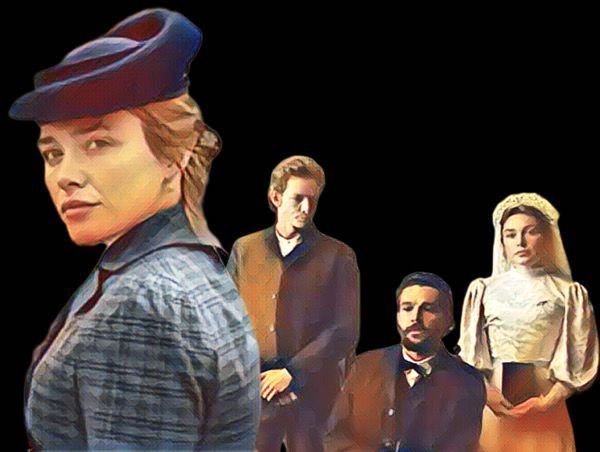
In the original novel, Cathy does not function merely as a cruel, manipulative, or emotionally destructive woman, since Steinbeck writes her almost as a metaphysical entity, someone frequently described as incapable of empathy, incapable of love, and even incapable of fully existing within ordinary human logic, causing the novel to repeatedly abandon any genuine attempt to understand her psychologically, as though Cathy represented less a person and more a serpent infiltrating the American paradise built around the Trask family.
That quality is exactly what has always made the character simultaneously fascinating and deeply unsettling, because Cathy Ames never apologizes to the reader, never seeks moral redemption, and never tries to fit within an emotionally reassuring framework, existing instead almost as a force of destruction moving through that family. At the same time, Steinbeck insists on presenting her as something close to inhuman.
The Netflix teaser, however, completely shifts that perspective within its opening moments, because the first voice we hear does not belong to a male narrator observing Cathy from the outside, nor to Adam, Cal, or any other figure connected to the novel’s biblical structure, but to Cathy herself, who says:
“When I was a little girl, I imagined I could grow smaller… because the world is so full of evil.”
The line immediately changes the audience’s relationship to the character, because while the original novel presents evil as something emanating from Cathy herself, the adaptation suggests that the world already existed as a corrupted space long before Cathy occupied that symbolic place within the narrative, transforming violence from something generated solely by her into something that also exists in the environment surrounding her.
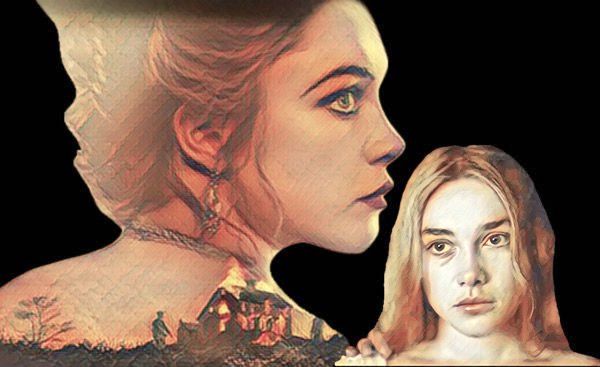
Netflix’s official description practically confirms this shift by defining Cathy Ames as an “antihero,” a particularly revealing term because Cathy never truly belonged to the realm of contemporary anti-heroines, since modern female antiheroes are usually constructed through trauma, repression, structural misogyny, social violence, or psychological survival mechanisms. In contrast, Cathy belongs far more to a biblical, allegorical, and almost gothic tradition, functioning within the novel as a radical rupture of the very idea of humanity.
Perhaps that is exactly what Zoe Kazan wants to question, especially because the adaptation seems less interested in denying Cathy’s monstrosity and more interested in examining how certain women were historically transformed into absolute symbols of evil within deeply male-centered narratives.
Critics also noticed that the teaser functions almost like “a tribute to Florence Pugh,” an observation that makes perfect sense because the entire visual construction of the preview seems obsessed with her presence, surrounding Cathy with a dark glamour as she appears dressed in black at a funeral, wearing dark sunglasses and heavy coats, almost like a classic movie star wandering through an American gothic melodrama.
Yes, elements of the original story are still there: the loveless relationship with Adam Trask, the exchanged glances with Charles Trask on her wedding night, her sons Cal and Aron, her aversion to motherhood, and the brothel Cathy eventually controls, but it seems increasingly clear that the series will offer some kind of “justification” for everything terrible she does, and anyone familiar with Steinbeck’s novel knows that Cathy is not merely cruel, but profoundly, relentlessly evil.
That choice will likely create discomfort among admirers of Steinbeck’s original work, because the author spent the entire novel trying to make Cathy feel almost incomprehensible, inaccessible, and emotionally unreadable, while the series appears interested precisely in expanding her, deepening her, and transforming her into a subjectively larger, more complex, and perhaps even too human presence.
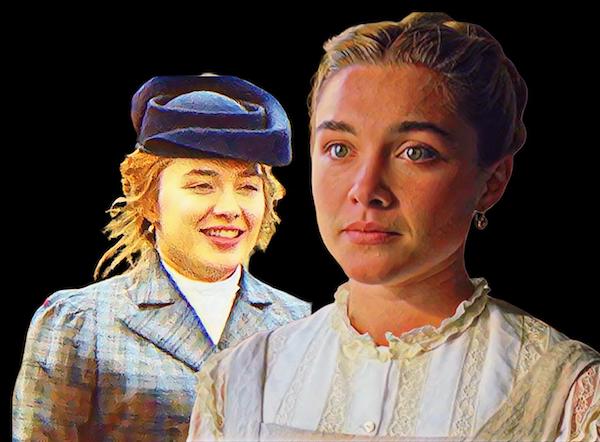
And that is exactly where the adaptation’s most delicate tension lies, because contemporary culture has become far less comfortable with female characters who are portrayed as simply evil, often creating an expectation that violent or destructive women must be psychologically contextualized through trauma, emotional damage, or social explanation, while audiences simultaneously show much less tolerance for women written as absolute manifestations of malicious mystery.
The problem is that Cathy Ames works precisely because she is frightening, since Steinbeck never attempts to soften her or organize her into a comforting narrative of victimhood or social determinism, refusing to offer the reader any moral reassurance in relation to her, which is what ultimately makes Cathy one of the most radical female figures in twentieth-century American literature.
If the adaptation turns Cathy into merely a traumatized woman shaped by a cruel world, part of the character’s original power will inevitably disappear, although it is also possible that Zoe Kazan is pursuing something more complex than simple humanization, especially because the series appears interested in discussing how the male gaze historically helped construct certain female figures as monstrous.
There is also something almost metatextual about all of this, since the classic 1955 adaptation of East of Eden was directed by Elia Kazan, Zoe’s grandfather, in a version eternally associated with James Dean and Cal Trask’s suffering, while decades later the granddaughter returns to the same material and deliberately shifts the focus toward Cathy Ames, almost as if she were critically revisiting not only Steinbeck’s novel, but also the cultural tradition that helped cement Cathy as an absolute symbol of feminine evil.

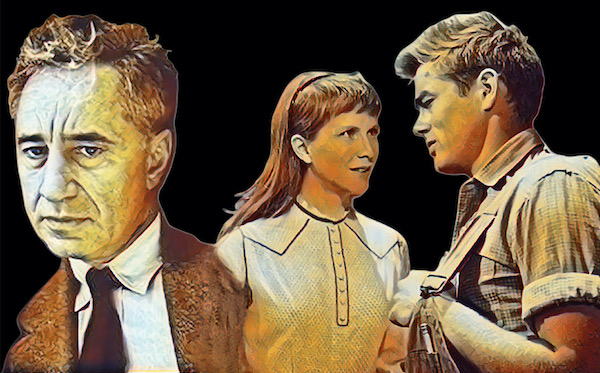
The central question therefore stops being merely “Who is Cathy Ames?” and becomes instead “Who told her story before?”, and perhaps that is exactly what already feels so unsettling about the teaser, because changing Cathy means changing the philosophical core of East of Eden, pushing the story away from the biblical terrain of sin, free will, and inherited morality into a far more contemporary discussion about gender, narrative, trauma, and the construction of feminine monstrosity.
Descubra mais sobre
Assine para receber nossas notícias mais recentes por e-mail.


1 comentário Adicione o seu