
Few bands from the 1990s have managed to survive so many transformations in pop culture quite like Oasis. The Manchester group that emerged during the height of Britpop not only defined a specific era of British music but eventually became an emotional symbol for different generations who discovered their songs under completely different circumstances. For part of the audience, Oasis represents the youth of the 1990s, the excesses of British rock, and a very particular idea of English masculinity and identity. For younger listeners, meanwhile, the band became a form of cultural inheritance passed down through parents, nostalgic playlists, algorithms, and short-form videos that kept songs like Wonderwall, Don’t Look Back in Anger, and Live Forever permanently circulating in digital culture.
It is precisely this emotional and historical dimension that the new Oasis documentary appears interested in capturing.
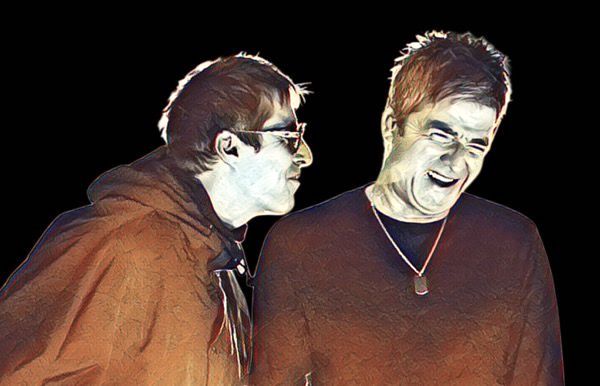
The still-untitled feature documentary about the Oasis Live ’25 tour is considered one of the most anticipated musical reunions in decades. It will premiere in theaters in September before arriving exclusively on Disney+ later this year, in a release strategy that already signals how the industry sees this return not simply as a music event, but as a global cultural moment.
The choice of Steven Knight as the project’s creator may be one of the clearest indications of what the documentary is trying to accomplish. Best known for Peaky Blinders, Knight has built much of his career exploring themes tied to British identity, working-class roots, masculinity, trauma, and the transformation of real or fictional figures into contemporary cultural myths. In his work, memory and legacy often matter just as much as the events themselves, which helps explain why his involvement makes so much sense for a project centered on Oasis.
Because the story of the band was never only about music.
Oasis became a narrative built around family rivalry, public resentment, working-class pride, performative arrogance, and an extraordinarily complicated relationship between affection and destruction. Liam and Noel Gallagher spent decades turning their hostility toward each other into a public spectacle, feeding the idea that permanent separation had become part of the mythology surrounding the band. For years, the impossibility of reconciliation helped keep Oasis permanently alive in collective memory.
That may be why the reunion has generated such an intense reaction even among people who did not experience the band during its original peak.
There is something deeply symbolic about seeing two brothers who spent decades publicly insulting each other now sharing a stage again in front of sold-out crowds around the world. The documentary seems to understand that this return cannot be framed simply as nostalgia. According to the official description, the film aims to explore “the profound emotional impact of this global cultural phenomenon and what Oasis means to audiences and different generations around the world.”
Steven Knight’s own statement reinforces that reading.
“I wanted to tell the story of the brothers and the band, but equally importantly, the story of the fans whose lives were marked and sometimes transformed forever by the music.”
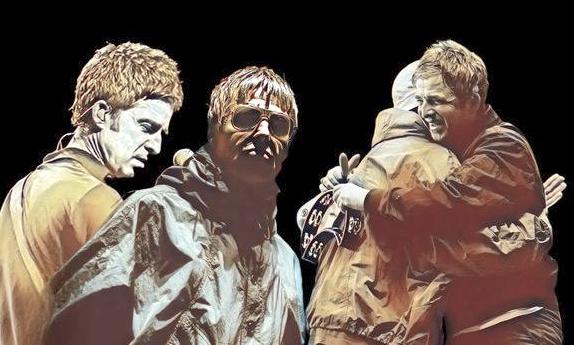
The quote also reflects an important shift in the way music documentaries have evolved in recent years. The most compelling projects in the genre no longer function merely as behind-the-scenes records or nostalgic celebrations, but instead approach bands and artists as collective emotional archives. The focus is no longer only on the music or the performances, but on the psychological and emotional relationship audiences build with those works over time.
In the case of Oasis, that connection has always been tied to a very specific mixture of grandeur and everyday melancholy. The band’s songs spoke about escape, hope, frustration, suburban dreams, and the desire for transcendence in a remarkably direct and uncomplicated way, allowing millions of people to project themselves into the lyrics regardless of their own realities.
The documentary appears deeply interested in that collective experience.
The production promises unprecedented access to rehearsals, backstage moments, and performances from the tour, as well as the first joint interviews with Noel and Liam Gallagher in more than 25 years. That detail may ultimately be the most symbolic of all, because it inevitably shifts the conversation toward a question that surrounds almost every major reunion in contemporary music culture: how much of this is genuine emotional reconciliation, and how much is an acknowledgment of legacy, memory, and cultural impact?
The answer probably matters less than the fact that the brothers are willing to occupy the same symbolic space again.
Over time, Oasis stopped representing only a successful band and became one of the last truly universal myths in rock music. In an industry fragmented by streaming, social media, and the accelerated consumption of trends, the group remains associated with a period when bands could still create a collective sense of generation and cultural belonging on a global scale.
That may be exactly what Disney recognized when it positioned the documentary as one of its major music releases of the year.
Eric Schrier, president of Direct-to-Consumer and International Originals at Disney, described the film as “an intimate story about reconciliation, the power of music and Oasis, one of the most successful and influential groups of all time.” His statement makes clear that the project intends to go far beyond documenting a sold-out tour and instead explore what happens when a band transcends its own historical moment and becomes a form of shared emotional memory.

The creative team itself reinforces those cinematic ambitions. Directors Dylan Southern and Will Lovelace previously worked on music documentaries such as Shut Up and Play the Hits and Meet Me In The Bathroom, two films deeply interested in the relationship between music, urban identity, and generational memory. The technical crew also includes cinematographer Haris Zambarloukos and Academy Award-winning sound mixers James Mather and Tarn Willers, known for films such as Top Gun: Maverick and The Zone of Interest.
Nothing about the project suggests a simple streaming special assembled merely to capitalize on reunion hype.
There is a clear attempt to transform this comeback into a major cultural document about legacy, memory, reconciliation, and collective belonging through music.
And perhaps that is the greatest irony in Oasis’ story.
A band built around internal conflict, public resentment, and self-destruction ultimately became one of the most widely shared emotional experiences in modern rock history. Decades after the peak of Britpop, Liam and Noel Gallagher’s reunion no longer functions merely as music news. It now occupies a much larger cultural space connected to the contemporary desire to revisit the symbols that helped different generations organize their own emotional memories.
Descubra mais sobre
Assine para receber nossas notícias mais recentes por e-mail.

