
Few figures in popular culture remain as omnipresent as Marilyn Monroe. Her face still appears on T-shirts, perfumes, luxury campaigns, makeup collections, exhibitions, posters, mugs, jewelry, and advertisements around the world. In many ways, Marilyn has become more than an actress. She turned into an instantly recognizable visual language. The problem is that behind this seemingly simple permanence lies one of the most complex disputes in modern history involving image rights, memory, celebrity, and intellectual property.
The actress’s centenary, celebrated in 2026, has reignited a question that sounds simple but is anything but: has Marilyn Monroe’s image finally entered the public domain?
The short answer is no.
And the long answer is even more interesting.
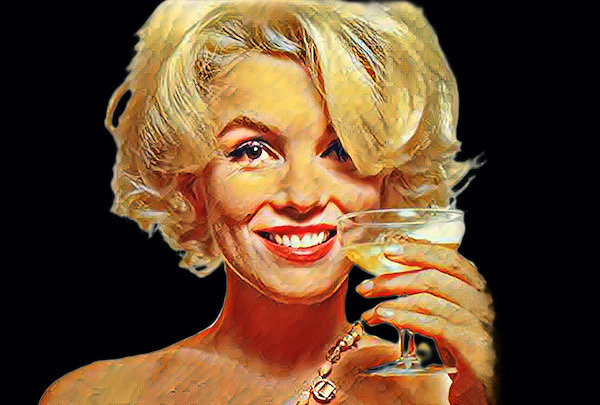
Because Marilyn Monroe does not legally exist as a single entity. Her image is fragmented across photographers, estates, film studios, trademarks, publicity contracts, and different international legal systems. Depending on what is being used, who is using it, and in which country, the rights can change entirely.
Today, most of the official commercial exploitation tied to the Marilyn Monroe name and brand is controlled by Authentic Brands Group, the company that also manages names such as Elvis Presley, Muhammad Ali, and Sports Illustrated. It oversees official licensing deals, products, campaigns, and commercial uses associated with the Marilyn Monroe identity.
But the story began long before that.
When Marilyn died in 1962, much of her estate was left to Lee Strasberg, the director of the Actors Studio and one of the most important figures in her professional life. Decades later, control passed to Anna Strasberg, Lee’s widow, precisely at the moment when 1980s and 1990s pop culture transformed Marilyn into a global merchandising machine.
That was when her image stopped being merely part of cinema history and became one of the most profitable brands in entertainment. Unsurprisingly, its management started operating almost like a major corporation. Licensing agreements multiplied, contracts were signed, and Marilyn’s face began appearing on virtually every kind of product imaginable.
At the same time, however, a major legal problem emerged: Marilyn Monroe was not just a brand. She also has an enormous photographic archive scattered across different photographers, studios, and collectors.
And that is where things become much more complicated.
Many of the actress’s most famous images do not belong to the estate controlling her name. They belong to the photographers who created them or to the archives that inherited those rights. Photographs by Milton Greene, Sam Shaw, Bert Stern, and George Barris each have specific owners. This means someone may commercially control the “Marilyn Monroe” brand while not necessarily controlling a particular photograph of her.
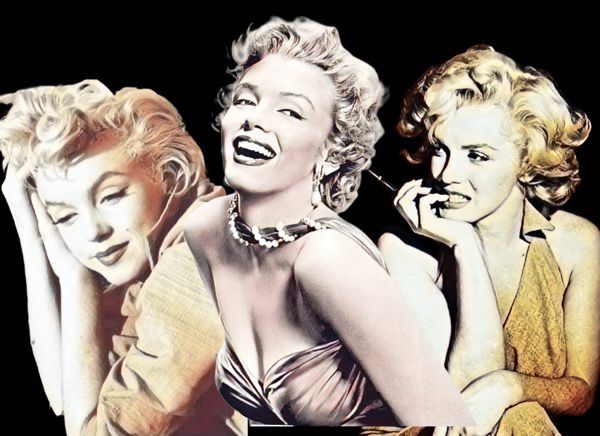
The same applies to her films. Works such as Some Like It Hot, Gentlemen Prefer Blondes, and The Seven Year Itch still belong to the studios that produced them. The fact that Marilyn would have turned 100 does not automatically alter those copyrights.
There is another important detail as well: some older promotional images may eventually fall into the public domain in certain countries before the commercial identity of “Marilyn Monroe” itself loses protection. In other words, a specific photograph may theoretically circulate freely in certain contexts while the commercial use of that same image could still trigger legal disputes.
That helps explain why Marilyn occupies such a singular place in contemporary pop culture. She appears to belong everywhere, almost like a universal public figure, while legally remaining surrounded by layers of private control.
There is also a decisive legal dimension to this story. For years, the estate attempted to secure Marilyn’s posthumous publicity rights, particularly in California, where those protections are traditionally strong for celebrities. The problem was that after her death, representatives of the estate officially declared Marilyn to be a resident of New York. At that time, New York did not recognize the same kind of posthumous publicity protections available in California.
The result was a brutal irony. The very legal strategy once used to handle taxes and inheritance ultimately weakened the estate’s later control over her image.
More than a corporate dispute, this reveals something profoundly contemporary about Marilyn Monroe. Her image became so vast that it no longer fully belongs to anyone. Not to the estate, not to the studios, and not even to the companies now managing her brand.
Perhaps because Marilyn stopped existing solely as a person a very long time ago.
She became a kind of collective memory of the twentieth century.
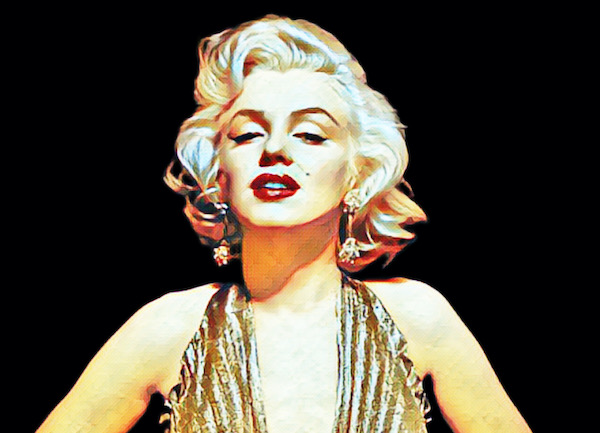
And there is something almost melancholic about that. Marilyn spent much of her life trying to control her own image, fighting against the way Hollywood transformed her into a product, a fantasy, and a male projection. She created her own production company, battled studios, studied acting seriously in New York, and tried to escape the “dumb blonde” caricature the system insisted on selling.
One hundred years after her birth, her image remains contested precisely because it is still too valuable to disappear.
In the end, the battle over Marilyn Monroe’s rights may be less about intellectual property and more about something much larger: who gets to manage a myth after it no longer belongs to the person who created it.
Descubra mais sobre
Assine para receber nossas notícias mais recentes por e-mail.


1 comentário Adicione o seu