
I am not the first to connect the dots, but there is something deeply familiar about watching a Sam Levinson project. Not necessarily because of the plot, but because of the feeling it creates. The diffused lighting, bodies filmed like fantasy, the camera hypnotized by sweat, smeared makeup, sex, emotional collapse, and characters who seem permanently on the verge of self-destruction. For a long time, critics tried to explain this by comparing Levinson to names like Larry Clark or Harmony Korine, especially because of Euphoria’s focus on youth culture. But perhaps the most accurate comparison lies somewhere else.
Sam Levinson may be the Adrian Lyne of the streaming generation.
And that helps explain why his work inspires fascination and discomfort at the same time.
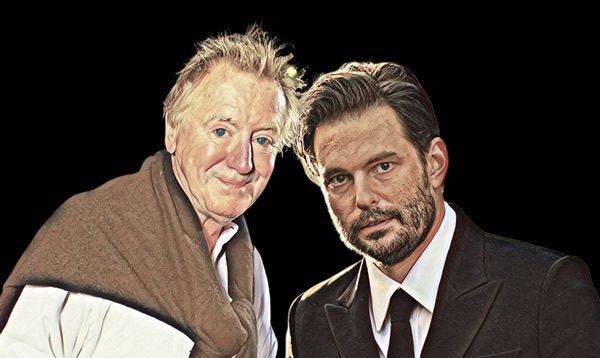
Today, Adrian Lyne occupies a curious place in Hollywood history. For younger audiences, his name may not carry the same immediate recognition as Steven Spielberg, Martin Scorsese, or Ridley Scott. But there was a moment, especially throughout the 1980s and 1990s, when he was one of the most powerful and commercially desired directors in the industry.
Lyne practically defined the language of the modern erotic thriller. Flashdance, 9½ Weeks, Fatal Attraction, Indecent Proposal, Lolita, Unfaithful. His films were global hits, dominated cultural conversations, and turned sex, obsession, and fantasy into cinematic events. There was something extremely calculated in the way he filmed desire: warm lighting, glistening bodies, smoke, sensual music, characters emotionally destroyed by their own impulses.
At one point, Lyne’s success in Hollywood became so significant that fellow filmmakers openly envied it. Ridley Scott himself once admitted frustration in the 1980s at watching Adrian Lyne achieve the kind of commercial and cultural success he was still chasing at the time. It was not just about box office numbers. Lyne had figured out how to transform eroticism into a sophisticated pop spectacle.
But time radically changed how his work is viewed.
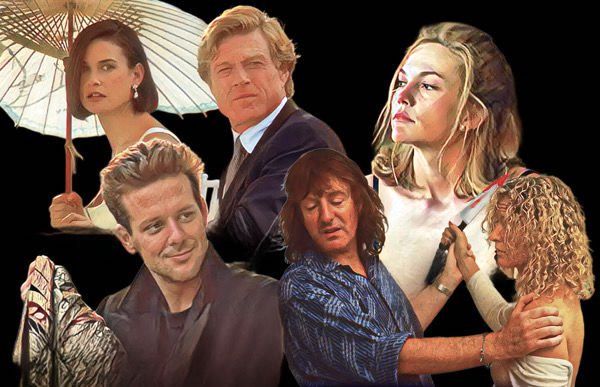
If, in the 1980s, his films were treated as provocative, elegant, and dangerously sexy, today they are often revisited as uncomfortable documents of a Hollywood built around male anxiety, female objectification, and fantasies of emotional punishment. What once seemed transgressive now carries an almost archaeological weight regarding how women were portrayed during that era.
Fatal Attraction, for instance, has undergone major critical reevaluation over the past decades. Glenn Close herself has spoken at length about how Alex Forrest became a symbol of male fear surrounding independent and sexually liberated women. 9½ Weeks is now frequently discussed as a fantasy of psychological control disguised as sophisticated eroticism. Even Indecent Proposal, which once seemed merely provocative, is increasingly viewed as the portrait of a culture that negotiated female bodies as narrative currency without moral discomfort.
And perhaps that is exactly what makes Sam Levinson so intriguing.
Because visually, he feels like a direct heir to that tradition, even if his work is also frequently compared to filmmakers such as Paul Verhoeven and Brian De Palma. There is a trace of Basic Instinct in the way Levinson turns sexuality into a psychological spectacle. There are echoes of De Palma in the constant voyeurism, the fetishistic camera, and the sensation that his characters are always being watched. At times, especially in The Idol, there is even a resemblance to Verhoeven’s cynical fascination with fame, power, and sexual fantasy.
But Adrian Lyne may be the most uncomfortable comparison precisely because Levinson shares with him a very specific obsession: emotional degradation filmed as aesthetic seduction.
Euphoria and The Idol operate through the same sensory logic. Neon replaces the smoke of the 1980s, social media substitutes the voyeurism of classic erotic thrillers, but the structure remains recognizable: characters consumed by the gaze of others, by fantasy, and by the need to remain desirable even while falling apart.
The difference is that Adrian Lyne filmed adults living forbidden fantasies in an era that still separated eroticism from moral discourse. Sam Levinson does this within a culture that has already spent years discussing misogyny, exploitation, the male gaze, and the symbolic violence of the camera itself. That contradiction is precisely what makes his work so difficult to categorize critically.
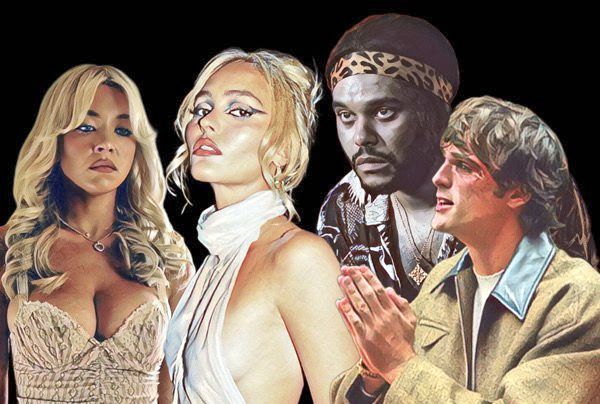
Because Levinson does not seem interested merely in eroticizing his characters. There is often an element of public humiliation embedded in his narratives. An emotional sadism that affects both men and women, but falls especially heavily on his female protagonists.
Sydney Sweeney may be the clearest example of this. In Euphoria, Cassie is repeatedly transformed into a spectacle of extreme vulnerability. Crying, begging, hypersexualized, and emotionally shattered in front of both internal and external audiences. Her suffering rarely exists in private. The character lives under permanent observation.
But Levinson does something similar with his male characters. Jacob Elordi, for instance, is filmed simultaneously as an object of desire, a threatening presence, and a humiliated figure. Nate Jacobs exists in constant cycles of violence, loss of control, and emotional emasculation. There is something almost cruel in the way Levinson publicly dismantles his characters.
That places him alongside the directors he is often compared to, but it also reveals what feels most unsettling about his work: all of those filmmakers navigated the peak of Hollywood misogyny as dominant cinematic language, one that emerged from an industry that treated the female body as narrative and commercial currency without much cultural discomfort.

Sam Levinson insists on that aesthetic decades later, in a post-#MeToo landscape and within a generation that has already developed the critical vocabulary to question precisely these kinds of representations.
Perhaps that is what makes Euphoria feel simultaneously contemporary and strangely outdated. The series perfectly understands the logic of digital performance, emotional surveillance, and hyperexposure, yet it often relies on a visual grammar inherited from deeply masculine cinema of the 1980s and 1990s.
But Levinson makes one crucial change to that legacy. Adrian Lyne filmed desire as heat. In Sam Levinson’s work, desire often feels anesthetized.
The characters in Euphoria do not seem to experience eroticism itself. They perform intimacy. They embody dramatized versions of themselves for an invisible audience. Shame, trauma, sex, and emotional collapse unfold as a continuous spectacle. Everything already appears mediated through the gaze of others.
That may be why the series remains so “Instagrammable” even at its most miserable. Adrian Lyne filmed people losing control. Sam Levinson films characters who were born already aware that they were being watched while losing it.
And there is another element that makes this comparison even more fascinating: Sam Levinson is almost the complete artistic opposite of his father.
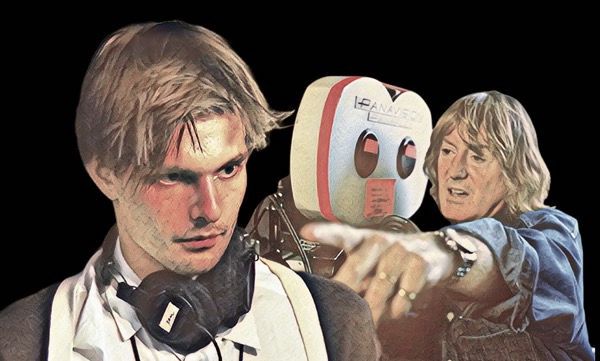
Barry Levinson belongs to a far more humanistic generation of filmmakers, interested in interiority, relationships, and social context. Films like Rain Man, Good Morning, Vietnam, and Diner observed characters trying to emotionally survive within larger systems.
Sam Levinson’s work feels far less interested in collective humanity and far more fascinated by imprisonment within image itself. His characters often seem incapable of existing outside emotional performance, as though every experience has already been contaminated by the need to be seen.
Perhaps that is precisely what makes him such a divisive filmmaker. Sam Levinson inherited the aesthetic of the classic erotic thriller, but transplanted it into a generation shaped by social media, digital pornography, therapeutic culture, and permanent public self-awareness.
And perhaps the most interesting question is not simply whether he is the Adrian Lyne of the streaming generation.
But why does this language suddenly feel so familiar again right now?
Descubra mais sobre
Assine para receber nossas notícias mais recentes por e-mail.

