
The rarest thing about Widow’s Bay may be realizing that the series keeps getting better precisely at the moment when most streaming productions begin collapsing under the weight of their own mysteries.
When I first wrote about the show at the end of April, there was still an inevitable uncertainty surrounding it. Would this be a series capable of sustaining the extraordinary atmosphere of its opening episodes, or just another production built around calculated eccentricity, immaculate aesthetics, and mysteries designed to generate online theories? Contemporary television has become increasingly skilled at creating impressive pilots that quickly lose momentum once characters need to deepen, conflicts expand, and the narrative has to justify its own universe.
But what makes Widow’s Bay so remarkable is precisely the realization that it not only sustains its tone but continues discovering new emotional layers as it moves forward. And perhaps that happens because the series understood from the very beginning that horror was never truly the center of the story.
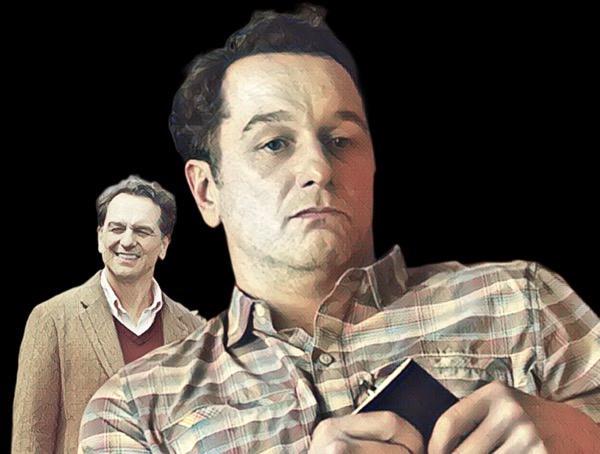
The Apple TV production functions much more as a study of emotional exhaustion. Of people continuing to exist long after something inside them quietly ended. The supernatural is present, of course, but it almost always operates as a symbolic extension of that coastal town, a place suffocated by its own historical, economic, and emotional ghosts.
There is something deeply melancholic about Widow’s Bay. A constant sensation that every character is trapped inside an older version of themselves. And the series finds remarkably intelligent ways of transforming that feeling into a visual atmosphere. The gray ocean, the permanent fog, the empty bars, the silent streets, and even the interiors themselves seem to carry a collective exhaustion that is difficult to explain rationally.
Matthew Rhys remains extraordinary. And this may be one of the most subtle and emotionally precise performances on television this year. His mayor never tries to become a contemporary antihero or a sarcastic protagonist engineered to appear “cool.” Rhys plays a tired man. Simply that. And that simplicity is exactly why it works so beautifully.
There is a very specific sadness surrounding the character. The sense of someone who continues performing duties, making decisions, and moving through his days without truly believing that anything can improve. In several moments, Rhys seems to be performing the physical weight of emotional burnout itself. The exhausted body, the empty stare, the long pauses before answering even the simplest question. Everything about him conveys the impression of a man living in a permanent state of depletion.
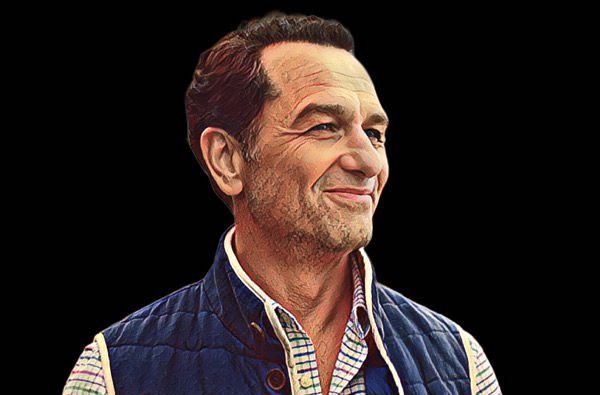
And perhaps the smartest element of Widow’s Bay is its humor. Not punchline-driven humor or traditional comic relief, but the weary sarcasm typical of communities that have spent far too long coexisting with the absurd. The series understands that emotionally exhausted people often develop irony as a survival language.
That appears even in the official episode descriptions, which have become an essential part of the show’s experience. Small tourist advisories written as if the town itself were attempting to reassure visitors while everything slowly collapses around them.
“We apologize for the curfew. Please remain calm as we determine what’s happening. On a separate note, keep your teenagers inside after dark.”
Or:
“We hope you enjoyed the three-hour ferry to New England’s best-kept secret! Ignore the warnings about the fog. Everything’s fine.”
There is something both deeply funny and melancholic about the show’s passive-aggressive communication style. As if Widow’s Bay were speaking directly to the audience the same way friends speak to each other during difficult periods: minimizing tragedies, using irony to survive discomfort, and trying to turn chaos into a joke because the alternative would be admitting despair.
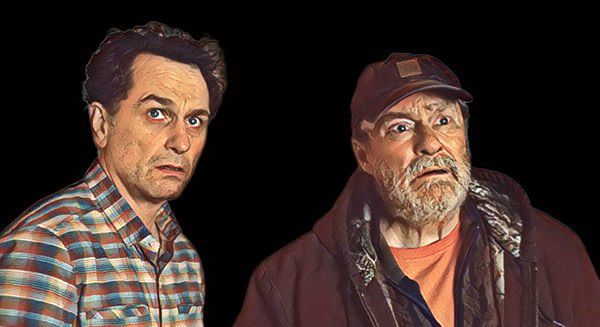
And Widow’s Bay succeeds precisely because it resists the temptation to over-explain its own strangeness. That may be one of the greatest problems in contemporary streaming television: series that completely dismantle their mysteries to deliver exhaustive chronology, lore, mythology, and neatly organized answers. The Apple production feels comfortable allowing discomfort, silence, and ambiguity to occupy space.
Perhaps that is why it evokes the spirit of Twin Peaks far more successfully than many recent productions that attempted to imitate its eccentric aesthetics without understanding the emotional emptiness beneath them. Widow’s Bay understands that small towns accumulate very real ghosts. People who never managed to leave. Relationships suffocated by constant proximity. Secrets that continue circulating because nobody truly escaped that place.
And the most fascinating part is realizing how frequently the series is now being recommended even by people who normally dislike horror altogether. Because ultimately, the show does not depend on jump scares, graphic violence, or constant adrenaline. The fear comes from somewhere else entirely. From the suffocating realization that some towns, some memories, and some wounds simply never end.
Halfway through its season, Widow’s Bay no longer feels like a pleasant surprise. It feels like one of the most intelligent, melancholic, and emotionally fascinating television productions of 2026.
Descubra mais sobre
Assine para receber nossas notícias mais recentes por e-mail.

