
There is a sentence Eva Libertad said during our conversation that perhaps explains why Deaf moved so many women, including hearing women, far beyond the discussion about disability. “Many mothers wrote to me saying: I’m not deaf, but I am Angela.”
The Spanish film, winner of three Goya Awards and one of the most acclaimed recent European productions, follows Angela, a deaf woman navigating motherhood while struggling with the fear of not being able to communicate with her own daughter. But reducing Deaf to a story solely about deafness would perhaps mean missing the emotional depth of what the film is truly exploring.
The film speaks about something that crosses the lives of many women: guilt, loneliness, inadequacy, emotional exhaustion, and the intimate fear of not being able to bond with the people they love the most.
And perhaps that is why the experience feels so devastating.
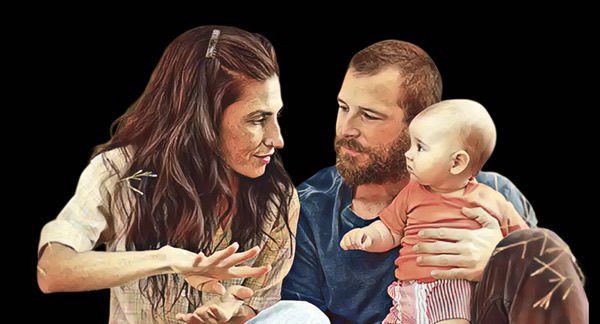
Throughout the conversation with director Eva Libertad and actress Miriam Garlo, sisters in real life as well, it became clear that the film was born precisely from the attempt to translate feelings that often remain hidden even within motherhood itself.
“In 2021, she shared with me all of her doubts and insecurities, when she saw herself as the most deaf person inside a hearing world,” Eva explained about the project’s origins.
Before the feature film, the sisters had already made a short film around the same subject. But Eva realized there was still something deeper to explore.
“I wanted to know what would happen to the couple if she became pregnant, whether the child would be hearing or deaf, and what Angela’s relationship with the baby would look like.”
Motherhood in the Deaf community appears to be very far removed from the idealized image that usually dominates cinema. There is no emotional perfection. No romanticized glow surrounding the maternal figure. Instead, there is fear, exhaustion, irritation, guilt, and a constant feeling of disconnection.
And that resonates deeply with psychoanalytic thinkers who, for decades, have tried to dismantle the idea of motherhood as a naturally harmonious experience.
Melanie Klein wrote extensively about maternal ambivalence, about how love and anxiety coexist from the very beginning of the mother-baby relationship. Françoise Dolto, meanwhile, argued that the bond between mother and child does not depend solely on speech, but on presence, the body, the gaze, and the way the baby is recognized as a subject.
In the Deaf community, all of this gains another layer because Angela already exists in a world where communication itself requires constant effort.
“That fear of not knowing whether you can bond, not knowing how to communicate with your own daughter,” Eva said during the interview.
Perhaps the film’s most impressive achievement is showing how isolation and motherhood can coexist. And not only for deaf women.
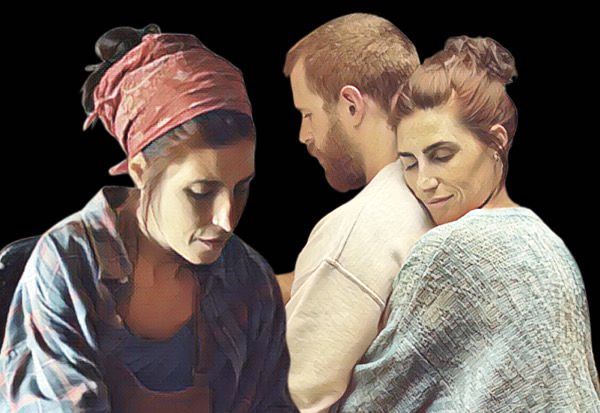
“I think motherhood has always been portrayed in a very romanticized way because art has traditionally approached it from a male perspective. But now women are finally beginning to tell our own experiences,” Miriam Garlo said.
She continued:
“It doesn’t mean every motherhood experience is like this; each one is different, but the film talks about postpartum depression, anxiety, and the fear of not being capable of bonding with your baby.”
The film is also remarkable because it refuses to turn Angela into an inspirational symbol. She makes mistakes, becomes irritated, withdraws emotionally, and fails at times. And that was an intentional decision.
“We wanted to portray a deaf woman who felt authentic and real, someone who did not need to be perfect, who is going through a crisis, severe postpartum depression, and difficult family relationships, just like deaf women do.”
Miriam added:
“She is simply a human being trying to survive.”
There is also a very interesting inversion of traditional cinematic dynamics. In Deaf, it is the man who occupies the role of constant caregiver.
“Usually, the female character is the one who takes care of and supports the protagonist. We wanted to bring a male caregiver to the screen.”
According to Miriam, this also reflects a broader social transformation.
“Many men are beginning to deconstruct toxic masculinity, but we still do not see that very often on screen.”
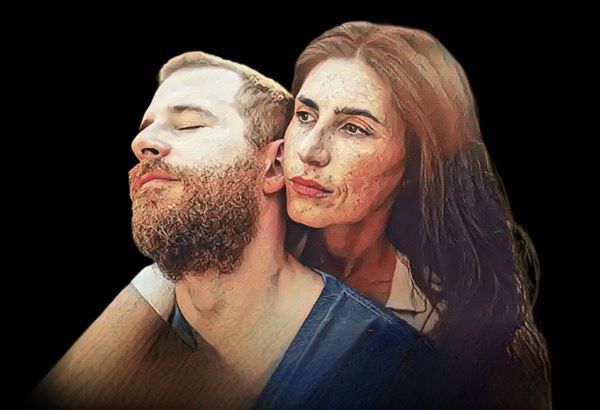
The childbirth sequence is perhaps the most distressing moment in the film. Eva revealed that the entire scene was based on real testimonies from deaf women.
“It was very important to convey that isolation, that lack of communication, and that fear where she is alone, unable to understand what is happening, leaving her extremely vulnerable.”
The director also explained that the medical professionals appearing in the scene were not actors.
“The medical team was not actors. They were real doctors.”
Perhaps that is why the film carries such a brutal sense of truth. Deaf never seems interested in making grand speeches. Instead, it observes the small emotional fractures of everyday life: the discomfort of constantly having to ask for help, the fear of not understanding, the guilt of feeling emotionally distant from your own baby, and the sense of inadequacy inside your own home.
And that may explain why so many women recognize themselves in Angela even without sharing her experience of deafness.
“Deep down, we are much closer to one another than we think,” Eva said.
When Miriam Garlo won the Goya Award for Best New Actress, becoming the first deaf actress ever to receive the honor, the moment carried historical importance far beyond cinema itself.
“I’m proud, but I’m also paying close attention because there are many other deaf actresses, actors, screenwriters, and crew members who also deserve opportunities.”
But perhaps Deaf’s greatest achievement is something else entirely.
The film reminds us of something profoundly human and uncomfortable: sometimes the greatest fear is not failing to hear the world, but failing to feel recognized within it.
Descubra mais sobre
Assine para receber nossas notícias mais recentes por e-mail.

