
There’s something almost perfect about Young Frankenstein returning right now. Not only because Hollywood is living through an era where practically everything needs to become a franchise, sequel, or reboot, but because the 1974 film itself was already, in many ways, a reinvention long before that logic took over the industry.
When Mel Brooks released Young Frankenstein, he took Universal’s classic monsters — especially Frankenstein and Bride of Frankenstein, directed by James Whale and loosely inspired by Mary Shelley’s novel — and rebuilt that universe as an affectionate, exaggerated, completely chaotic parody. The expressionist horror of the 1930s became comedic mayhem filled with ridiculous wordplay, physical comedy, and the kind of broad sexual humor that defined much of American comedy in the 1970s.
Now we’ve reached something almost meta. Very Young Frankenstein, recently ordered to series at FX, is a reinterpretation of a film that was already reinterpreting another classic before it. A reboot of a reboot, a concept so excessive and self-aware that it feels like something Mel Brooks himself would have turned into a joke.
And maybe that’s exactly why the news feels so fascinating.
In the year he turns 100, Brooks returns as executive producer of the new series alongside Taika Waititi, Stefani Robinson, and Garrett Basch, the creative forces connected to the success of What We Do in the Shadows. Waititi directed the pilot episode, while Robinson — one of the key writers behind What We Do in the Shadows — serves as writer and executive producer.
The cast also helps reveal the tone FX appears to be aiming for. Zach Galifianakis leads the production in a role seemingly inspired by Gene Wilder’s iconic Frederick Frankenstein, while Dolly Wells, Spencer House, Kumail Nanjiani, Nikki Crawford, and Cary Elwes round out the ensemble. Just the combination of Galifianakis’ awkward chaos and Waititi’s absurdist sensibility already makes the project more intriguing than most modern reboots.
The choice makes immediate sense because few recent productions have understood the balance between classic monsters, absurd humor, and cultural references as well as FX’s vampire comedy.
There’s a very clear lineage between Brooks’ filmmaking and the kind of comedy Waititi and Robinson have developed over the past decade. Both approach monsters not simply as terrifying creatures, but as ridiculous, melancholic, deeply human figures. The absurdity never erases affection for the original material. If anything, it depends on it.
The challenge facing the new series, however, is enormous because Young Frankenstein is not simply a famous comedy. It is one of the most beloved films in Hollywood history.
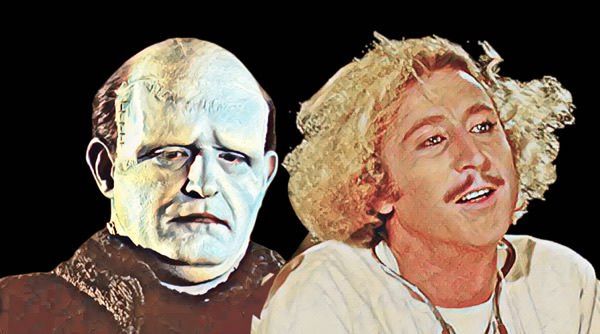
Released in 1974, the film became a massive commercial and critical success. It grossed more than $86 million worldwide, an extraordinary number for the time, especially for a black-and-white production released in an era when Hollywood had long abandoned that aesthetic. It also received Academy Award nominations for Best Adapted Screenplay and Best Sound, further cementing Mel Brooks and Gene Wilder as one of the great creative partnerships in American comedy.
But perhaps the most impressive thing is how the film has survived across decades without losing cultural relevance.
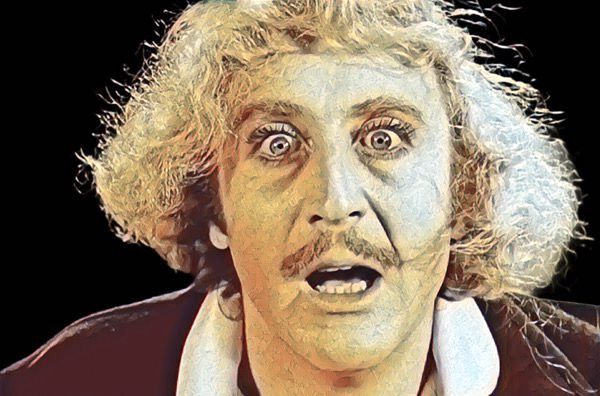
Gene Wilder played Frederick Frankenstein — or “Fronk-en-steen,” as he constantly corrected people — the grandson of the legendary Victor Frankenstein, deeply embarrassed by the grotesque family legacy. When he inherits his grandfather’s castle in Transylvania, he slowly becomes seduced by the very experiments he once claimed to despise.
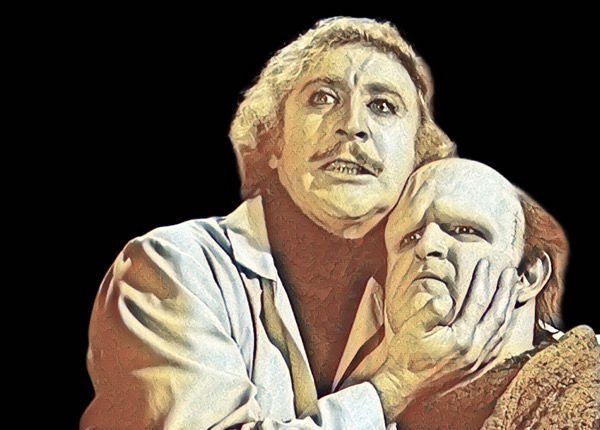
Around him were characters who became permanent fixtures of American pop culture: Marty Feldman’s Igor, constantly stealing scenes with his mismatched eyes and absurd comic timing; Cloris Leachman’s Frau Blücher; Teri Garr’s Inga; Madeline Kahn’s hysterical fiancée; and Peter Boyle’s Monster, whose dance sequence to “Puttin’ on the Ritz” remains one of the most iconic moments in comedy history.
What made Young Frankenstein work was precisely its unlikely combination of cinephile obsession and utterly childish humor.
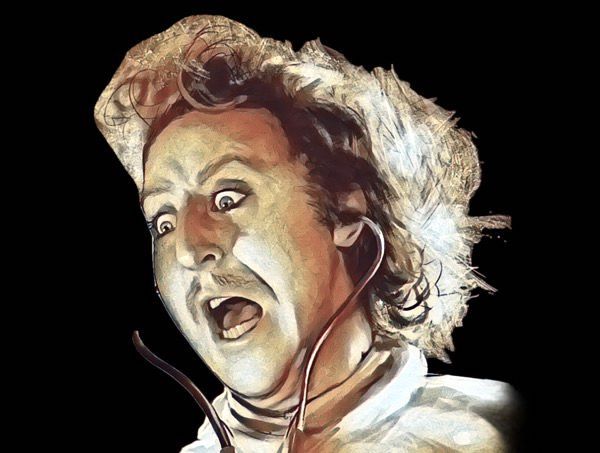
Brooks recreated Universal’s classic horror films with almost obsessive precision, even using original laboratory equipment from the old Frankenstein productions. At the same time, he filled the film with hysterical screaming, idiotic puns, sexual jokes, physical chaos, and performances pushed to complete exaggeration.
Of course, parts of that humor have aged uncomfortably. Like many comedies of that generation, there are caricatures, sexual exaggerations, and jokes that would almost certainly be written very differently today. But perhaps the most interesting thing is realizing how Young Frankenstein continues to be widely cited as one of the greatest American comedies ever made despite all of that.
Because its strength was never just provocation.
It lived in the rhythm of the scenes, the physical commitment of the cast, Brooks’ visual intelligence, and the fact that the film deeply understood the universe it was satirizing. Young Frankenstein mocked those monsters because it genuinely loved them.
And maybe that’s exactly what makes Very Young Frankenstein more interesting than it initially seems.
Not simply because Hollywood is reviving another classic, but because there’s something poetically fitting about Mel Brooks turning 100 while still finding ways to bring monsters back from the dead.
Descubra mais sobre
Assine para receber nossas notícias mais recentes por e-mail.
 miscelana.com
1 comentário Adicione o seu