
When news broke that Quinta Brunson would develop and star as Betty Boop in a new film, many people reacted with surprise. Not because Betty had been forgotten, since she never truly disappeared from pop culture, but because the character seemed tied to a very specific kind of nostalgia, almost frozen inside vintage storefronts, retro T-shirts, and pin-up references that have circulated through fashion, music, and advertising for decades. Still, perhaps for exactly that reason, Quinta’s casting feels far smarter than it initially appears.
Because Betty Boop was never just a cute cartoon.
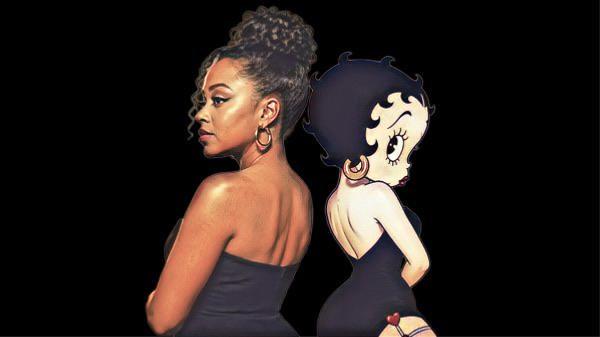
She was one of animation’s first major female stars, born during the jazz era and carrying sensuality, independence, and humor at a time when Hollywood was still learning how to transform women into global cultural phenomena. Long before Barbie became the subject of contemporary feminist reinterpretation, Betty already existed as a contradictory symbol, simultaneously commercial, provocative, and deeply connected to the social transformations happening in the United States during the early twentieth century.
Created in 1930 by Max Fleischer and initially designed by Grim Natwick, Betty first appeared in the short film Dizzy Dishes, still partially canine before gradually evolving into the figure the world recognizes today. The enormous eyes, tiny dress, oversized hoop earrings, childlike voice, and famous Boop-Oop-a-Doop eventually became permanent fixtures of the American cultural imagination.
However, there is something especially fascinating about Betty Boop when viewed from the perspective of the present day. The character emerged during a period when women were beginning to challenge traditional codes of behavior, occupying nightlife spaces, dancing to jazz, smoking in public, and claiming a visual and sexual freedom that still unsettled much of American society. Betty condensed all of that into animated form.
And precisely because of that, she also generated controversy.
As the Hays Code tightened its grip on Hollywood during the 1930s, the character was softened. Her sensuality was toned down, her clothing became less provocative, and her personality was reshaped to fit the era’s new moral restrictions. Betty Boop’s trajectory almost mirrors the history of control imposed on female representation in American popular culture.
There is also another important layer that always resurfaces whenever Betty is discussed: the accusations of cultural appropriation.
Singer Helen Kane sued Fleischer Studios in 1932, claiming Betty had copied her voice, appearance, and performance style. The lawsuit ultimately revealed something even more complex, since many of the gestures and vocal patterns associated with Kane appeared to originate from Black performers such as Baby Esther Jones and Florence Mills, women who were fundamental to shaping the language of jazz and American performance but who were often erased from dominant cultural memory.
Betty Boop was always visually presented as a white character within classic American animation, inspired by the flapper aesthetic of the 1920s. Still, the cultural debate surrounding her became more layered because many of the performative elements associated with the character, including vocalizations, physical rhythm, and comic mannerisms, seemed rooted in Black jazz and vaudeville performers who rarely received the same historical recognition.
Decades later, Betty Boop still functions almost like a portrait of American tensions surrounding spectacle, race, femininity, sexualization, and the entertainment industry itself.
Perhaps that is exactly why Quinta Brunson said she discovered “a much deeper story” after diving into the character’s origins.
And perhaps that is exactly why she feels like such an inspired choice to lead this project.
Quinta did not become popular simply because of Abbott Elementary. She became one of the most important creators in recent American television because she understands how to balance humor, social commentary, and humanity without turning everything into an obvious speech. Before the success of the series, she gained attention during the 2010s through viral social media videos and her work at BuzzFeed, where she quickly stood out for her ability to transform seemingly ordinary situations into sharp observations about race, labor, gender, and everyday life.
Then came appearances in productions such as A Black Lady Sketch Show and iZombie, but it was Abbott Elementary that completely changed her trajectory.

The series, centered on teachers working in an underfunded Philadelphia public school, achieved something rare in contemporary American network television: it became simultaneously popular, intelligent, warm, and politically aware without sounding preachy. Quinta won two Emmys, including lead actress in a comedy series, becoming the first Black woman to win the category since 1981, while also becoming the first Black woman to receive nominations in the same year for acting, writing, and producing in comedy.
There is an important detail in all of this. Quinta understands female characters trying to survive inside systems that constantly attempt to diminish them.
Janine in Abbott Elementary lives through exactly that. Betty Boop did too.
Comparisons to Greta Gerwig and Margot Robbie’s Barbie appeared almost immediately after the announcement, and they make sense. Hollywood has realized there is enormous space for revisiting historical female icons through contemporary perspectives. But Betty may be even more interesting because she was never culturally “clean.” There has always been something slightly strange, melancholic, and transgressive about her.
Especially because Betty Boop never truly disappeared.
She survived across generations through reinterpretations in music, fashion, and pop culture. Madonna was perhaps one of the artists who most clearly incorporated Betty’s aesthetic, especially during the 1980s, constantly playing with the combination of performative innocence and exaggerated sexuality. Marilyn Monroe was also frequently associated with Betty Boop’s energy because of the mixture of breathy vocals, sensuality, and performative femininity. Later came echoes in artists such as Christina Aguilera, Gwen Stefani, and Katy Perry, alongside countless visual reinterpretations across advertising, music videos, and contemporary pin-up aesthetics.
The character’s visual impact also never faded.
Betty became a fashion icon long before animated characters were treated that way. Her face appeared on clothing, makeup, handbags, advertising campaigns, and retro collections for decades, transforming her into one of the most recognizable animated figures in the world, even among people who never watched the original cartoons.
The reaction to the announcement has followed that exact logic. Part of the audience is curious to see how Quinta will modernize Betty without destroying her essence, another part fears an excessively contemporary adaptation, while others are genuinely excited by the possibility that this may be the first time in years Hollywood looks at Betty Boop as a historical character rather than simply a vintage brand.
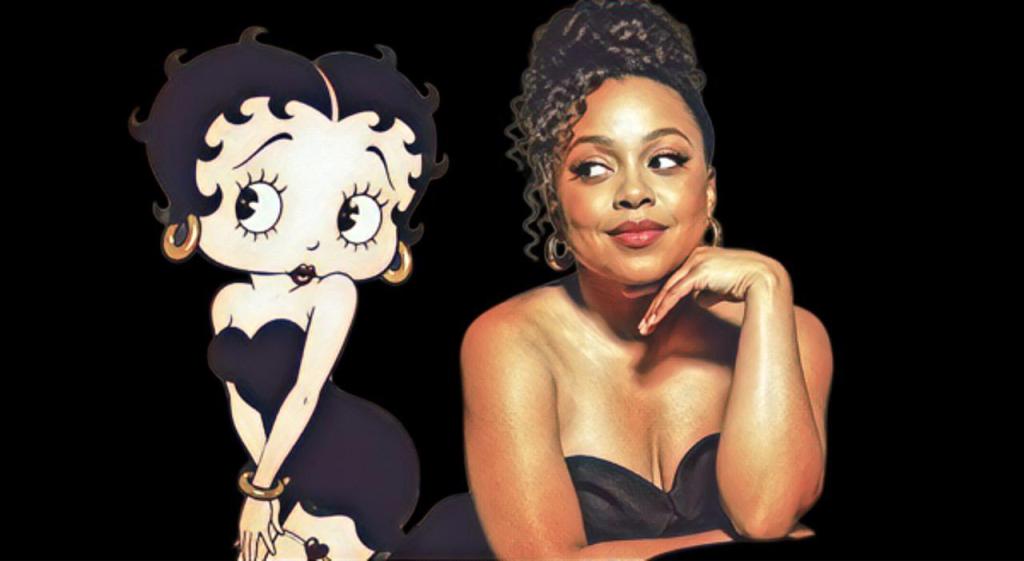
What makes the project especially interesting is that the film itself seems determined to avoid the most predictable route. Instead of merely turning Betty into the lead of a nostalgic adventure, the story intends to explore the relationship between creator and creation, between art and commercial exploitation, between public identity and autonomy. In other words, precisely the themes that have surrounded Betty Boop since the 1930s.
In the end, there is something almost poetic about the idea of Quinta Brunson taking on this role in 2026.
Because Betty Boop was born during a period of profound cultural transformation in the United States. And Quinta has also become a symbol of an important shift within contemporary American television, marked by the possibility of women leading popular narratives without sacrificing intelligence, subtlety, or authorship.
It is still too early to know whether the film will work.
But it is difficult to deny that this choice makes perfect sense.
Descubra mais sobre
Assine para receber nossas notícias mais recentes por e-mail.

