
The title of Hacks’ penultimate episode comes with a trick: “The Garden” is not really about Madison Square Garden. Or rather, it is about everything the Garden represents to Deborah Vance. The ultimate validation after decades of being treated as disposable by an industry that has always preferred older men and younger women. Which is exactly why the fantasy must be dismantled piece by piece.
We return to Deborah making her public comeback on The Breakfast Club after the forced silence imposed by the late-night scandal finally comes to an end. She is electric, performative, thrilled to regain control of her own narrative — especially after the Madison Square Garden show sold out in just ten minutes.
Of course, all of it masks anxiety through grandiosity. The closer Deborah gets to real vulnerability, the funnier and more aggressive she becomes. Her preparation for the show feels less like a stand-up rehearsal and more like an Olympic athlete spiraling toward a silent collapse. Jean Smart plays all of this brilliantly because Deborah never verbalizes fear. Fear reveals itself in smaller excesses: the obsession with control, the inability to sleep, the compulsive need to keep moving. Her real terror is that the audience may realize she can no longer sustain her own legend.
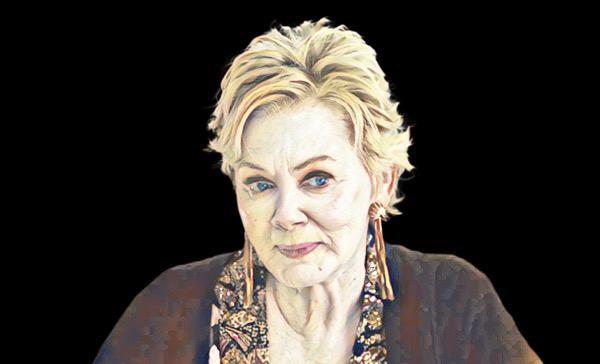
That is why it feels so ironic that Marty becomes her emotional sedative. Deborah calls him in the middle of the night, almost like someone looking for human anesthesia. Their relationship remains one of the most unexpectedly tender parts of the series because it works less as romance and more as mutual recognition between two people aging inside systems that discard older people without hesitation.
She witnesses the moment Marty is fired by the “computer boys” in a scene that blends absurdity with melancholy. The important detail is not simply the firing itself, but how instantly Deborah understands the humiliation because she has lived through it before. When Marty complains about ageism, Deborah practically summarizes the entire dynamic of the series by sighing that he simply “arrived late to the club.” As usual, men suffer the consequences too, just much later.
Meanwhile, Ava finds herself in a storyline that initially feels separate, but clearly sets up the true emotional ending of the series. We finally see the attempted reboot of Who’s Making Dinner?, which fails because the executives find the pitch too generic. It lacks something “personal.” And that is when Ava slowly realizes that Deborah has become the raw material of her own creative life.
Even the smallest moments — arguments about minibars, habits, age, and coexistence — make Ava realize that the differences that once created war between them have now become a source of intimacy.
She realizes she has spent years living inside an emotional sitcom with Deborah Vance without fully noticing it. Maybe that is the season’s quietest revelation: Deborah is no longer simply Ava’s boss, mentor, or walking trauma. She has become her emotional soulmate. And finally, Ava finds the story she can actually sell.
But on the night of Madison Square Garden, everything collapses.
The empty hallway. The silence inside the arena. Deborah asks where the audience is while Ava looks close to tears before leading her onto the stage. The unimaginable has happened: Bob Lipka is sitting alone inside Madison Square Garden. He bought every ticket.
The scene is deeply humiliating because this is not just professional sabotage. It is a literal attempt to erase Deborah Vance from public existence. Bob wants her to perform in front of an empty stage. For him, destroying Deborah and silencing her has become a goal worth using every available resource to achieve.
Even working in television myself, I am grateful I have never encountered a Bob Lipka. But he represents so many male executives that the type becomes instantly recognizable — and Deborah’s pain becomes impossible not to understand.

After destroying her Madison Square Garden dream, he insists he will continue trying to silence her forever.
The show’s response becomes even more fantastical than selling out MSG. In the middle of a chaotic improvised operation, Deborah decides to stage a free show in Central Park. In three days.
Jimmy spirals while trying to secure permits through the Parks Department. Kayla insists her camp friends “run New York.” Damien attempts to save the stage infrastructure. It all works because Hacks understands that the entertainment industry chaos is usually professionalism barely holding itself together — even if the logic here bends slightly in favor of giving Deborah an almost mythic triumph.
And closing yet another emotional arc, Deborah and Marty finally seem to meet each other in the same emotional space. She invites him to manage the Diva casino. It is a partnership that had to survive years of emotional highs and lows before finally feeling balanced.
Speaking of journeys, Deborah also spends the episode publicly apologizing to former enemies while promoting the new show, earning unexpected allies along the way. By the end, 30,000 people filled Central Park, breaking a stand-up attendance record.
But perhaps the most important thing is something else entirely: for the first time, Deborah appears surrounded by people she genuinely trusts — and, even more importantly, people she is finally willing to listen to.
Her legacy finally seems secure.
But there is still one episode left before goodbye. And Hacks has always known that its real conflict was never professional.
It was emotional.
Descubra mais sobre
Assine para receber nossas notícias mais recentes por e-mail.

