
Television spent decades turning young people into protagonists of the end of the world. From Buffy to Stranger Things, and through almost the entire emotional logic of contemporary pop culture, there has always been a narrative obsession with youth as the emotional center of human experience. Teenagers feel more. Suffer more. Save more. Even monsters seem to choose them first.
That is why there is something deeply interesting about the inversion proposed by The Boroughs, the new Netflix series produced by the Duffer Brothers. Not only because it places characters over 70 at the center of the narrative, but because it does so without the condescension usually reserved for old age. It is still rare to see elderly characters occupying the roles of heroes, investigators, or survivors without being treated as fragile, “adorable,” or merely nostalgic caricatures.
And perhaps that is precisely where the series hides its real strength.
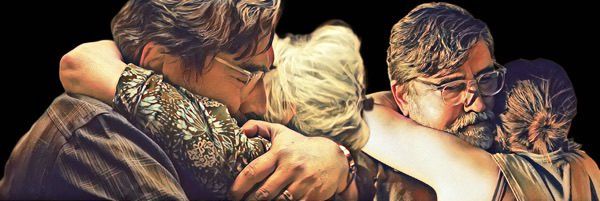
Because beneath the surface of a monster story — a kind of vampires, mysterious creatures, forgotten people being manipulated or exploited in the name of “eternal life” — lies the feeling that The Boroughs is really about something much larger: the silent abandonment of old age in a society obsessed with youth.
The premise follows elderly residents living in an apparently peaceful community until supernatural forces begin to emerge. But the important — and cruel — detail of the story may lie precisely in who these creatures choose to target: forgotten, invisible people. People who the contemporary world had already pushed to the margins long before the threat appeared, and, more than that, whose credibility is frequently questioned because of memory lapses or even Alzheimer’s disease.
The horror, then, stops being merely supernatural and becomes a finger pointed directly at all of us.
The series seems to touch on a deeply human contradiction: we spend our entire lives trying to mature emotionally while the body moves inevitably toward deterioration. Psychological time and physical time rarely evolve together, and the discomfort produced by that imbalance is both timeless and universal: aging has never been seen as something desirable.
The famous phrase attributed to George Bernard Shaw — “youth is wasted on the young” — continues to resonate across generations precisely because of the cruel irony inside it. By the time we finally accumulate enough experience to understand our contradictions, traumas, regrets, and conflicting desires, physical youth has already begun to disappear.
Carl Jung came very close to this perception when he developed the concept of individuation: the process of integrating the psyche, in which the individual begins to recognize contradictory parts of themselves, including trauma, repression, and what he called the shadow. For Jung, this process often only begins to become possible during the second half of life because it depends on accumulated experience. Part of psychological maturity can only emerge after lived experience, when a person finally becomes capable of confronting their own pain and inconsistencies without the performative urgency of youth.
And yet it is precisely that fleeting, momentary youth that we continue chasing.
Perhaps because the body matures at a cruelly different rhythm from the mind. The body “wears out” through use exactly when the psyche begins to grow more complex. Emotional maturity arrives at the same moment society begins valuing that person less. It is almost as if we become more complete precisely when the world decides to stop looking at us.
That makes fiction’s recurring obsession with eternal life even more symbolic. Vampires, artificial rejuvenation, preserved bodies, transferred consciousness. Eternity rarely means simply continuing to live. It means recovering youth. Recovering physical vitality. Recovering desire. Recovering time. As if living forever only becomes acceptable if the body remains young.
The Boroughs seem to play directly with this idea. The antagonist even talks about the concept of “the best is yet to come” and how the phrase sounds almost wrong for those characters because, at a certain stage of life, looking forward no longer necessarily produces hope. The gaze inevitably turns backward instead. Toward the people who died. The mistakes. Lost youth. Everything that will never return. And perhaps that is exactly what separates the series from other contemporary horror stories.
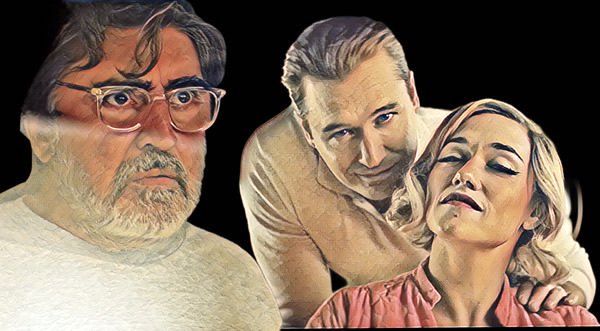
Much like Get Out initially appeared to be merely a psychological thriller before revealing a much deeper metaphor about racism, appropriation, and structural violence, The Boroughs gives signs that the supernatural may function only as a surface layer for something far more painful underneath: invisibility, aging, and society’s fear of physical decline. The energy of forgotten elderly people — ignored and expected to die soon anyway — becomes the perfect raw material for a couple that has managed to escape decades of illness and wrinkles by taking from those whom society had already expected to disappear. A perfect crime. A crime so ordinary and so real that fantasy only makes it sharper. Better still, The Boroughs is never didactic or judgmental about it: it simply is what it is.
And the truth is that old age is often portrayed in fiction as a suspended space. Silent condominiums, distant neighborhoods, institutions isolated from the city, places where time itself seems to slow almost to a halt. Settings that resemble ghost stories long before any creature appears. Because aging still profoundly unsettles contemporary culture.
Not only because of death, but because it dismantles two very specific modern fantasies: infinite productivity and total control over the body. We live in a society constantly talking about longevity, self-care, and healthy aging, but there is an implicit condition underneath all of it. The acceptable elderly person is the one who continues performing youthfulness. Anyone who ages “for real” quickly becomes uncomfortable for the collective imagination.

Perhaps that is why Cocoon remains one of the most beautiful metaphors ever created about aging. The film, which celebrated its 40th anniversary in 2025, used science fiction to talk about something extremely simple and profoundly human: elderly people still want to live fully. They still want to touch, love, feel pleasure, desire the world, and be desired by it.
The alien pool in Cocoon never merely offered physical rejuvenation. It restored something emotionally deeper: the feeling of becoming fully alive again. And The Boroughs seems to emerge from a similar — and inverted — discomfort.
There is even a character played by one of my favorite actors, David O’Hare, dealing directly with the inevitability of death after already enduring profound losses. From what little has been revealed so far, there is something especially painful about him: not wanting to die, but also not being able to bear watching others die first. At a certain stage of life, survival also means witnessing the gradual disappearance of the people who sustained your emotional memory of the world.
And here lies a particularly sensitive equation: if youth fears the future, old age often fears the emptying of the past, but it is something we only truly understand once we arrive there ourselves. Perhaps that is why the real horror of The Boroughs is not the monsters. Perhaps it lies in the realization that growing old today means continuing to exist in a world that slowly learns how to stop seeing you.
Descubra mais sobre
Assine para receber nossas notícias mais recentes por e-mail.

