
As published on Blog do Amaury Jr./Splash UOL
Few recent franchises have managed to reinvent alternate history with the consistency of For All Mankind. Created by Ronald D. Moore, Matt Wolpert, and Ben Nedivi, the Apple TV series began with a seemingly simple question — “What if the Soviet Union had won the space race?” — and transformed it into one of the most sophisticated science fiction universes of recent years, blending politics, technology, Cold War tensions, and human drama across decades.
Now, Star City, premiering on May 29 on the platform, expands that universe by doing something even riskier: completely reversing the narrative perspective. Instead of following the Americans, as the original series did, the new production dives into the Soviet side of the space race, following scientists, cosmonauts, KGB agents, and families living under a regime defined by constant surveillance, ideological paranoia, and the absence of individual freedom.
The result feels much closer to a psychological political thriller than to traditional science fiction. The series understands that, in that context, space was never simply about technological conquest. It was propaganda, a power struggle, and a demonstration of ideological supremacy during the Cold War.
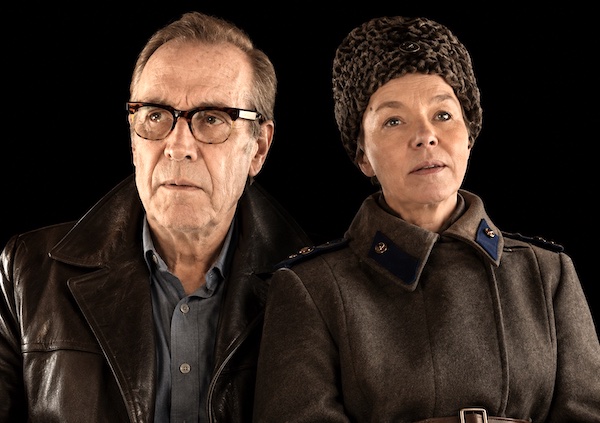
During the conversation with Blog do Amaury Jr., showrunners Matt Wolpert and Ben Nedivi explained what it was like revisiting that historical period from a completely different perspective and why Star City works almost as a human mirror to For All Mankind. They also discussed the construction of young Irina Morozova, a character audiences already knew in her adult version from the original series, and the idea of showing how seemingly cold and intimidating political figures are shaped by traumatic experiences and oppressive systems.
Alongside them, Rhys Ifans — recently known for playing Otto Hightower in House of the Dragon, in addition to films such as Notting Hill and The Amazing Spider-Man — spoke about portraying a man divided between national pride, melancholy, and a longing for freedom. His character in Star City lives with the paradox of helping send others into space while understanding that he himself may never personally experience the very thing that symbolizes freedom to him.
The conversation also evolved into a reflection on political paranoia, Soviet identity, the dangers of extreme nationalism, and the fact that the space race has always been deeply connected to the need to prove which political system appeared more powerful to the world.
You had already shifted historical perspective in For All Mankind with that small “what if?”. Now you’re doing it again, but this time through the Soviet perspective. What is it like building a story this way?
Matt Wolpert:
It’s always fascinating trying to put yourself in someone else’s shoes and look at the world from the other side. That’s how we worked on For All Mankind, telling the story from the American perspective.
But we always found ourselves drawn to the people who were “the others” in that narrative. The characters Americans saw as enemies, the ones they believed they needed to defeat.
The more we learned about the Soviet space program and the people working within it, the more fascinated we became.
And honestly, we didn’t deeply know Soviet culture before beginning this process. Learning about the everyday struggles of living under that authoritarian regime was incredibly interesting, but it also reminded us of the shared humanity between people everywhere in the world, regardless of the political system they live under.
Rhys, your character is simultaneously a prisoner and a hero. How does he navigate that? What feels real to him?
Rhys Ifans:
What is real to him, sadly and strangely enough, is precisely a place he may never actually visit: space.
Space represents a place where dogma and ideology cease to exist. There’s a very beautiful tragedy in that for an actor to play. He sends these brave young people somewhere he knows he himself may never reach.
I imagine that, as a child, looking at the Moon represented freedom to him. Especially coming from the traumatic experience of the gulag. So there’s always this melancholy inside the character. Space symbolizes exactly what the system surrounding him refuses to allow.
There’s also something very powerful about this idea of not even allowing people to have their own names.
Rhys Ifans:
Exactly. He’s been reduced to a piece of engineering, a mechanical component, instead of a human being.
And it’s interesting because you’re also playing another extremely political character in House of the Dragon. (Matt and Ben laugh and agree with me while Rhys adjusts himself in his chair.) They are very different characters, but both are trapped inside systems of power.
Rhys Ifans:
(Laughing, but defending the Chief Designer.) They are completely different as people! But yes, the circumstances they live in may be similar.
There’s enormous importance placed on “being first” in this space race. How much emotional weight does that place on these characters?
Rhys Ifans:
I think that, for adventurers, the idea of being first is what initially takes them there. But once they arrive, they realize there’s something much bigger than themselves.
Ben Nedivi:
I loved that.
Because “being first” comes far more from a geopolitical logic than a human one. The people actually doing the work — the engineers, astronauts, and scientists — when they look back at Earth from up there, they realize how ridiculous the idea of who arrived first really is.
It belongs to nobody and everybody at the same time.
But unfortunately, the space program has always been tied to competition. It was an ideological battle. The logic was: “If we got there first, it proves our system is superior.”
That’s what the Cold War represented for decades.
And it’s interesting to realize how that still exists today. Just look at the renewed global interest in the space race as other countries begin competing for technological power.
There’s something deeply cynical about that, but also paradoxically human. Just as wars end up accelerating technological advances, the space race also produced extraordinary discoveries, even though it was born out of conflict.
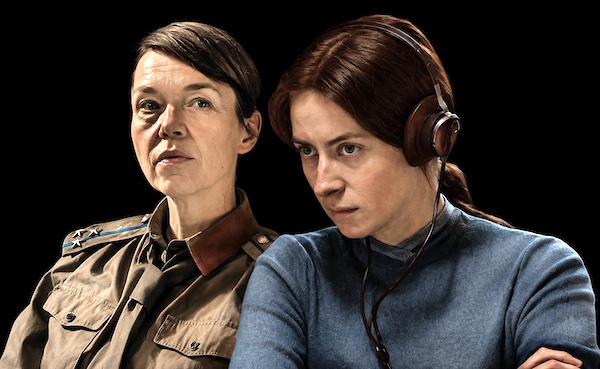
There’s also a war within the war itself. As if human lives become secondary to ideology. Rhys, your character, is trying to fulfill a dream while surviving inside the system. Does he believe in that system?
Rhys Ifans:
I think he’s a proud Russian. But not a proud Soviet. There’s a difference.
That’s fascinating because, when we learned about the Soviet Union in school, everything seemed like one giant homogeneous block. The series shows there were many different identities inside that structure. And for you as writers, how difficult was it to go backwards and reconstruct characters we already knew as older people in For All Mankind?
Matt Wolpert:
Honestly, it freed our creativity in a certain way.
It gave us the chance to do something different and move away a little from the patterns of the original series in order to dive into something completely new.
And that was wonderful.
Ben Nedivi:
As a writer — or any artist — the worst thing is becoming comfortable.
We wanted a challenge, and this project was exactly that: taking the DNA of For All Mankind while simultaneously creating a completely different series.
And it helped that the setting, the tone, the people, and the world were all so different. Because if this had simply been another season of For All Mankind, we probably wouldn’t have been interested.
The challenge itself was what made it so exciting.
Matt Wolpert:
And the character of Irina Morozova is perhaps the best example of the potential these two shows have when speaking to one another.
In For All Mankind, we met an older woman who was powerful and intimidating. Now we’re watching the beginning of her life, the start of that transformation.
And that’s deeply human, because nobody is born cold or cruel. People are shaped by the experiences they go through.
Yes! I actually became annoyed with myself for rooting for Irina at several moments.
Ben Nedivi:
(Celebrating.) That’s exactly the reaction we were hoping for.
(Laughs.)
There’s also something very current about revisiting this historical period now. As if the series almost functions as a warning.
Ben Nedivi:
There’s that famous phrase: “Those who forget the past are condemned to repeat it.”
As writers, we need to be careful not to turn that into a sermon. Our goal is to tell a good story with good characters.
But obviously, it’s impossible to ignore certain connections with the present.
What we’re experiencing today in the United States and in many parts of the world is frightening in many ways, but perhaps not surprising. I think the problem with human beings is that we are inherently optimistic and often believe certain cycles won’t happen again.
But history can repeat itself.
At the same time, I believe the series is also about resilience. Even during the darkest periods and under the most oppressive systems, people still manage to find ways to preserve their humanity.
And that may be the central story of Star City.
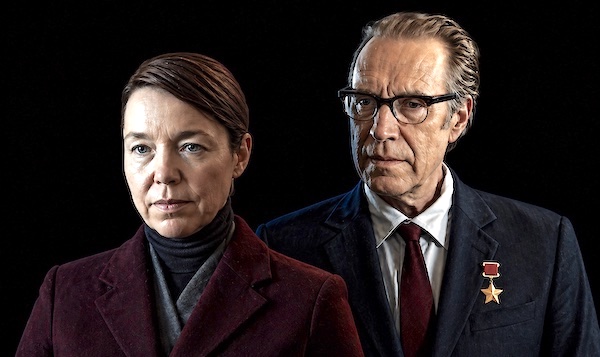
Rhys, to finish: what drew you to this project?
Rhys Ifans:
Actually, Ben just answered that.
What attracted me was precisely this idea of resilient characters, people trying to preserve some sense of morality and humanity even while living inside extremely oppressive systems.
Even when they make terrible choices, they still know, deep down, what it means to be a good person.
They recognize that within themselves.
And I think that’s very beautiful.
Descubra mais sobre
Assine para receber nossas notícias mais recentes por e-mail.

