
The deliberate anguish of Half Man was never really hidden in its plot twists. Anyone who watches as many television series as I do eventually learns to recognize the clues, the possibilities, and the narrative paths ahead, even when writers use a non-linear structure to misdirect the audience. It was therefore not difficult to suspect that Ruben’s past concealed sexual abuse, that Niall would turn out to be Baird’s biological father, and that the story would eventually force both men to confront the truth about Niall’s sexuality. Of all the questions raised throughout the season, however, the reason they would ultimately confront one another to the point of death on Niall’s wedding day was the mystery the show genuinely wanted us to solve, and the finale provides an answer that is both clear and incomplete.
The revelation that Baird is Niall’s biological son becomes the trigger for the brutal fight in the barn that leads to the deaths of both Ruben and Niall. Let’s move straight into spoiler territory. Yet the true source of Ruben’s rage and violence had been hinted at from the very first episode, when we are led to believe we are simply watching a remorseful father abandoned by his wife while a frightened boy hides nearby. There was something else in that scene, something a less attentive viewer might have forgotten as the season unfolded. I did not. Even so, the revelation was different from what I expected. It is there that we find the explanation for why Ruben has spent his entire life feeling like a “half man.”
In typical Richard Gadd fashion, the real mystery of the series was never hidden inside that barn but buried in the past. The revelation emerges during an intense conversation that transforms the finale into a meditation on two lives shaped by shame, inadequacy, and the persistent feeling of failing to live up to what the world expects a man to be.
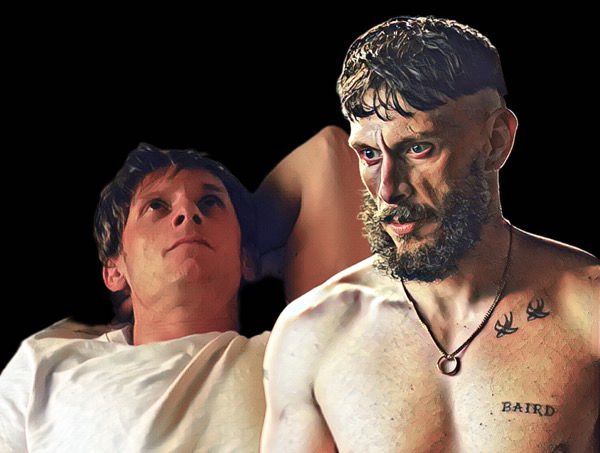
That is why comparisons to Baby Reindeer are inevitable but also limited. The Netflix series was an attempt to organize a personal experience and confront specific traumas. Half Man is more ambitious. It uses a fictional story to explore something much larger and far more difficult to resolve: the contemporary crisis of masculinity.
Over the last several years, documentaries, books, academic studies, podcasts, and television series have all tried to understand phenomena such as the manosphere, online male radicalization, and the rise of narratives that promise to restore a supposedly lost sense of male identity. What is striking is that, despite the enormous amount of analysis devoted to the subject, we remain far better at identifying the problem than solving it. We know the crisis exists. We know it produces isolation, resentment, violence, and radicalization. We know it affects young men in particular. What remains less clear is why so many men continue to find these narratives more emotionally compelling than vulnerability, self-awareness, or the difficult work of confronting their own suffering.
Half Man offers no solution to that dilemma. Perhaps because there is none. What the series does instead is something equally valuable: it shows how that emotional void can be constructed over the course of an entire lifetime.
At first glance, Ruben and Niall seem profoundly different. Ruben transforms pain into aggression. Niall transforms pain into escape and self-destruction. As the narrative unfolds, however, it becomes increasingly clear that both men are struggling with the same fundamental belief: the conviction that there is something wrong with them.
The sexual abuse Ruben suffered at the hands of his father during childhood creates a wound that never fully heals. Not because trauma itself determines his destiny, but because he internalizes the belief that it somehow made him less of a man. The violence we witness throughout the series becomes a desperate form of compensation. Ruben attacks, intimidates, dominates, and explodes because he is constantly trying to prove something to himself. He is trying to reclaim a masculinity he believes was taken from him and that he never learned how to rebuild.
Niall follows a different path but arrives at the same destination. For decades, he represses his sexuality, attempts to meet other people’s expectations, and lives as someone permanently divided between what he desires and what he believes he should desire. His story is marked by destructive relationships, compulsive sex, drugs, and a long series of failed attempts to fit into a model of life that never truly belonged to him.
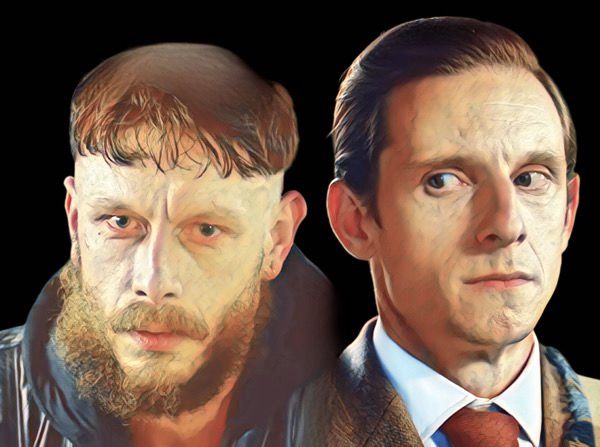
What Richard Gadd does so brilliantly is reveal that both men carry the same belief, even though it emerges from entirely different experiences. Both feel incomplete. Both believe they are missing something essential. Both spend their lives trying to compensate for that absence. Perhaps that is precisely why they understand each other so deeply and why, for years, they find in one another the illusion of a completeness neither can achieve alone.
Half Man also speaks to all the men who grew up believing that vulnerability is weakness, that sexual confusion represents failure, that trauma is synonymous with shame, or that masculinity depends upon a permanent performance of strength, control, and self-sufficiency.
It is impossible not to think of Freud at this point in the story. Not only because psychoanalysis concerns itself with the lasting effects of trauma, but because both Ruben and Niall seem to organize their lives around an unbearable gap between who they are and who they believe they should be. Much of the psychoanalytic tradition revolves around precisely this conflict between desire and ideal, between what a person truly is and what they believe they must become to earn love, recognition, and belonging.
At the same time, the series engages with more recent conversations about masculinity. The notion of a hegemonic masculinity—an ideal that remains unattainable for most men- runs through nearly every episode. The protagonists’ suffering emerges not only from what happened to them but also from how they interpret those experiences. The abuse did not make Ruben less of a man. Niall’s sexuality did not make him less of a man. The tragedy lies in the fact that both believe exactly that.
Richard Gadd constructs their relationship as a tragedy. Ruben and Niall function as distorted mirrors. Each believes he sees in the other what he himself lacks. Ruben sees a freedom he could never attain. Niall sees a confidence he never possessed. Together, they feel momentarily whole. Apart, they are forced to confront their insecurities once again.
The result is a relationship that resists any single definition. They are brothers, but that is not enough. They are friends, but that is not enough either. They are rivals, accomplices, enemies, and confidants. At times, they appear to love one another deeply. At others, they seem determined to destroy each other. The strength of the series lies in its understanding that human emotions rarely organize themselves into neat and coherent categories.
It is within this extraordinarily complex territory that Jamie Bell delivers remarkable work.
Much has been said about Richard Gadd, and rightly so. He remains the primary creative force behind the series. But Bell is given the more difficult task. Niall can never be reduced to a single explanation. He must be sympathetic and frustrating, vulnerable and selfish, courageous and cowardly at the same time. Bell finds an extraordinary balance between these contradictions and creates a profoundly human character, someone who frequently sees the right path before him and still chooses another. He accomplishes all this without turning Niall into either a victim or a villain, sustaining a character who makes some of the worst possible decisions while never losing his humanity.
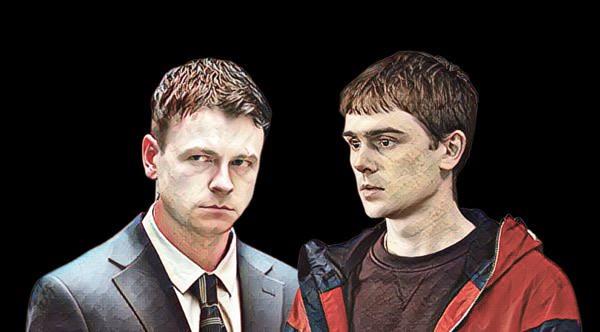
His performance becomes even more powerful in the finale, particularly during the extended prison conversation between Niall and Ruben. For much of the series, viewers expect Niall’s sexuality to be the great secret at the heart of the narrative. When it is finally revealed, however, Richard Gadd completely subverts that expectation. The revelation itself is not what matters most. What matters is Ruben’s reaction. Rather than rejecting him, he confronts him with a far more painful truth: that he has spent his entire life trying to be someone he was not.
The most interesting aspect of this moment is that what Niall believed to be his greatest secret ultimately is not what destroys their relationship. For years, he has lived in terror of being rejected for who he is, only to discover that the fatal blow will come from somewhere else entirely.
Ruben always knew the truth, and for a few brief moments, the series suggests the possibility of redemption. But when Niall admits that he slept with Mona and that Baird is his biological son, the revelation strikes Ruben at his most vulnerable point. The issue is not simply betrayal. The issue is that the revelation destroys the narrative Ruben has built about himself for years. The man who spent his life trying to recover a sense of power discovers that the son he believed was his never truly was. The friend he thought he knew better than anyone becomes responsible for the greatest humiliation of all.
The confrontation in the barn ceases to be merely a scene of violence. It becomes the inevitable collapse of decades of resentment, emotional dependence, love, envy, guilt, and suffering. The fight is brutal because it is not being fought only between two individuals. It is being fought between everything they represent to one another.
When Ruben finally strangles Niall to death while repeating “I love you, brother,” Richard Gadd delivers one of the most disturbing images television has produced in recent years. Not because there is a contradiction there, but because there is not. Love and destruction have coexisted within their relationship since the very first episode. The murder simply pushes that logic to its ultimate conclusion.
What makes the ending so powerful, however, is not Niall’s death but the question that remains unanswered: how does Ruben die? Richard Gadd concludes the series in much the same way he concluded Baby Reindeer, refusing definitive explanations. There is no comforting resolution. There is no moral lesson. There is no conclusion capable of neatly organizing everything we have just witnessed.
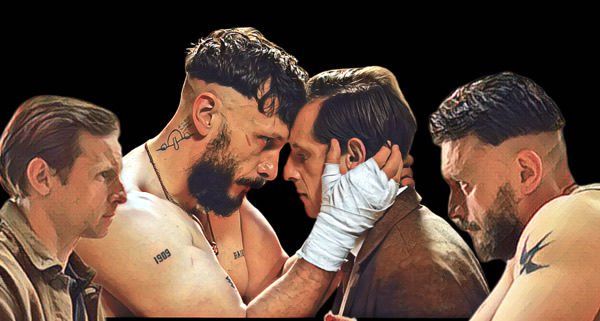
There is only Ruben staring at Niall’s body and the realization that not even his brother’s death can relieve the feeling that has haunted him his entire life: the sense of never having been whole. The real enemy was never standing in front of him. It was always inside him.
Perhaps that is precisely why Half Man lingers long after the credits roll. Not because it is a story about male violence, but because it is a story about men who never learned how to exist without it. Not because it is a story about sexuality or abuse, although it deals deeply with both subjects, but because it understands something more fundamental: the suffering produced when a person spends an entire lifetime trying to live up to an impossible idea of themselves.
Ultimately, the tragedy of Ruben and Niall lies not only in the choices they made. It lies in the fact that both spent decades believing they were less than they could have been, when perhaps the first step toward escaping that prison would have been understanding that neither of them was ever half a man at all.
Descubra mais sobre
Assine para receber nossas notícias mais recentes por e-mail.

