
If you follow my column here in Caderno B+, you have already had the opportunity to read about Marilyn Monroe more than once. From documentaries to biographies and lists, I am a fan. And as she would have turned 100 on June 1, 2026, I return to her story with pleasure.
Perhaps it is significant that, a century after her birth, it still seems impossible to talk about her solely as an actress. Her career lasted only 17 years, and yet few figures of the twentieth century remain as present in the collective imagination as Marilyn.
For that reason, the actress’s centennial is being celebrated almost as a global cultural event. In London, Los Angeles, São Paulo, and many other cities, exhibitions, retrospectives, and tributes seek to revisit a question that has followed Marilyn since the 1950s: Who was she really?
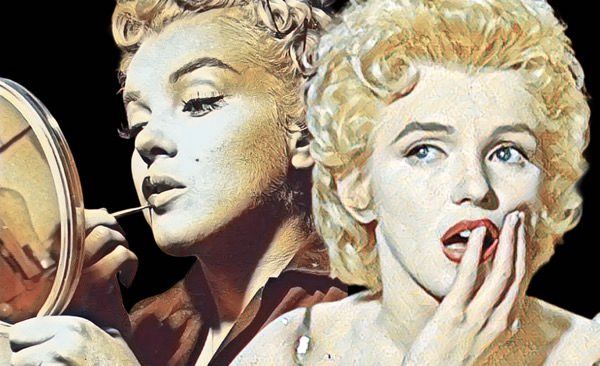
The celebrations have also reached Brazil. In São Paulo, MIS is presenting Marilyn Monroe Lost Shots, featuring photographs taken by Allan Grant just days before her death. In Rio de Janeiro, Estação NET Gávea is hosting a retrospective of some of the most important films of her career.
At London’s National Portrait Gallery, the exhibition Marilyn Monroe: A Portrait brings together works by photographers such as Richard Avedon, Cecil Beaton, Eve Arnold, Milton Greene, Philippe Halsman, and Sam Shaw. The goal is not merely to display famous faces or iconic images, but to investigate the construction of a public persona that continues to fascinate entire generations.
But perhaps the most revealing tribute is taking place in Los Angeles. At the Academy Museum, the exhibition Marilyn Monroe: Hollywood Icon seeks to dismantle an interpretation that followed the actress for decades: that of a passive woman, a victim of the industry and a prisoner of her own beauty.
On display are costumes, contracts, annotated scripts, correspondence, personal belongings, and historic pieces such as the pink dress from Gentlemen Prefer Blondes and the famous white dress from The Seven Year Itch. What emerges from this material is a figure far more interesting than the “dumb blonde” caricature immortalized by popular culture.
The exhibition presents a woman who challenged studio executives, demanded approval over photo shoots, participated in decisions about costumes, and became one of the first actresses to establish her own production company in Hollywood. She was an artist who understood not only her own talent, but also the economic and symbolic value of the image she helped create.
Perhaps that is one of the reasons Marilyn continues to inspire interest far beyond the world of cinema.
She lived in an era that lacked the contemporary vocabulary to discuss female autonomy, image-making, mental health, or objectification. Even so, she confronted all of those issues. She spoke openly about therapy when it was still considered taboo. She challenged powerful executives. She defended choices that could have destroyed careers in 1950s Hollywood. When a scandal emerged involving nude photographs taken years before she became famous, she refused to deny her involvement despite pressure from the studio. “I needed the money,” she replied. “I’m not ashamed of it.”
The statement remains strikingly modern.
Over the years, the myth came to overshadow the person. The narrative of the tragic woman often eclipses that of the intelligent professional. The victim overshadowed the strategist. The fantasy erased the creator. Perhaps that is why the centennial is so fascinating.
These exhibitions are not merely an attempt to celebrate Marilyn Monroe. They are attempting to recover parts of her that were buried beneath decades of collective projections. The woman emerging from these tributes is not merely the platinum blonde frozen in famous photographs. She is someone who deeply understood how Hollywood worked and learned how to negotiate her place within a system that rarely offered women power. And yet none of these initiatives seems able to fully solve the mystery, because Marilyn continues to occupy a singular place in popular culture, and the world still cannot let her go.

One hundred years after her birth, we continue to look at Marilyn Monroe the same way the camera seemed to look at her: unable to look away for very long.
And perhaps that is because, at heart, she was never just a movie star. Marilyn Monroe became Hollywood’s fantasy about itself—and one of the great mysteries that the twentieth century left for the twenty-first century to try to understand.
Descubra mais sobre
Assine para receber nossas notícias mais recentes por e-mail.


1 comentário Adicione o seu