
Over the past few days, the internet seems to have devoted all its energy to debating, ad nauseam, the successes, failures, and surprises of Euphoria’s farewell season, a final chapter that arrives without two of its most famous stars, Zendaya and Jacob Elordi. The phenomenon is understandable. Few contemporary productions are capable of attracting so much attention, generating such immediate reactions, and producing so many images designed to circulate endlessly across social media. Although there has been praise for the elegant conclusion of Hacks, a series that brings its story to a genuinely satisfying emotional close, very little attention has been paid to what may be the most disturbing television finale of 2026: Half Man, Richard Gadd’s latest creation.
The difference may lie precisely in the fact that Half Man offers none of the comforts that made Euphoria and Hacks such different cultural phenomena. It is not visually dazzling in the way Sam Levinson’s series is, nor does it find refuge in hope or affection as Deborah and Ava’s story often does. Richard Gadd constructs a deliberately uncomfortable narrative, one that is at times confusing, frequently fragmented, and almost always challenging to follow. Its non-linear structure constantly forces viewers to question what happened, when it happened, and even whether it happened at all. For much of the season, it feels less like a conventional narrative and more like a succession of memories, traumas, and fantasies layered on top of one another without regard for the traditional logic of time.
But perhaps that confusion is precisely the point.
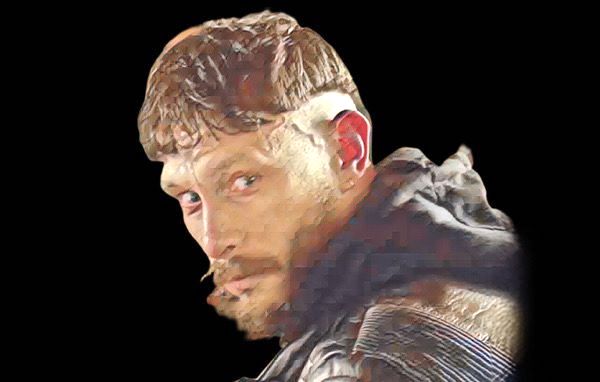
After Baby Reindeer, it would have been easy to imagine Richard Gadd continuing to explore the boundaries between personal experience and fiction. That is exactly what he does, albeit in a different way. If his Netflix series transformed real-life experiences into television drama, Half Man uses fiction to investigate an equally painful question: why do so many men seem to live as though they are only half of themselves? The question may sound abstract, but it runs through every episode and takes shape through the relationship between Ruben and Niall, two characters who initially appear completely different but gradually reveal themselves to be different expressions of the same wound.
At first glance, Ruben seems to represent everything Niall believes a man should be. He is popular with women, sexually confident, aggressive when necessary, physically intimidating, and apparently comfortable within traditional codes of masculinity. Even when his violence lands him in prison, there remains around him an aura of power that Niall never possesses. People may fear him, but they see him. Niall, by contrast, spends much of his life hiding who he is, lying both to others and to himself while struggling with desires and feelings he cannot accept.
What is most interesting is that the series never turns Ruben into a model of stability or maturity. When we meet him again as an adult, he has a wife, a job, and the appearance of an organised life, but that stability is largely superficial. The violence is still there. The anger is still there. The trauma is still there. The man who provides for his family is the same man who spent years trying to survive a pain he never fully understood. Marriage, fatherhood, and the role of provider did not heal his wounds; they merely offered a structure within which he could function.
That is why the prison conversation is so devastating. For years, Niall appears to have constructed Ruben as an impossible rival. The man who has the life, the woman, the family, and the identity he lacks. When Ruben reveals the truth about the abuse he suffered at the hands of his father, that image begins to crumble. Suddenly, the seemingly solid masculinity Niall envied is exposed as something built upon a profound wound. Ruben remains the strong man everyone fears, remains someone capable of violence and destruction, but he is also a victim. He remains a husband and a father, but he is also someone whose understanding of intimacy was shattered in childhood. He remains the man who appeared whole, yet admits to feeling only half complete.
As in Baby Reindeer, the heart of the story lies in a subject that remains surrounded by silence. At the centre of Half Man is male sexual abuse, a topic that continues to provoke discomfort even within a culture that has finally begun discussing sexual violence more openly. Violence against women has, thankfully, started to receive the public attention it has always deserved. Sexual violence against men, however, remains trapped beneath additional layers of shame, denial, and misunderstanding, particularly when it occurs during childhood. The very idea that a boy might grow up carrying doubts about what happened to him still provokes defensive reactions in many people.
It is precisely into that territory that Richard Gadd chooses to step.
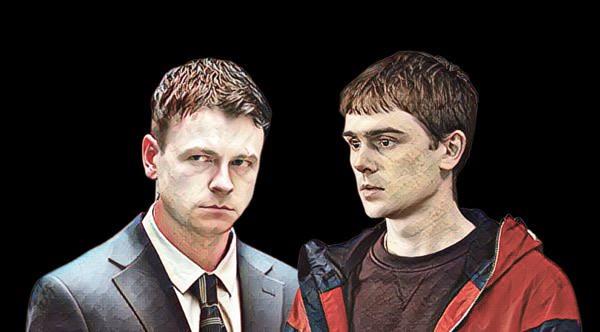
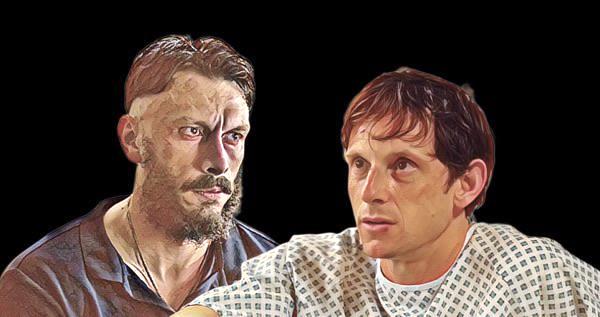
In the final episode, Ruben finally puts into words what has haunted him since childhood. The revelation alone would be devastating. What transforms the scene into one of the most uncomfortable moments on television in recent years is the fact that Richard Gadd refuses to remain within a simplified version of the story. Ruben explains that the abuse made him feel like a “half man,” not because it robbed him of his masculinity, but because it destroyed his ability to distinguish where affection ended and fear began, where intimacy ended, and violence started, and where the desire to be loved became inseparable from trauma.
The conversation then moves into even more delicate territory. Ruben admits that, during some of the episodes of abuse, his body responded physically. While his mind experienced fear, confusion, and suffering, his body sometimes reacted sexually. The revelation does not appear as a confession of desire but as an explanation for a guilt he carried throughout his life. What Ruben describes is the shame of someone who spent years believing that an involuntary physical response might somehow signify consent, participation, or desire, when in reality it simply meant that his body reacted in ways he could not understand.
At that moment, the scene stops being solely about abuse and becomes something much broader: a meditation on humanity’s difficulty in living with contradiction. Trauma specialists have explained for decades that physiological responses do not equal consent, yet culture continues to struggle with this reality. The audience’s discomfort in response to Ruben’s confession mirrors, in many ways, Niall’s own discomfort. Up until that moment, he listens.
When Ruben crosses that final boundary and admits the confusion created by those physical responses, something changes. The most common interpretation is that Niall simply cannot handle the complexity of what he is hearing. There is, however, another, perhaps more interesting, reading. Throughout the series, Niall constructs his identity around rigid categories. Man or not man. Strong or weak. Dominant or dominated. Winner or loser. Ruben’s experience destroys all of those boundaries because it demonstrates that psychological life rarely conforms to such simple classifications.
Perhaps that is precisely why Niall’s reaction is so intense. For years, he seems to have believed himself stronger, freer, and more authentic than Ruben. Inside that prison cell, however, something unexpected happens. The man Niall spent his entire life admiring, envying, and trying to surpass demonstrates a form of emotional courage he himself does not possess. Ruben is capable of looking directly at his wound, admitting his shame, and sustaining a deeply uncomfortable truth about himself. Niall cannot do the same.
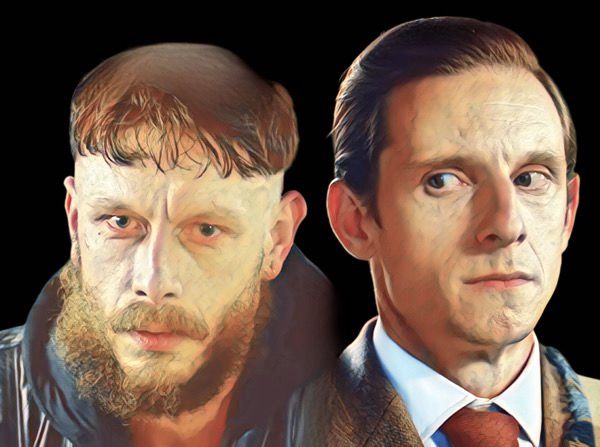
What makes the scene even more tragic is that it takes place only minutes after another revelation that completely changes the way we understand the relationship between the two men.
Throughout the series, Niall lives in fear that Ruben will discover his attraction to men. The fear does not seem irrational. Ruben has always been seen as aggressive, violent, and often openly homophobic. Young Niall spends years hiding his desires, his relationships, and even fundamental parts of his identity because he believes Ruben’s reaction would be devastating. The loss of that friendship would be unbearable.
Then Richard Gadd dismantles that entire construction. When Niall finally admits the truth, Ruben responds that he always knew. More importantly, he says he never cared.
The revelation is every bit as significant as the disclosure of the abuse because it forces viewers to reinterpret decades of suffering. The man Niall spent his entire life fearing may never have existed in the way he imagined. The most destructive homophobia in the story was not inside Ruben. It was inside Niall himself. He was the one who could not accept himself. He was the one who transformed his desires into shame. He was the one who needed to believe he would be rejected because he could not yet imagine the possibility of being accepted.
Within that context, Ruben’s confession about the abuse acquires an even deeper meaning. When he reveals what happened with his father, he is not merely sharing a trauma. He is offering Niall a form of understanding. He is saying that he, too, has lived through confusion between body and identity, between desire and guilt, between what we feel and what we believe we are supposed to feel. When he admits that his body responded during the abuse, Ruben is not diminishing the violence he suffered. He is acknowledging the complexity of human experience. He is saying that sexuality, intimacy, and trauma rarely obey the simple categories we use to organise the world.
Perhaps it is precisely at that moment that Niall feels diminished.
Throughout his life, he has constructed Ruben as the complete man. The virile man. The man desired by women. The husband. The provider. The man who possessed everything he lacked. Inside the prison, however, Ruben demonstrates something Niall cannot attain. He looks directly at his wound without looking away. He admits his shame. He tolerates his contradictions. He tells the truth.
Niall cannot.
From that moment onward, almost like an expression of Freud’s death drive, the revelation about Mona ceases to feel like a confession and begins to function as an attack.
If Ruben has just demonstrated an emotional strength greater than his own, Niall searches for the one place where he still believes he can defeat him. That place is not sexuality. It is infertility.
By revealing that he slept with Mona and was able to give her what Ruben could not, Niall strikes precisely at the part of Ruben’s masculinity that he was never able to repair. By choosing infertility as his weapon, he attacks the one dimension of traditional masculinity in which Ruben never managed to feel complete. This is not a comment about desire. It is a comment about potency, legacy, fatherhood, and inadequacy. It is a calculated blow aimed at the man who, for the first time, seems greater than he is.
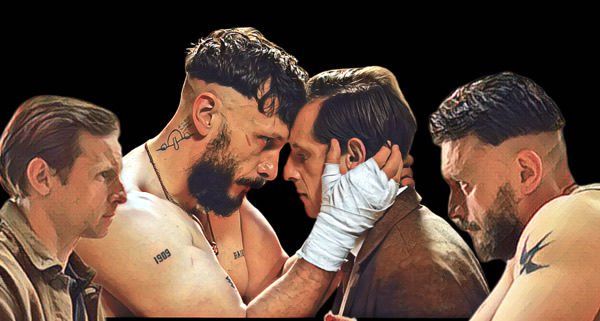
Perhaps that is why the revelation about Mona arrives immediately afterward. The confession does not emerge naturally from the conversation but rather as a desperate attempt to transform intimacy back into competition. For a few minutes, Ruben had stopped competing. He was simply trying to be seen. Niall responds by retreating into the only language he seems to understand: power, rivalry, and conquest.
Ultimately, that may be why Half Man is so difficult to watch. Richard Gadd is not interested in explaining masculinity or offering solutions for it. He is interested in showing what happens when men spend decades trying to survive parts of themselves that they do not understand. Ruben and Niall spend their lives searching in one another for what they believe they lack. One envies freedom. The other envies identity. One fears rejection. The other fears are known. By the time they finally tell the truth, it is already too late.
Ruben kills Niall, but he is also moving toward his own destruction. In the end, Half Man is not the story of one broken man. It is the story of two broken men.
Two halves that never managed to form a whole man.
Descubra mais sobre
Assine para receber nossas notícias mais recentes por e-mail.

