
For decades, Anne Rice readers knew this moment would eventually arrive. Ever since the publication of The Vampire Lestat in 1985, the character embodied everything we associate with great rock stars: charisma, excess, theatricality, narcissism, sensuality, and an almost desperate need to be seen. Long before he ever picked up a guitar, Lestat de Lioncourt behaved like someone permanently living beneath a spotlight. Season 3 of Interview with the Vampire finally turns that idea into reality and accomplishes something that once seemed impossible: it brings a literary character onto a stage as though he were a real musical artist.
Rather than simply adapting Lestat’s rock-star era, AMC has chosen to make it tangible. Instead of merely referencing his musical career or using generic songs as background music, the production created original tracks, released singles on streaming platforms, produced a full album, and placed Sam Reid in front of a live audience. The result is a fascinating experiment in which the boundaries between literature, television, music, and performance begin to dissolve.
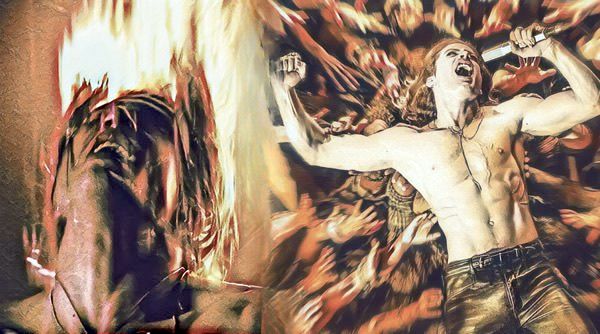
What makes it even more compelling is that none of this is an invention of the series. It was all there in the books. When Anne Rice wrote The Vampire Lestat, she already understood that the character could not remain hidden in the shadows forever. After centuries of being observed by others, Lestat wanted to tell his own story. He wanted to answer Louis’s accusations. He wanted to present his version of events. Above all, he wanted to be heard. Music became the perfect vehicle for that ambition.
The choice makes complete sense because Lestat was never a traditional vampire. While Louis becomes consumed by philosophical questions of guilt, morality, and suffering, Lestat has always wanted to live intensely. He wants to experience everything, provoke everything, and feel everything. He wants to be loved and hated in equal measure. He wants to turn his very existence into a spectacle. The stage is not a personality change. It is simply the natural consequence of who he has always been.
There is also an important historical context. When Rice wrote The Vampire Lestat, the 1980s were dominated by artists who transformed their lives into public performances. David Bowie, Prince, Freddie Mercury, Lou Reed, and countless others demonstrated that music could be as theatrical as any stage production. Lestat fits naturally into that world. Beautiful, provocative, and emotionally explosive, he feels less like a conventional literary character and more like someone destined to exist somewhere between glamour and decay.
The adaptation understands this perfectly. Rather than turning Lestat into a generic contemporary musician, it embraces the influences that shaped him. The result blends glam rock, alternative rock, gothic theatricality, and the energy of artists for whom identity and performance were inseparable. Echoes of Bowie, Billy Idol, and Iggy Pop can be heard throughout the season’s music.
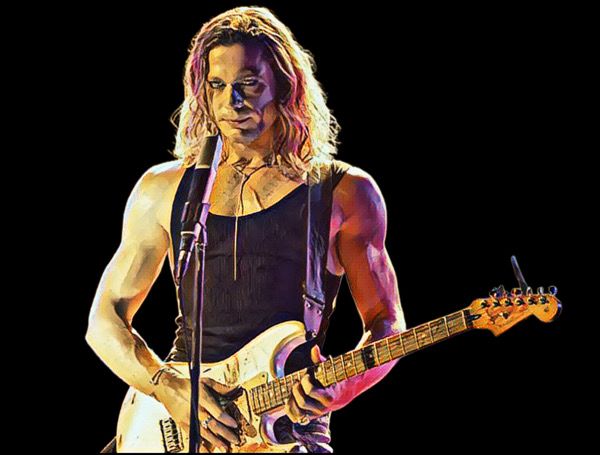
Much of the credit belongs to Daniel Hart, the composer responsible for the series’ score since its first season. Although his work had already earned widespread praise from fans, Season 3 presented an entirely different challenge. Hart was not simply composing music for a television show. He had to imagine the songs that a two-hundred-year-old French vampire might write if he suddenly decided to become a rock star.
That distinction is crucial. The season’s songs do not function merely as soundtrack material. They serve as extensions of the narrative itself. For the first time, audiences begin to understand Lestat not through Louis’s memories or Daniel Molloy’s questions, but through the character’s own words. Music becomes a new form of narration.
Songs such as Long Face and All Fall Down help establish that identity. The former showcases Lestat’s playful, provocative, and performative side. It is a song that seems to laugh at vampirism itself while embracing his public image. All Fall Down, meanwhile, reveals a darker and more melancholic side of the character, reminding listeners that beneath the spectacle remains a man burdened by loneliness, loss, and centuries of memory.
Perhaps the most entertaining choice is the inclusion of Dancing With Myself, Billy Idol’s classic anthem. The song feels as though it had been written for Lestat decades before Anne Rice ever placed him on a stage. After all, it is a song about desire, isolation, narcissism, and performance. Few characters in popular culture embody those themes more completely. The result feels so natural that it often sounds less like a cover and more like a song Lestat simply claimed as his own.
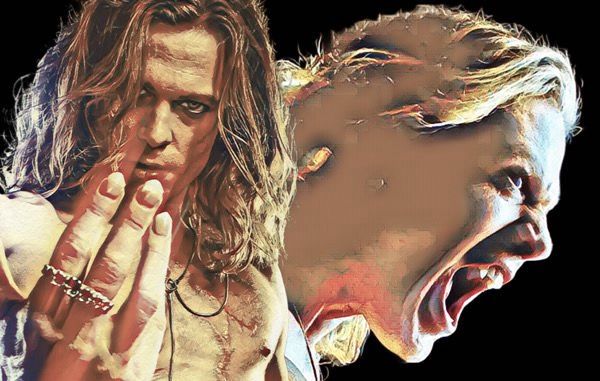
If Daniel Hart had to create Lestat’s musical voice, Sam Reid had to become that voice. This may have been the most daring aspect of the entire production. Unlike Jacob Anderson, who already had a successful music career under the name Raleigh Ritchie, Reid built his reputation exclusively as an actor. When news broke that he would perform the songs himself, fans were understandably curious about whether he could pull it off.
The answer arrived quickly. Reid not only embraced the challenge but also seemed to understand something fundamental about the character. Rather than trying to sing like a conventional rock star, he focused on understanding how Lestat would behave in front of an audience. The result is a performance filled with arrogance, vulnerability, charm, and excess—precisely the qualities that have always defined Anne Rice’s vampire.
That transformation became especially clear during the special event held at New York’s Beacon Theatre to celebrate the season’s launch. The evening combined live performances, exclusive footage, and thousands of devoted fans. More than a promotional event, it served as a declaration of confidence in the project. Few television productions would dare place a fictional character in front of a real audience before an entire season has even premiered.
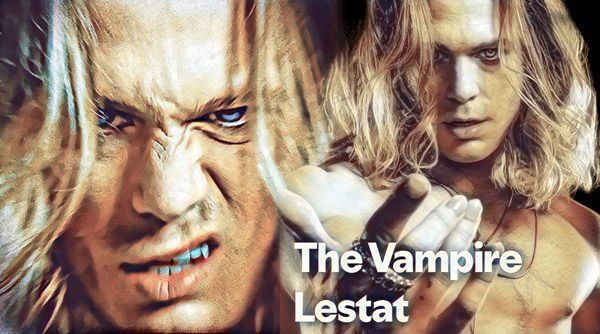
What is remarkable is that it worked. Fan reactions resembled those usually reserved for genuine music stars. People sang along, discussed lyrics, analyzed references, and treated Lestat as though he were a living artist rather than a fictional creation. At certain moments, the distinction between Sam Reid and Lestat seemed to disappear altogether.
Perhaps that is the season’s greatest achievement. For forty years, the idea of Lestat as a rock star remained one of Anne Rice’s most delightfully outrageous concepts. It worked beautifully on the page but seemed difficult to translate to another medium without becoming a caricature. The series found an elegant solution: it treated the idea seriously.
And that may be precisely why fans have responded with such enthusiasm. They are not simply listening to songs inspired by a character. They are witnessing the realization of a literary fantasy that has existed since 1985. After centuries in the shadows, Lestat has finally stepped into the spotlight. Judging by the audience’s reaction, it seems that is exactly where he was always meant to be.
P.S.: Are you following the artist The Vampire Lestat on Spotify? I am, naturally.
Descubra mais sobre
Assine para receber nossas notícias mais recentes por e-mail.

