
Ever since King & Conqueror was announced, I viewed it as something very specific: a kind of epilogue to Vikings: Valhalla. That is probably why I was surprised to see so many comparisons to Game of Thrones over the past few months. It is easy to understand why. The series features succession disputes, fragile alliances, broken promises, war, and two men convinced they have a legitimate claim to the same throne. It also stars Nikolaj Coster-Waldau and now has an additional connection to Westeros through James Norton, who plays Ormund Hightower in House of the Dragon. Even so, reducing King & Conqueror to a historical version of Game of Thrones overlooks what makes it most interesting.
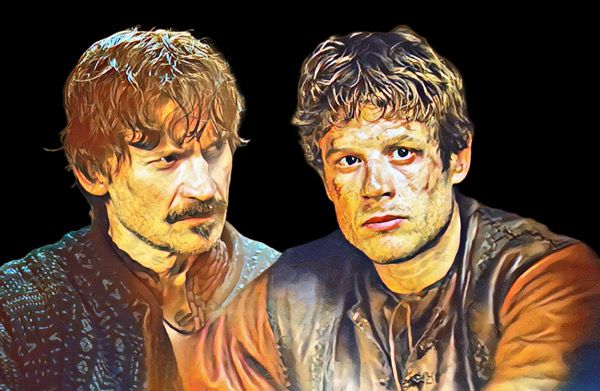
The story follows the events of 960 years ago that led to the Battle of Hastings in 1066, one of the most important moments in English history. After the death of Edward the Confessor without a direct heir, the kingdom’s succession is thrown into crisis. Harold Godwinson, leader of the most powerful family in England, takes the crown. Across the English Channel, William, Duke of Normandy, believes Edward had promised him the throne years earlier and sees Harold’s coronation as a betrayal. From that moment on, the series chronicles the escalation of a conflict that would permanently reshape British history.
What makes the conflict so compelling is that King & Conqueror refuses to offer simple answers, even though Harold is often remembered by history as a usurper. There is context. There is room for interpretation. William is not portrayed simply as a foreign invader driven by ambition, either. Quite the opposite.
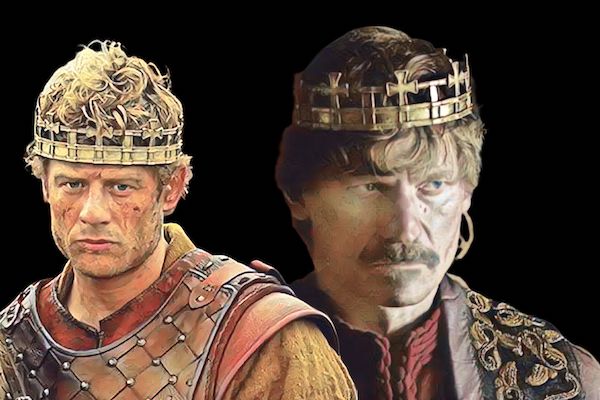
The series presents two men who are deeply convinced that the crown belongs to them by right. Both have plausible justifications. Both believe they are protecting something greater than their own interests. And both are capable of making devastating mistakes. The result is a drama that functions far more as a study of legitimacy and power than as a straightforward tale of conquest.
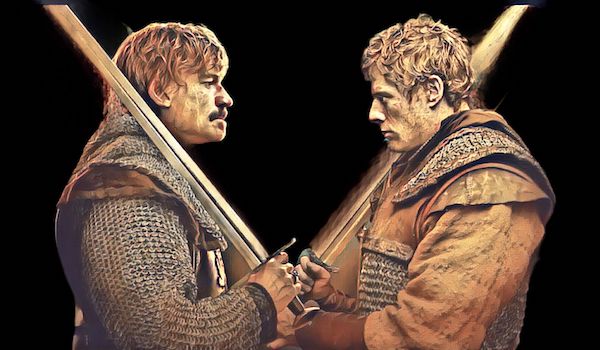
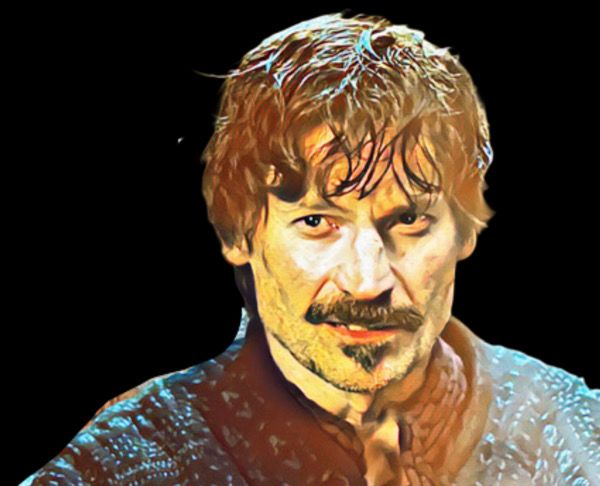
This is precisely where the cast makes all the difference. As mentioned earlier, casting Nikolaj Coster-Waldau as William was an inspired choice. The actor brings with him the credibility of someone who has already inhabited one of television’s most complex political worlds, yet he finds a very different register here. His William is ambitious, determined, and strategically brilliant, but also deeply insecure. There is a constant vulnerability beneath the image of the future conqueror. His need to prove his worth, justify his claims, and convince others—and perhaps himself—that he deserves what he seeks turns William into a far more complex character than the historical figure often remembered only for the outcome of Hastings.
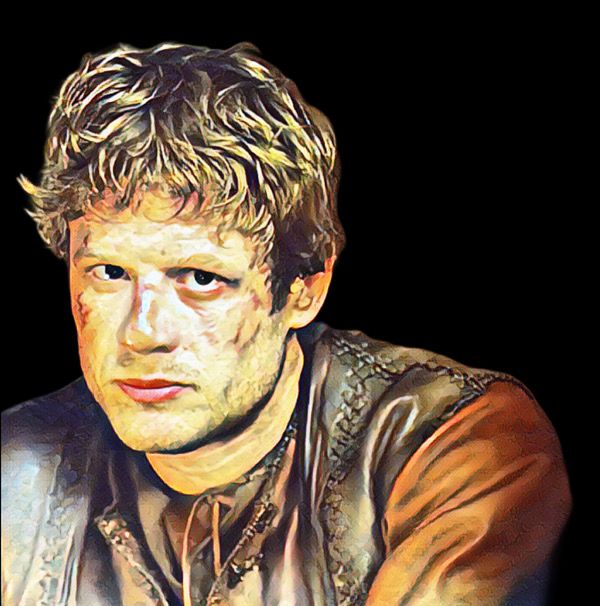
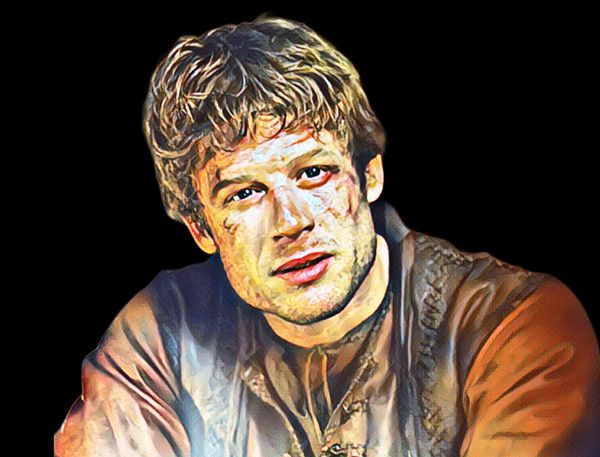
James Norton finds a similar complexity in Harold Godwinson. There is something almost ironic about watching him play this role at the same time that he is becoming part of the world of Westeros. Norton possesses exactly the physical qualities we associate with traditional heroes: charismatic, confident, magnetic, and naturally comfortable in a leadership role. The series, however, uses those qualities to create something more interesting. Harold is intelligent and brave, but also proud, impulsive, and often unable to recognize the consequences of his own decisions. Rather than turning one side into a hero and the other into a villain, King & Conqueror finds humanity in both.
As with almost every production based on real events, the series takes a number of historical liberties. Some changes will undoubtedly stand out to viewers familiar with the period. Certain characters are given storylines that differ from the historical record, personal relationships are expanded, and some events are reorganized to serve the narrative more effectively. The most obvious example may be the way the series handles events involving Emma of Normandy. Even so, none of these alterations struck me as particularly problematic. The production was never intended to function as a documentary. Its primary commitment is to drama, not to the literal reproduction of historical events.
Curiously, the series’s problems do not stem from its historical adaptations. They stem from the writing.
At several points, King & Conqueror seems to assume that viewers already know who these historical figures are and understand the significance of every political relationship. For those well-versed in English history, this may not be an obstacle. For much of the international audience, however, the narrative can become more confusing than it needs to be. The series does not always do enough to explain who certain characters are, why specific alliances matter, or why some decisions carry such profound consequences. There are also moments when important developments feel rushed, moving faster than the drama has earned.

This is ultimately what prevents the production from reaching an even higher level. It is not lacking in budget. It is not lacking in talented actors. It is not lacking in a compelling story. What it occasionally lacks is a more patient script, one willing to guide viewers through this political world without assuming prior knowledge.
Even so, I finished the season genuinely enjoying the experience. Perhaps because it delivered exactly what I had expected from the beginning. For years, Vikings and Vikings: Valhalla chronicled the slow transformation of England through the struggles of Saxons, Vikings, and Normans. The rise of the Godwin family, the growing influence of Normandy, and the reign of Edward the Confessor all pointed toward this moment. King & Conqueror simply picks up the baton and follows the final consequences of that process.
That is why, while some viewers may approach it looking for a historical version of Game of Thrones, they will find something quite different: the conclusion of a story television has been telling for more than a decade. It is a story about the fall of one world and the birth of another. A story that took place nearly a thousand years ago, yet remains fascinating because it speaks to themes that still resonate today: ambition, legitimacy, identity, power, and the enduring human conviction that we are the protagonists of our own version of history.
King & Conqueror may not be perfect. But it is a strong historical drama, supported by excellent performances and by a real-life event so extraordinary that it continues to inspire stories nearly a millennium later. And for those who followed the journey that began with Ragnar Lothbrok and continued through his descendants, it works exactly as I imagined it would when it was first announced: the Vikings: Valhalla epilogue we never got.
Descubra mais sobre
Assine para receber nossas notícias mais recentes por e-mail.

