
When I first wrote about Jane Andrews a few years ago, the story seemed so extraordinary that it almost felt like fiction. A young woman from a modest background lands a job working for Sarah Ferguson, begins moving through royal palaces, meets Princess Diana, travels the world, and becomes one of the people closest to the Duchess of York. Years later, she is arrested and convicted of murdering her boyfriend. It is precisely those contradictions that make The Lady one of the most intriguing television premieres of the year.
The four-part miniseries, produced by Left Bank Pictures — the company behind The Crown — premiered on ITVX in the United Kingdom and is available internationally through MGM+. Only the first two episodes have been released so far, but it is already easy to understand why the production has attracted so much attention from the British press. This is not simply a true-crime drama, nor is it merely another royal story. It is an unlikely combination of both, and perhaps even more surprisingly, one that works remarkably well.
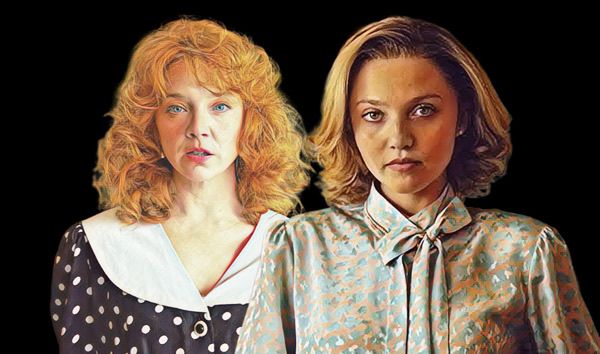
The series follows Jane Andrews, played by Mia McKenna-Bruce, who won the BAFTA Rising Star Award after her acclaimed performance in How to Have Sex. It is an enormously challenging role because Jane remains a figure who can be interpreted in radically different ways depending on who is telling the story. To some, she is a victim. To others, a manipulator. To others, still, a survivor, a murderer, or some complicated combination of all four. Alongside McKenna-Bruce, Natalie Dormer portrays Sarah Ferguson, while Ed Speleers plays Thomas Cressman, the man whose death would turn Jane into one of Britain’s most infamous criminals.
Born in Grimsby in northern England, Jane grew up in an environment marked by financial hardship, eating disorders, depression, and troubled relationships. At the age of twenty-one, she responded to a job advertisement published in The Lady magazine without realizing the position involved working directly for Sarah Ferguson. Within months, she found herself living a life completely removed from anything she had previously known. Jane spent nearly a decade at the Duchess of York’s side, accompanying her on trips, managing her wardrobe, helping organize her schedule, and moving within circles that included some of the most recognizable figures in the British monarchy. She became so close to Ferguson that the duchess nicknamed her “Lady Jane,” a reference that would eventually inspire the title of the series itself.
It was an extraordinary social ascent for someone without aristocratic connections, wealth, or status. Yet the first two episodes suggest that this transformation came at a high emotional cost. The series’s greatest strength lies in recognizing that the most compelling part of the story is not the murder itself, but the woman who existed before it. Rather than presenting Jane as a ticking time bomb waiting to explode, The Lady focuses on her vulnerability, her constant need for validation, and her almost desperate desire to belong. McKenna-Bruce captures that fragility beautifully, creating a character who remains sympathetic even when viewers already know how her story ends.
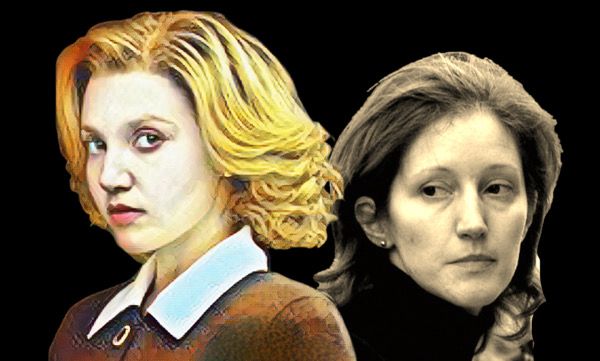
That may be exactly why the series is so absorbing. The audience already knows that tragedy is coming. The suspense lies not in the outcome but in the journey toward it. With each episode, the sense grows that we are watching someone far more emotionally fragile than the people around her ever realized. Her eating disorders, anxiety, destructive relationships, and inability to cope with rejection emerge not as excuses for what happened, but as pieces of a far more complicated portrait than the headlines ever allowed.
The production is equally impressive in its recreation of the period. Beyond the costumes and locations, it successfully captures an era when the Royal Family still seemed distant, glamorous, and almost mythical to outsiders. Natalie Dormer understands that balance perfectly in her portrayal of Sarah Ferguson. Her Fergie is charismatic, impulsive, warm, and occasionally reckless, but the series avoids turning her into a villain. In fact, this may be one of the rare stories involving the Yorks in which Sarah Ferguson appears largely innocent. Yes, she allowed Jane to become a constant presence within her inner circle and undoubtedly contributed to the fantasy of belonging that her assistant developed. Even so, nothing suggests she could have foreseen what would happen years later.
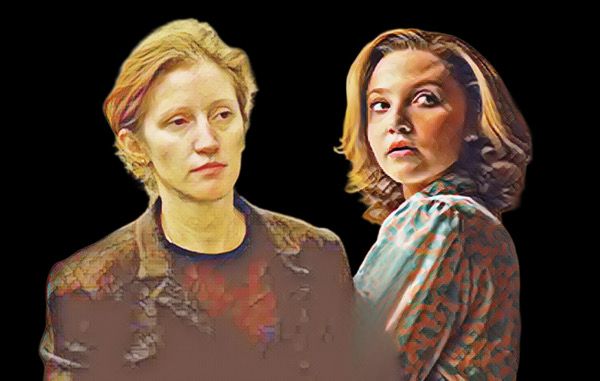
Those events eventually transformed Jane Andrews into an international headline. In September 2000, after months of conflict and arguments about the future of their relationship, Thomas Cressman was attacked while he slept. According to the prosecution, Jane used a cricket bat and later a knife to kill him before fleeing. She was found days later, stood trial, and was convicted of murder in 2001. Her defense argued that she suffered from serious psychological problems and had been living within a coercive and abusive relationship. Prosecutors presented a different narrative, portraying her as a woman unable to accept the end of a romance that symbolized her continued place in a world she had always longed to join.
The series deserves credit for refusing to resolve that debate in simplistic terms. Rather than offering a symbolic acquittal or a fresh moral condemnation, The Lady appears genuinely interested in understanding who Jane Andrews was before she became synonymous with a notorious crime. That decision makes the first two episodes particularly compelling and helps explain why so many critics have singled out McKenna-Bruce’s performance as the heart of the production.
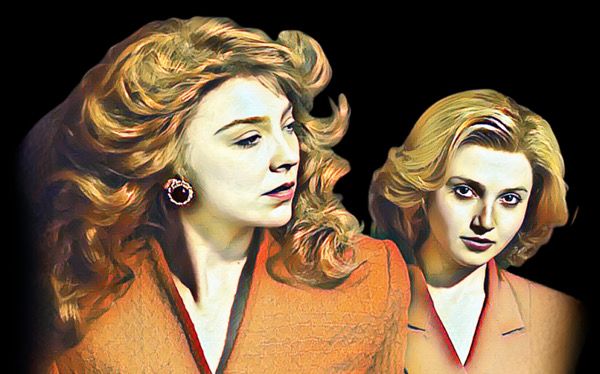
Elegant, exceptionally well-acted, and supported by meticulous historical reconstruction, The Lady succeeds in making a widely known British case feel surprisingly fresh. It also accomplishes something I never expected to see work so effectively: a series that appeals equally to true-crime enthusiasts and followers of the British Royal Family. These are two worlds that rarely overlap, yet here they combine to create a story that is as fascinating as it is bizarre.
There are still two episodes left before Jane Andrews’ story reaches its conclusion, but the impression left by the opening half is overwhelmingly positive. If the series can maintain the balance between psychological study, human drama, and historical reconstruction that has defined its first episodes, The Lady has every chance of becoming one of the most interesting British miniseries of the year. And after these first two chapters, I am genuinely curious to see how the production chooses to end a story whose outcome we already know, but whose mysteries continue to provoke debate more than two decades later.
Descubra mais sobre
Assine para receber nossas notícias mais recentes por e-mail.

