
If anyone still had doubts that Madonna would treat Confessions II as an event rather than simply an album, the 13 minutes of Confessions II: The Film have answered that question.
Directed by the duo TORSO (David Toro and Solomon Chase), the project is not merely an extended music video. Nor is it a conventional visual album. What Madonna delivers is something closer to a visual manifesto: a parade of references to her own career, pop culture, fashion, fame, desire, and celebrity obsession. All of it is wrapped in the electronic soundscape that made Confessions on a Dance Floor one of the defining records of her career.
The result is as excessive as it is captivating.
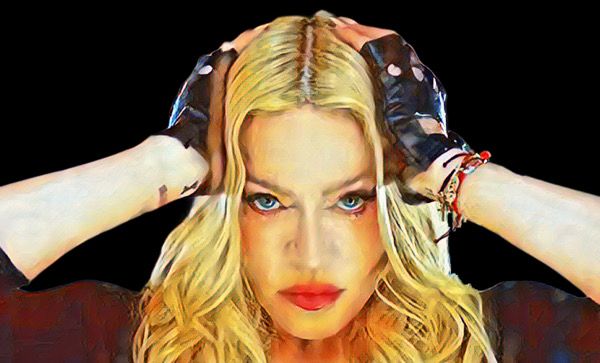
Madonna has always understood something many artists forget: when you have been a cultural figure for more than four decades, your own image becomes raw material. Rather than running from that reality, she transforms her mythology into a narrative.
The film stitches together the first six tracks from the album into a continuous experience, with no clear separation between songs. Scenes unfold like dreams connected by emotional logic rather than traditional storytelling. There are paparazzi reimagined as paramilitary forces, encounters in bathrooms, dance floors, car crashes, aerial performances, surreal forests, lasers, and imagery that feels pulled directly from the collective subconscious of pop culture.
But perhaps the greatest pleasure comes from the easter eggs.
Just as the original 2005 album engaged with the history of disco music, Confessions II appears to engage with the history of Madonna herself. There are echoes of Like a Virgin, visual nods to Deeper and Deeper, reminders of 1980s New York, and a constant sense that we are moving through different versions of Madonna across the decades.
Then come the cameos.
Madonna has assembled a wonderfully chaotic cast that blends fashion, music, film, television, sports, and family. The film features Arca, Benedict Cumberbatch, Cole Palmer, Debi Mazar, Gwendoline Christie, Honey Dijon, João Pedro, Kate Moss, Odessa A’zion, Richard E. Grant, Shygirl, Lourdes Leon, Archie Madekwe, and Julia Garner, among others.
The appearances feel less random than they initially seem.
Kate Moss represents Madonna’s longstanding relationship with fashion. Debi Mazar serves as a living connection to New York; both women shared before fame found them. Arca and Shygirl embody a younger generation of artists who inherited some of the creative freedom Madonna helped normalize. Benedict Cumberbatch, Gwendoline Christie, and Richard E. Grant bring a theatrical strangeness that fits perfectly within the film’s exaggerated universe.
There is also one particularly fascinating presence: Julia Garner.
Cast years ago to portray Madonna in the long-discussed biopic, Garner appears during a symbolic sequence in which Madonna herself transforms into the actress. It is a clever visual gesture. At once, it acknowledges the future film and suggests Madonna handing over part of her story to the performer who will eventually reinterpret her on screen.
Another noteworthy detail is the presence of Lourdes Leon.
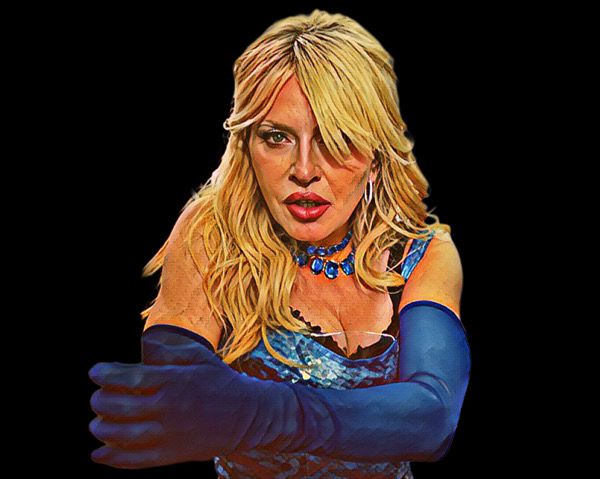
During the film’s Tribeca premiere, Madonna revealed that mother and daughter co-wrote “The Test,” one of the album’s most personal tracks. Lourdes also delivers the film’s final line, a closing moment that feels almost like a wink to the audience.
Visually, the project further strengthens Madonna’s recent connection to the world of high fashion. Her growing relationship with Dolce & Gabbana has become increasingly visible in recent months, and the film embraces the operatic, provocative, and unapologetically glamorous aesthetic that has always been part of Madonna’s DNA.
What remains most impressive, however, is that Madonna continues doing exactly what she has always done best: provoking.
Not merely in the moral sense that defined many of her controversies in the 1980s and 1990s. Today, she provokes the very idea of aging in pop culture. She challenges the expectation that veteran artists should become domesticated versions of themselves. She pushes back against nostalgia by revisiting Confessions without turning it into a museum piece.
Instead, she uses the past as fuel.
That is why the 13 minutes of Confessions II: The Film feel less like an album promotion and more like a statement of purpose. Madonna is not interested in becoming a memory. She still wants to occupy space, spark debate, confuse, fascinate, and challenge audiences.
More than forty years after she revolutionized popular culture, she is still doing exactly that.
Descubra mais sobre
Assine para receber nossas notícias mais recentes por e-mail.

