
For decades, there was an almost automatic answer to a simple question: where could you find television at its best?
The answer was HBO.

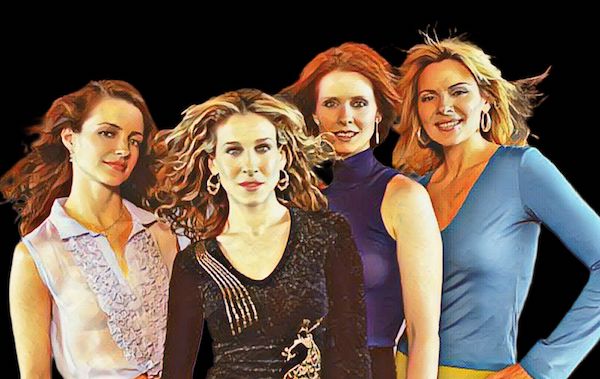
From the days of Oz, Sex and the City, and The Sopranos to the era of Game of Thrones and Succession, the network built something that seemed almost impossible to replicate. It wasn’t just a brand. It was a seal of quality. Saying “it’s an HBO show” meant something, not only to audiences and critics, but especially to the industry itself. It was where writers wanted to work, where actors pursued their most ambitious projects, and where directors often found a creative freedom that even cinema could not always provide.
Which is why the last few years have felt so strange. HBO remains one of the most respected names in television and probably the most awarded platform in the business, yet it is difficult to ignore the sense that the company has spent much of the decade trying to figure out exactly what it wants to be. Mergers, executive shake-ups, budget cuts, and even the curious dance between Max and HBO Max have created the impression of a brand wrestling with its own identity. And while that was happening, another company quietly began occupying a space that felt surprisingly familiar.
Apple TV.


Interestingly, Apple never tried to become Netflix. Nor did it show much interest in competing with Disney’s gigantic catalog or building an endless library of originals. From the very beginning, its strategy seemed to follow a different path. Instead of betting on quantity, the company bet on identity. And perhaps that is what makes the comparison with the old HBO so fascinating.
It is impossible to understand this story without going back several decades. Throughout the 1980s and 1990s, broadcast television still operated under very specific rules. Sitcoms dominated the landscape, medical dramas like ER and Chicago Hope moved millions of viewers, and legal dramas remained among television’s favorite genres, but there were limits.
Dependence on advertisers imposed restrictions, and certain themes, images, and narratives simply had no place in that environment. HBO, by requiring a subscription and existing within a closed ecosystem, enjoyed a level of freedom that was unprecedented.
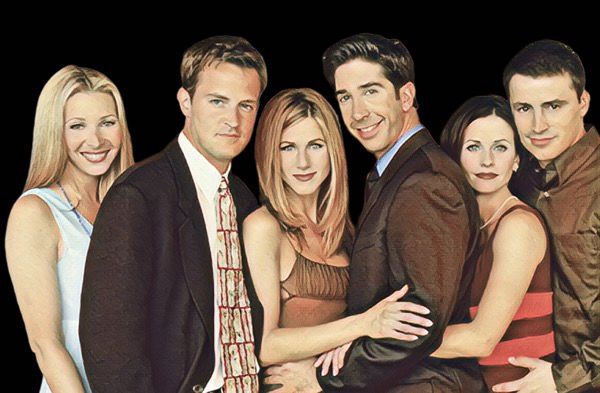

Gradually, it brought to television a sophistication that had previously seemed exclusive to cinema: violence, sex, morally ambiguous characters, and more complex storytelling ceased to be exceptions. What initially looked like a risk ended up changing the industry as, for the first time, stars no longer saw television as the end of the road. On the contrary, working for HBO became every bit as desirable as appearing on the big screen, and before long, the network had become the model everyone wanted to imitate.
The arrival of streaming and changing viewing habits completely reshaped the landscape. Competition became fiercer, more global, and, in some ways, more chaotic. Netflix arrived like a bulldozer and revolutionized the way we consume television, but for years, comparisons with HBO were inevitable. There was always the sense that, on some level, Netflix aspired to become the new benchmark for prestige television. It came close. Very close, but interestingly, it never quite escaped the comparison.
Corporate transformations are also part of this story. Disney absorbed much of Fox and continues to balance its many brands. Netflix built an extraordinary machine for production and distribution without being a traditional studio. Amazon acquired MGM, inherited James Bond, and still seems to be searching for a clearer identity for its streaming business. Warner, meanwhile, one of Hollywood’s last great traditional studios, spent years trying to survive under the weight of massive debt and underwent a series of mergers and reorganizations that inevitably affected HBO. All of this helps explain why the crystal-clear identity that existed during the days of The Sopranos and The Wire feels somewhat less defined today.


Apple lives in a different reality. Streaming is not the center of its business. It does not depend desperately on advertising, nor does it need to release hundreds of series each year simply to justify the existence of Apple TV. Perhaps that is why the company has managed to preserve something that has become increasingly rare in the age of algorithms and endless scale: patience.
There is another intriguing aspect to Apple’s trajectory. At a time when virtually every platform is aggressively pursuing local productions and international expansion, Apple remains perhaps the most American of them all. There is no avalanche of Korean thrillers, Spanish dramas, or region-specific content designed to appeal to every market. And yet its hits become global phenomena. It is a fascinating paradox. In an era defined by the internationalization of streaming, Apple has maintained a remarkably clear identity, something many of its competitors seem to have lost.

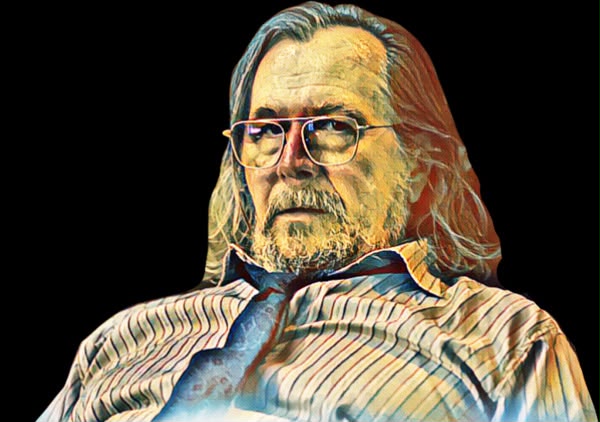
It is difficult to look at the company’s recent history without noticing a pattern. Ted Lasso was the first major breakthrough. Then came Severance, Pachinko, Slow Horses, Shrinking, Foundation, Silo, Dark Matter, and, more recently, Pluribus. Even smaller productions such as The Buccaneers and the surprise success Widow’s Bay found room to cultivate passionate communities.
More interestingly, Apple has perhaps unintentionally become the home of prestige science fiction. At a time when Hollywood often reduced the genre to franchises and blockbusters, the platform embraced more ambitious and sophisticated storytelling. For All Mankind, Foundation, Silo, Severance, Dark Matter, Monarch: Legacy of Monsters, and now Pluribus form a collection of series that few other services can match.

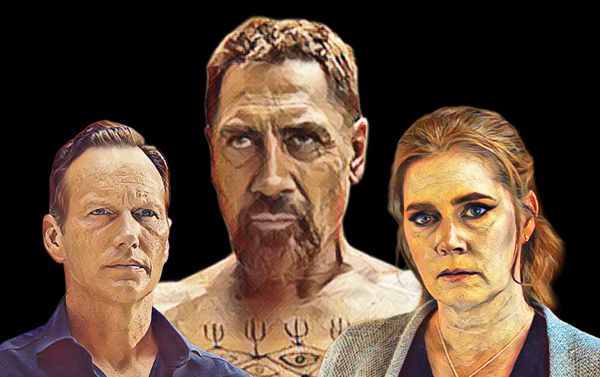
This shift became even more apparent to me through my weekly Top 10 streaming analysis. Over time, a pattern emerged. Apple series are not always the most watched, but they are often the ones generating the most conversation, the most engagement, and the longest-lasting discussions. That was true with the surprise success of Widow’s Bay. It happened again with the return of Hijack. The same was true with the buzz surrounding the new adaptation of Cape Fear and, naturally, with Pluribus. While many Netflix hits seem to last only a few days before being replaced by the next big release, Apple’s series continue to be revisited, debated, and analyzed for weeks. Perhaps because there are fewer of them. Or perhaps because the company has learned something that the old HBO understood better than anyone else: how to turn television into an event.
Awards tell part of that story. For decades, the Emmys were practically HBO territory. Then Netflix emerged and threatened that dominance. Amazon enjoyed its own golden age thanks to shows like Fleabag and The Marvelous Mrs. Maisel, but neither company managed to establish an identity as distinct as classic HBO. Apple may be getting closer.
The 2026 Emmy season could represent another chapter in that evolution. HBO remains enormously strong, and Hacks is once again among the favorites in comedy, even though I still find it amusing that such a dramatic series is classified that way. But in drama, the picture seems different. Pluribus appears to be one of the strongest contenders of the year and is unlikely to be Apple’s only major nominee. Awards matter because, beyond recognizing artists, they help solidify brands. That is how HBO built its reputation over half a century.


It would be premature to speak of succession, as HBO remains extraordinary, and its legacy is untouchable. One only has to look at The Last of Us, The White Lotus, and House of the Dragon to recognize that we are still talking about a creative powerhouse, but there is an irony that is difficult to ignore. For fifty years, it was HBO itself that taught the industry that quality, curation, and visionary creators could matter more than simply producing more content, and just as the company seems to be struggling to preserve that identity amid the demands of modern conglomerates, another company is beginning to resemble, more and more, the HBO that transformed television.
Perhaps we are not witnessing the birth of a new HBO; possibly, we are simply witnessing the continuation of an idea. As unlikely as it might have seemed only a few years ago, that idea today goes by the name Apple TV.
Descubra mais sobre
Assine para receber nossas notícias mais recentes por e-mail.

