
There is a particular kind of curse that seems to follow actors who become synonymous with enormous successes. The bigger the phenomenon, the harder it becomes to escape its shadow. Few careers illustrate this better than that of Emilia Clarke.
Just five months after its debut, Ponies has been canceled by Peacock. The decision is hardly surprising. Despite earning impressive scores on Rotten Tomatoes — 94% from critics and 83% from audiences — the period spy dramedy set in Moscow in 1977 simply failed to attract enough viewers to justify a second season.
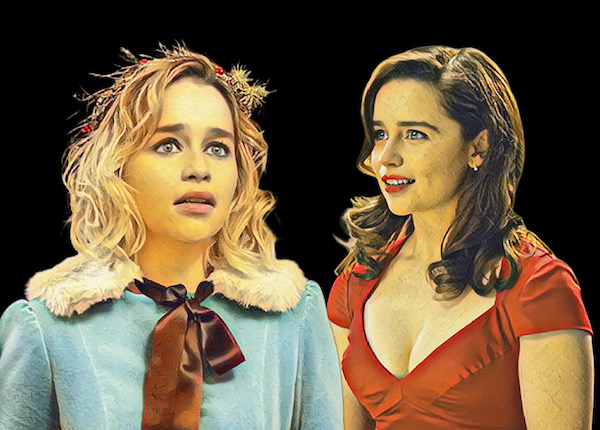
It is a disappointing outcome. For many viewers, the series starring Clarke and Haley Lu Richardson seemed exactly like the kind of project that could usher in a new chapter in the career of the woman forever associated with Daenerys Targaryen. As Bea, an American embassy secretary who becomes involved in CIA operations after her husband’s mysterious death in the Soviet Union, Clarke was able to explore a character far removed from the Mother of Dragons — more vulnerable, more mature, and often surprisingly funny. Yet the cancellation only reinforces an intriguing pattern.
Since Game of Thrones ended, Emilia Clarke has never stopped working. In fact, she has been one of the few members of the main cast to move through some of Hollywood’s biggest franchises. She stepped into the iconic role made famous by Linda Hamilton in Terminator Genisys, joined the Star Wars universe as Qi’ra in Solo, and more recently entered the Marvel Cinematic Universe with Secret Invasion.

On paper, it is an enviable résumé. In practice, however, none of those projects became the next defining cultural event. Terminator Genisys effectively killed plans for a new trilogy. Solo received a warmer reception than its reputation suggests, but underperformed at the box office, putting several Star Wars spin-offs on hold. And Secret Invasion became one of Marvel’s most heavily criticized productions.
Now, ironically, one of Clarke’s most warmly received projects in years has suffered the same fate.
Perhaps calling it a failure would be unfair. Clarke remains a sought-after actress and one of the most beloved personalities in the industry. Few performers leave a global phenomenon and continue headlining major studio productions more than a decade later. The problem is that shows on the scale of Game of Thrones distorts expectations. Everything that comes after inevitably feels smaller by comparison.
And Clarke is hardly alone. Kit Harington, Sophie Turner, Maisie Williams, and Lena Headey have also struggled to find anything approaching the cultural impact of Westeros. Even actors who continued to work steadily have never quite occupied the center of popular culture in the same way again.
Jason Momoa may be the most obvious exception, turning Khal Drogo into just one chapter of a career revitalized by Aquaman. And then there is Pedro Pascal, whose relatively brief stint as Oberyn Martell became merely the starting point for an extraordinary rise that eventually made him one of television’s biggest stars through series such as Narcos, The Mandalorian, and The Last of Us.
In Emilia Clarke’s case, talent has never been the issue. Nor have opportunities. Even critical acclaim has not been lacking. What continues to elude her is that unpredictable spark that transforms a series into a genuine cultural event.
Because perhaps that is the irony of starring in one of television’s greatest phenomena: after flying dragons, every other flight seems smaller.
Descubra mais sobre
Assine para receber nossas notícias mais recentes por e-mail.
 miscelana.com