
Every four years, billions of people voluntarily participate in a collective psychological experiment that, in almost any other context, would seem absurd. Adults cry in front of television screens. Strangers embrace in the streets. Entire nations enter alternating states of euphoria, hope, superstition, and grief. And all of this because of a game whose outcome no one can control.
The World Cup may be the greatest experiment in crowd psychology ever created.
In Group Psychology and the Analysis of the Ego, Freud argued that, when joining a crowd, individuals surrender part of their identity to become part of something larger than themselves. In football, this happens quite literally. We do not say, “Brazil won.” We say, “We won.” We do not say, “Argentina lost.” We say, “We lost.” The national team ceases to be merely a sports team and becomes an extension of our own selves.
Perhaps that is why the World Cup produces such overwhelming emotions. We are not merely watching matches. We are watching dramatized versions of our own fantasies.
And in 2026, this dynamic is particularly fascinating.
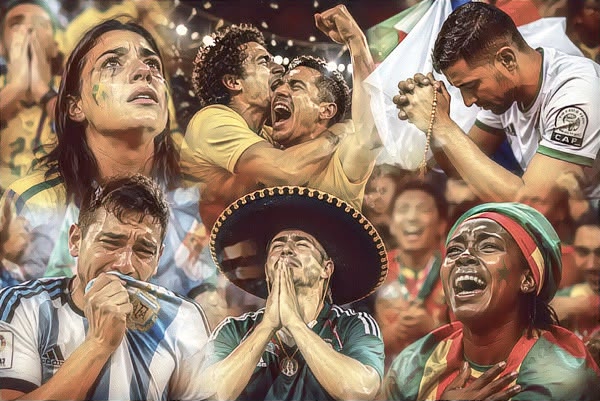
Brazil, the only five-time World Cup champion, enters the knockout stage accompanied by something relatively rare in its history: doubt. For the first time in decades, many Brazilians seem more willing to believe in the possibility of Argentina or France lifting the trophy than in their own national team. Psychologically, this creates a curious phenomenon: when narcissistic identification weakens, anxiety grows. Fans stop expecting confirmation of their greatness and begin preparing themselves for disappointment.
At the same time, the narratives that may be the most powerful in any World Cup emerge: the stories of David versus Goliath.
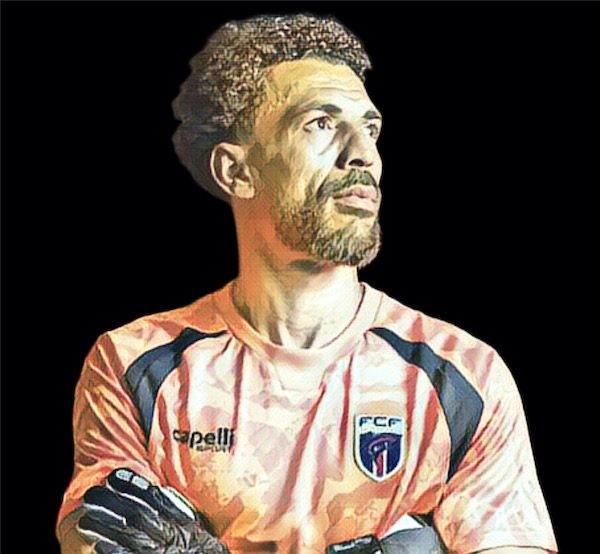
It was Cameroon in 1990. It was Ghana in 2010. Today, it is undoubtedly Cape Verde.
Why do we become so attached to these teams?
Because they represent something far greater than football. They embody one of the most fundamental fantasies of human experience: the possibility that the improbable can happen. That the small can defeat the mighty. That talent, courage, and chance can challenge seemingly immutable structures of power.
Supporting Cape Verde is not merely supporting Cape Verde. It supports the idea that the world may be fairer, more surprising, and less predictable than we imagine.
The great football powers, on the other hand, represent something entirely different. Argentina, France, Brazil, and Germany function as projections of fantasies of order, power, and historical continuity. We expect from them not merely victory, but confirmation that certain hierarchies still make sense.
The superstars occupy an even more complex position.
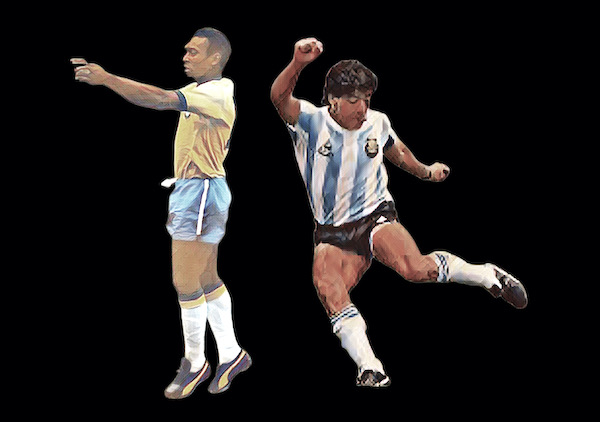
They are not merely athletes. They are vessels for collective desires. Messi represented redemption. Mbappé represents absolute power. Pelé represented attainable perfection. Maradona represented triumphant rebellion. Each generation chooses its heroes not only because of their talent, but because of the fantasies they are asked to sustain.
And then we arrive at the knockout rounds, perhaps the cruelest psychological invention in all of sport.
The group stage still preserves the illusion of control. There is tomorrow. There is recovery. There is the possibility of redemption. The knockout stage, by contrast, introduces something profoundly human and profoundly terrifying: finitude.
It takes only one mistake, one goal, and everything ends.
It is no coincidence that knockout matches are experienced almost as collective traumatic events. They reproduce one of humanity’s deepest anxieties: the discovery that certain events are irreversible.

Perhaps that is precisely why the World Cup continues to fascinate billions of people. Because beneath the appearance of a sporting tournament, it stages something much older. A story about belonging and exclusion. About heroes and monsters. About hope and failure. About the enduring human desire to believe that, this time, the impossible might actually happen.
And perhaps that is why, even though we know it is only football, we continue to suffer as if it were our own lives.
Descubra mais sobre
Assine para receber nossas notícias mais recentes por e-mail.

