
As published on Blog do Amaury Jr./Splash UOL
On July 1, 2026, Diana, Princess of Wales, would have turned 65.
It is one of those anniversaries that inevitably inspires a collective exercise in imagination. What would Diana be like at 65? What role would she occupy in the monarchy of Charles III? What kind of relationship would she have with Camilla, now Queen? Would she be a devoted grandmother to George, Charlotte, Louis, Archie, and Lilibet? Would she still be the most photographed woman in the world, or would she have finally found the privacy she spent her entire life searching for?
The truth is that perhaps none of these questions is the most interesting one.
Nearly 30 years after her death, Diana continues to occupy a unique place in contemporary culture: that of a person whose absence has remained more powerful than the presence of almost everyone who survived her.
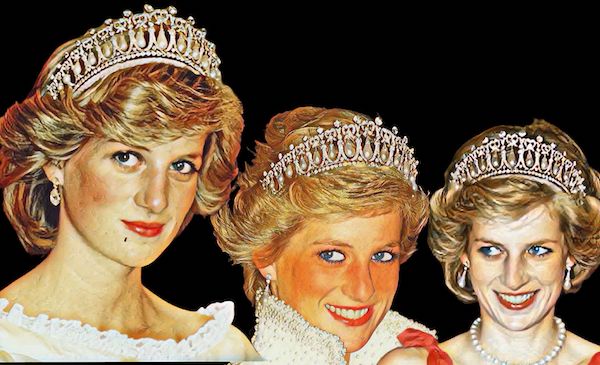
Few public figures have had the opportunity — or the misfortune — to live so many lives within a single lifetime. Diana was the shy English aristocrat introduced as the perfect bride for the heir to the throne. She was the fairy-tale princess whose wedding, in 1981, was watched by hundreds of millions of people. She was the betrayed wife, the devoted mother, the global celebrity, the humanitarian activist, the victim of the tabloids, and finally, the woman who tried to reinvent her own identity after leaving the institution that had made her famous.
Perhaps it is precisely this multiplicity that explains why Diana never disappeared.
The British royal family has always produced symbols. Diana produced identification.
While the traditional monarchy was built on distance, ritual, and permanence, Diana seemed to operate according to an almost contemporary logic of vulnerability. She spoke publicly about emotional suffering, visited AIDS patients when many people were still afraid to touch them, walked through minefields, embraced hospitalized children, and, above all, seemed to intuitively understand something that now dominates digital culture: people do not connect only with authority, but with humanity.
This does not mean, of course, that Diana was simple.
On the contrary. The more time passes, the clearer it becomes that she was a profoundly contradictory figure: extraordinarily empathetic and, at the same time, capable of manipulating the press; vulnerable and strategic; a victim of a rigid institution, but also an active participant in constructing her own public narrative.
Perhaps it is precisely this complexity that has ensured her cultural survival.
The British monarchy itself has undergone dramatic transformations since she died in Paris on August 31, 1997. Elizabeth II died. Charles became king. William became the direct heir to the throne. Harry broke with the institution and crossed the Atlantic. Camilla, once viewed as the ultimate antagonist in Diana’s story, became Queen.
And yet, Diana remains.
She remains in the public gestures of William and Harry. She remains in the way the royal family has come to address — however partially — mental health, vulnerability, and emotional openness. She remains in fashion, photography, film, television, and popular culture. Above all, she remains in the collective memory of a generation that grew up believing there was something profoundly unfair about her story.

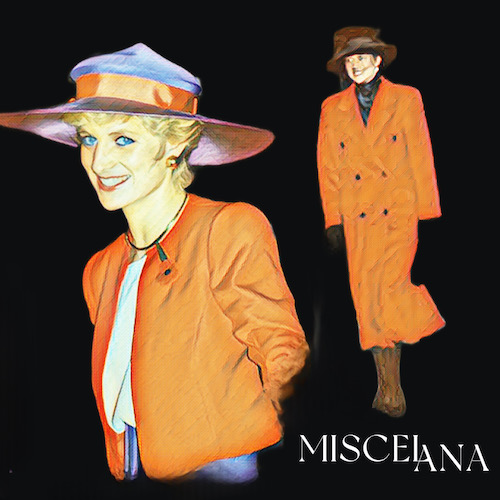
There is, however, one particularly painful dimension to this legacy. If there is one thing that admirers, biographers, and even the royal family’s more skeptical observers seem to agree on, it is that Diana’s greatest personal disappointment would probably be the relationship between her two sons.
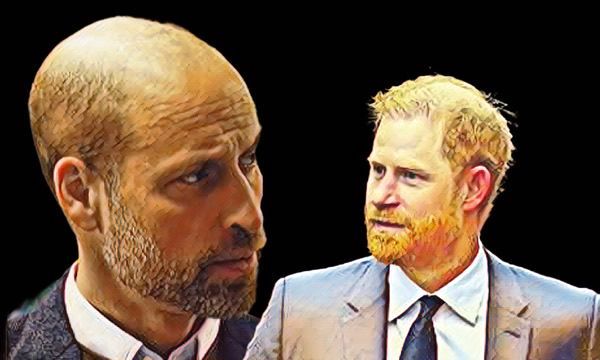
William and Harry, raised under the shared trauma of losing their mother and for years presented as the most visible proof of her emotional legacy, have become symbols of a rupture that appears increasingly deep and permanent. More than that, both have come to claim, in different ways, Diana’s own memory — her values, her vision of the monarchy, her suffering, and even her relationship with the press.
Harry frequently invokes his mother to explain his troubled relationship with the royal family and his decision to leave the United Kingdom. William, on the other hand, appears to have embraced a different aspect of Diana’s legacy: the attempt to modernize the monarchy from within while simultaneously preserving the institution she criticized so deeply and from which she never fully escaped.
It is impossible to know how Diana would react to this distance. But it is difficult to imagine that the woman who repeatedly said that, above all else, she wanted her sons to be happy and remain close would not see this estrangement as her greatest sorrow.
There is an unavoidable irony in that.
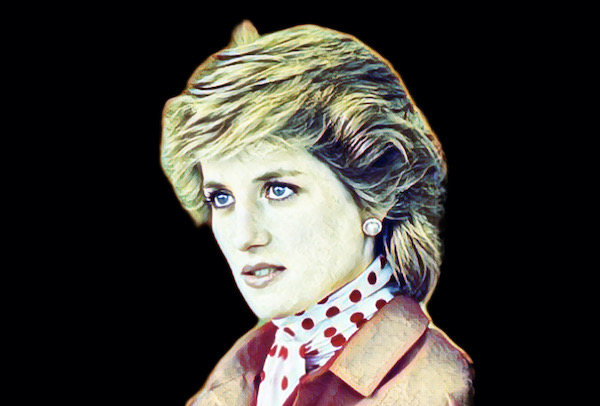
Diana spent much of her life trying to escape the roles imposed upon her: the perfect princess, the perfect wife, the perfect future queen. Nearly three decades after her death, she has become something far larger and far more difficult to define.
She became a myth.
And perhaps that is the real reason why Diana’s 65th birthday continues to inspire such fascination. Not because it makes us imagine who she would be today.
But it reminds us that some public figures eventually cease to belong to their own time and instead become part of the collective imagination.
Descubra mais sobre
Assine para receber nossas notícias mais recentes por e-mail.
 miscelana.com