
I’ve published a few articles about tarot on MiscelAna. Not many, but a handful. The reason was simple: my sister has been reading tarot for decades, and, as is often the case with the best stories, my curiosity began at home. The result, however, was surprising. Or perhaps predictable. The articles barely performed. The irony is that her tarot column in CLAUDIA magazine remains, year after year, one of its most-read features.
Perhaps that says something about audiences. Perhaps it says something about platforms. But above all, it may say something about tarot itself: it never really disappears. It may fall out of fashion in certain cultural circles, be treated with skepticism or irony in others, but it continues to exert a persistent fascination, surviving centuries, artistic movements, technological revolutions, and social transformations.
It is no coincidence, then, that one of New York’s most fascinating exhibitions this year is devoted precisely to it.
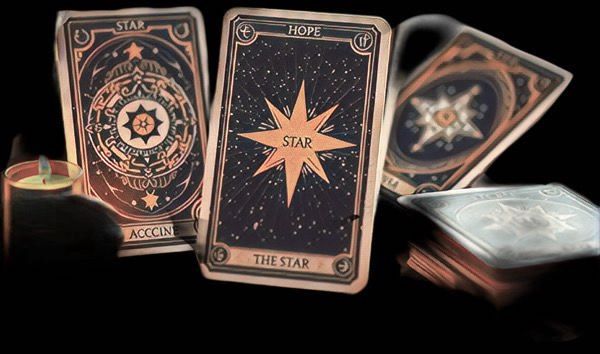
On view through October 4 at the Morgan Library & Museum, Tarot! Renaissance Symbols, Modern Visions traces nearly six centuries of history to answer a question that seems simple, but isn’t: how did a card game created to entertain Italian aristocrats become one of the most recognizable symbolic languages of the contemporary world?
The exhibition’s first surprise is that it dismantles what most people believe they know about tarot.
The first tarot cards emerged in northern Italy in the fifteenth century and were known as carte di trionfi or cards of triumph. They were not created to predict the future, interpret destiny, or reveal spiritual truths. They were, essentially, playing cards.
Alongside the traditional suits appeared twenty-one “triumphs”: allegorical figures inspired by literature, religion, and Renaissance culture, combining universal symbols with scenes of everyday life. For nearly three centuries, no one consulted these cards, hoping to discover the future. Perhaps this is the exhibition’s most fascinating revelation: before tarot became esotericism, it was already narrative.
The earliest known decks were commissioned by powerful Italian families and functioned as both entertainment and demonstrations of wealth, sophistication, and cultural prestige. Few examples survive. The most important belong to the so-called Visconti-Sforza decks, created for the ruling family of Milan and considered the most extraordinary surviving examples of Renaissance tarot.
For the first time in North America, the Morgan has reunited cards from its own collection with those held by the Accademia Carrara in Bergamo, allowing visitors to experience a substantial portion of this remarkable ensemble, produced by Bonifacio Bembo and his workshop between 1456 and 1458.
A masterpiece is not an exaggeration.
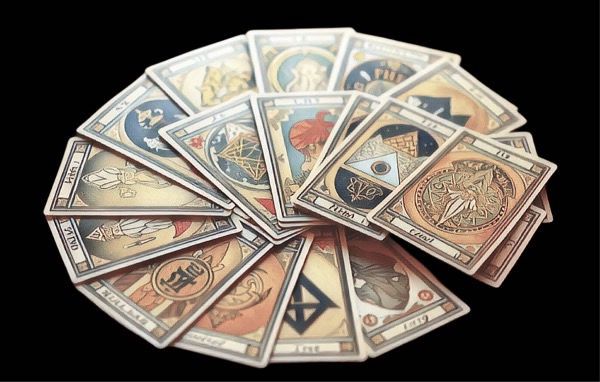
These cards were luxury objects, painted by hand and requiring mastery of panel painting, manuscript illumination, and other refined artistic techniques. They resemble jewels or precious manuscripts far more than what we think of today as a deck of cards. Yet they reveal something extraordinary: despite the nearly six centuries that separate us from them, they remain immediately recognizable.
Death is still Death. Justice is still Justice. The Lovers are still the Lovers. This continuity may explain tarot’s extraordinary capacity for survival. It was only in the eighteenth century, particularly in France, that the cards became associated with occultism and cartomancy. Scholars and occultists began reinterpreting tarot symbols as remnants of ancient lost wisdom, even attributing — without historical evidence — Egyptian origins to the cards.
From that moment on, tarot underwent another transformation: it ceased to be merely a game and became a tool for interpreting the world.
The exhibition follows this evolution through to the most influential tarot deck ever created: the Rider-Waite-Smith deck, published in 1909 by the occultist Arthur Edward Waite and illustrated by the extraordinary Pamela Colman Smith.
If the Visconti-Sforza deck represents tarot’s birth, the Rider-Waite-Smith deck represents its democratization. An artist, writer, collaborator of W.B. Yeats, and admired by photographer Alfred Stieglitz, Pamela Colman Smith revolutionized tarot by illustrating the Minor Arcana. For the first time, every card became a miniature visual narrative. Drawing simultaneously from the Bible, Art Nouveau, British society, and her own imagination, she created the visual vocabulary that still defines most contemporary tarot decks. But it is the exhibition’s second section, Modern Visions, that perhaps explains why tarot has never been more relevant than it is today.
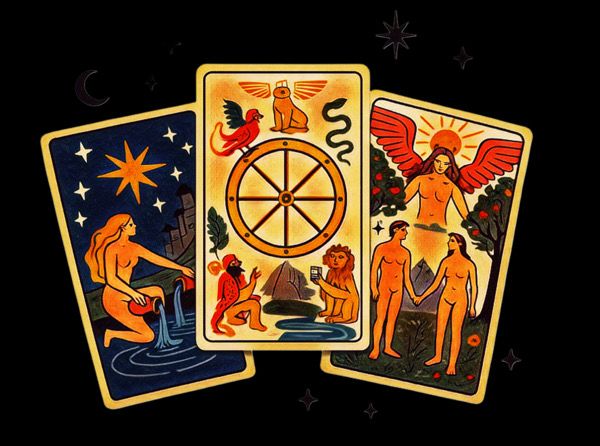
Throughout the twentieth century, countless artists discovered something rare in tarot: a visual tradition that was both firmly established and infinitely open to reinvention. The Surrealists understood this particularly well.
Leonora Carrington, Remedios Varo, and André Breton were not necessarily interested in creating tools of divination. What fascinated them was tarot’s symbolic potential — its ability to challenge rational logic and create space for alternative ways of imagining reality.
The exhibition features works by artists including Niki de Saint Phalle, Betye Saar, Kerstin Brätsch, and Chris Ofili, alongside extraordinary figures such as the Argentine artist Xul Solar — a close friend of Jorge Luis Borges, inventor of imaginary languages, and creator of one of the most fascinating tarot decks ever produced.
There are also examples demonstrating how tarot has evolved into an almost universal cultural language.
Today, there are tarot decks dedicated to cats, Peanuts, Italian cuisine, pop astrology, and even the cinematic universe of Guillermo del Toro. What might appear to be trivialization may actually be the ultimate proof of tarot’s symbolic power.
Searches for tarot readings soared during the pandemic and continue to grow. Social media transformed card readings into daily content. Independent bookstores display dozens of different decks. Tarot has become, simultaneously, an artistic object, a spiritual practice, entertainment, and a cultural phenomenon.
And perhaps the Morgan exhibition’s greatest revelation is this: tarot never survived because it promises to predict the future. It survived because it offers something far rarer. A way of transforming life’s uncertainty into narrative.
The exhibition is open from June 26 through October 4, 2026,
Descubra mais sobre
Assine para receber nossas notícias mais recentes por e-mail.

