
When Disney announced that it would remake Moana as a live-action film less than a decade after the original animated feature premiered, many people’s first reaction was confusion. After all, why revisit a 2016 film that remains one of the most-watched titles on Disney+?
The answer may lie precisely there.
Released in 2016, Moana grossed nearly $700 million worldwide, earned two Academy Award nominations, and, perhaps more importantly, became a permanent streaming phenomenon. Over the past decade, few Disney animated films have been revisited as frequently by children, teenagers, and families. The movie never really disappeared from popular culture.
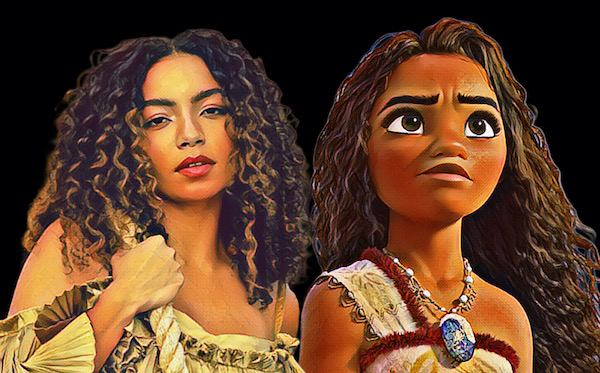
The definitive proof came in 2024. Originally conceived as a streaming series, Moana 2 was ultimately transformed into a feature film and went on to become a global phenomenon, grossing more than $1 billion at the worldwide box office. During the film’s release campaign, I spoke with actress and singer Any Gabrielly, the Brazilian voice of Moana, and it became clear that the character had evolved beyond being simply another Disney princess. For a new generation, Moana had become a symbol of independence, identity, and representation. In that sense, the live-action adaptation feels less like a corporate gamble and more like the natural next step in an ongoing success story.
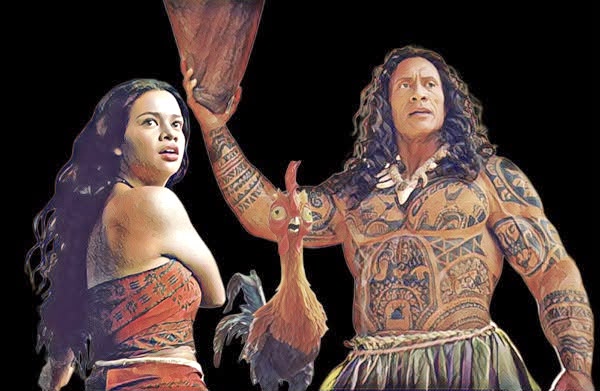
But there is another explanation behind Disney’s decision. Technology has finally reached a point where there is virtually no longer a limit between what can be animated and what can be filmed. The living ocean, the dimwitted rooster Heihei, the monsters, the gods, and the film’s fantastical world — all elements that once depended entirely on animation — can now exist alongside human actors.
Few Disney characters have completed, in just a decade, the journey that Moana has: from animated success to streaming phenomenon, to billion-dollar sequel, and finally to a live-action film starring one of the biggest movie stars on the planet.
And Disney decided to go all in.
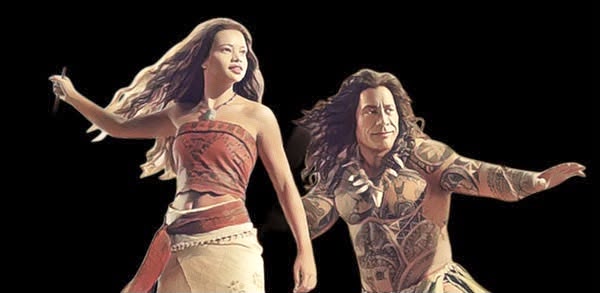
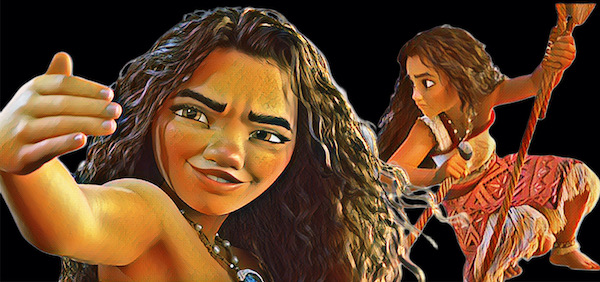
Directed by Hamilton creator Thomas Kail, the new Moana brought together more than 200 Pacific actors and artists and relied on one of the largest cultural advisory teams ever assembled by the studio. Throughout production, linguists, anthropologists, choreographers, traditional tattoo experts, and representatives from various Pacific cultures actively participated in the film’s development.
The scale of the production is staggering.
The team built a complete version of the fictional island village of Motunui on nearly 25 acres of land. It took five months to construct traditional homes, irrigation systems, tropical vegetation, and more than 250 coconut palm trees. No modern nails were used in the construction of the principal structures and vessels, which instead relied on traditional coconut-fiber lashing techniques.
To recreate Moana’s journey across the ocean, the production built more than 30 different canoes, developed three enormous water tanks — one holding approximately 400,000 gallons of water — and created nine distinct styles of vessels inspired by maritime traditions from across the Pacific.
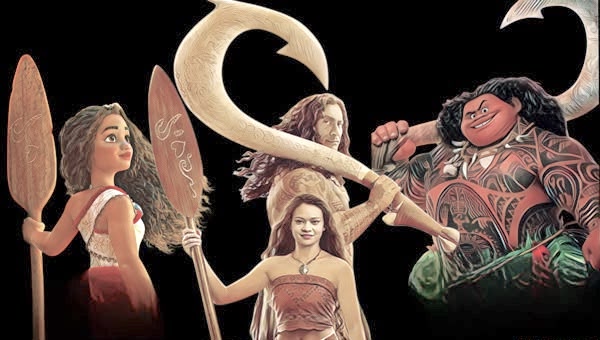
The costumes became a monumental undertaking in their own right.
More than 2,000 handcrafted garments were created for the film. Every pattern, color, and symbol incorporated into the costumes carries a specific meaning tied to Pacific heritage. Moana’s wardrobe, for example, incorporates symbols related to navigation, ancestry, and leadership, while Maui’s costumes visually tell the story of his own rise and fall.
At the center of it all is Dwayne Johnson.
Returning to the role of Maui after voicing the character in the original animated film, Johnson also serves as a producer and has repeatedly described this as the most personal project of his career. That’s because Maui was conceived, in part, as a tribute to Johnson’s grandfather, the legendary Samoan High Chief Peter Maivia.
“He represents legacy, life, pride, and culture,” Johnson said during production.
The new Moana, played by Australian actress Catherine Lagaʻaia, was selected after a worldwide search that attracted more than 32,000 submissions. According to the producers, it became clear almost immediately that she was the right performer to carry forward the legacy created by the original film.
Ironically, the film’s greatest gamble may be its refusal to take major risks.
Unlike several recent Disney live-action remakes, Moana chooses to preserve much of the original film’s framing, songs, characters, and even many of its most memorable moments. It feels less like a reinvention and more like a celebration.
Perhaps because Disney has understood something very simple: some stories do not need to be updated for a new generation. They simply need to be told again.
And if the early reactions are any indication, Moana may prove that nostalgia — when combined with scale, technology, and cultural respect — remains one of Hollywood’s most powerful forces.
And, frankly, few stars working today seem to enjoy playing a character as much as Dwayne Johnson enjoys being Maui.
Descubra mais sobre
Assine para receber nossas notícias mais recentes por e-mail.

