
If there was ever a moment when streaming promised to completely reinvent television and cinema, this week suggests precisely the opposite. The global rankings reveal an industry increasingly comfortable revisiting familiar worlds, beloved characters, and universes audiences simply do not want to leave behind. This is not merely nostalgia, although nostalgia is everywhere. What we are witnessing is an increasingly fierce competition for emotional permanence: winning no longer necessarily means launching the next big thing, but convincing viewers that they still want to remain inside the worlds they already love.
The consequence is fascinating. While some platforms continue to invest heavily in giant intellectual properties and established franchises, others are beginning to build their own “comfort universes”—spaces audiences return to not necessarily in search of surprise, but of familiarity. A few weeks illustrate this transformation better than the rankings we are seeing now.

Netflix: The Adult Thriller Remains Its Safest Bet
The success of I Will Find You confirms something Netflix learned years ago: few formulas are as reliable as adult thrillers built around family secrets and past trauma. The platform continues to serve as the primary destination for audiences seeking high-concept but relatively traditional storytelling. Surrounding the series are titles such as Agent Kim Reaction, Teach You a Lesson, and The Polygamist, reinforcing the impression that Netflix remains less interested in building long-term franchises than in creating a constant succession of temporary phenomena.
In films, Enola Holmes 3 naturally takes the top spot, demonstrating the continuing strength of Netflix’s strategy of transforming recognizable characters into recurring properties. The return of older titles, including Despicable Me 4 and Sonic the Hedgehog, also shows that the platform fully understands the value of emotional comfort in an era of overwhelming choice.


HBO Max: The Strength of the Brand Is Still Called HBO
Despite years of rebranding and strategic shifts, HBO Max’s greatest strength remains exactly what it has always been: its ability to turn television into a cultural event. House of the Dragon returns to the top just as its new season begins to establish its major narrative arcs, while Rick and Morty, Dune: Prophecy, From, and even older productions reinforce the perception that the platform remains the primary destination for viewers interested in dense worlds and complex serialized storytelling.
The same pattern appears in film. They Will Kill You leads the chart, but the simultaneous presence of Back to the Future, Jurassic Park III, and The Accountant suggests that HBO Max may have understood before many of its competitors that library content and new releases are no longer opposing categories. Today, they function together.


Disney+: No One Monetizes Nostalgia Better Than Disney
If there is one platform that has successfully transformed nostalgia into a business model, it remains Disney+. The number one position of X-Men ’97 perfectly symbolizes this strategy: a new series built almost entirely around the emotional experience of a generation that grew up with the original characters.
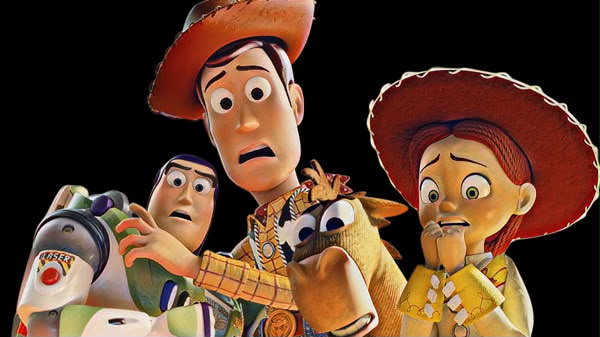
The same logic applies to film. Avatar: Fire and Ash sits at the top, but the real phenomenon may be the remarkable simultaneous presence of Toy Story, Toy Story 2, Toy Story 3, Toy Story 4, and Moana among the platform’s most-watched titles. Few companies have managed to transform their historical catalog into such a powerful asset as Disney, which today competes not only with its rivals but also with its viewers’ own emotional memories.

Prime Video: Romance, Youth, and Brand Recognition
The debut of Elle at number one suggests that Amazon has identified an extremely profitable territory: adaptations and expansions of established properties aimed at young female audiences. Alongside Off Campus, Every Year After, and The Summer I Turned Pretty, the Legally Blonde prequel confirms that there is an enormous appetite for romantic, aspirational, and nostalgic storytelling.
In film, Project Hail Mary takes the top spot and offers an interesting counterpoint: while the platform’s series rely heavily on emotional familiarity, its film division continues to invest in major commercial events capable of generating global conversation.
Paramount+: Taylor Sheridan Remains a Platform Within the Platform
Few contemporary phenomena are as remarkable as Taylor Sheridan’s ability to build durable television universes. Dutton Ranch once again claims the top position, followed by Yellowstone, while The Agency and Marshals reinforce the perception that Paramount+ has finally found its defining identity.
More than any other major streamer, Paramount+ appears to have abandoned the idea of trying to appeal to everyone. Instead, it has built an extremely specific and extraordinarily loyal ecosystem, where contemporary westerns, institutional dramas, and established franchises coexist as part of a unified cultural language.

Apple TV: The Unexpected Successor to HBO
Perhaps no ranking this week is more impressive than Apple’s. Silo, Cape Fear, Sugar, Widow’s Bay, Your Friends & Neighbors, and Star City all occupy prominent positions simultaneously, demonstrating something that would have seemed unlikely only a few years ago: Apple has become the market’s leading producer of prestige adult television.
In film, F1 remains in first place and reinforces another defining characteristic of the platform: its commitment to sophisticated cinematic events capable of coexisting with ambitious, prestige television. The result is a catalog that increasingly resembles HBO at its peak—a place where subscribers are not searching for quantity, but for a specific promise of quality.


By the end of this week, perhaps the most interesting conclusion is also the most paradoxical. For years, streaming promised that the future of entertainment would be defined by constant innovation. In 2026, however, what appears to drive the industry most powerfully is precisely the opposite: the ability to convince audiences to return, over and over again, to the things they already loved.
Descubra mais sobre
Assine para receber nossas notícias mais recentes por e-mail.

