
As published in CLAUDIA
For several decades now, books, television series, and films have explored a fascinating territory: the reimagining of historical figures in stories that are, at their core, less biographical than emotional, creative, and often deliberately anachronistic. Some of these works succeed precisely because they embrace their fictional nature — Shakespeare in Love, The Great, and Hamnet transform historical figures and periods into vehicles for contemporary reflection. Others, curiously, acquire the status of cultural truth: for many viewers, Salieri will forever remain Mozart’s great antagonist in Amadeus, just as Catherine de’ Medici will remain inseparable from her portrayal in The Serpent Queen. And, of course, some challenge any commitment to historical plausibility whatsoever. At a time when we consume “true stories” with as much — if not more — enthusiasm than fiction itself, the possibilities seem endless.
Perhaps one of the strongest impulses behind this tradition is the desire to answer questions that history itself has never been able to resolve: what led Shakespeare to write Hamlet or Romeo and Juliet? Did Salieri truly envy Mozart enough to wish him dead? What transforms a human experience into a masterpiece? Primavera, the new film by Italian director Damiano Michieletto, which premiered at the Toronto International Film Festival, toured the international festival circuit, and won four David di Donatello awards, arrives in Brazilian theaters offering its own answer to one of these enduring questions. And it is an especially ambitious one: who — or what — inspired Antonio Vivaldi to compose The Four Seasons?
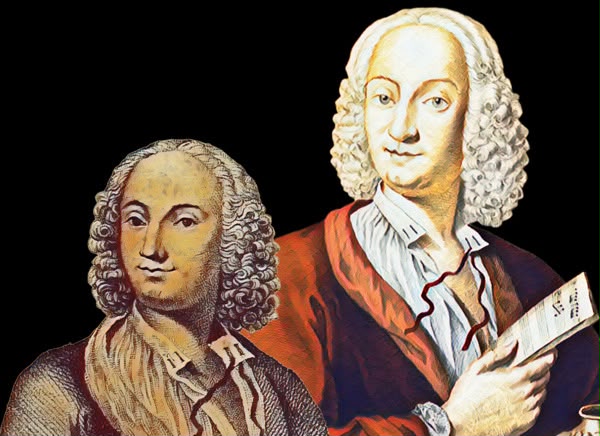
The answer offered by the film is, of course, fictional. But, as with the best historical reimaginings, it rests upon a reality so extraordinary that the invention itself feels plausible. Because Vivaldi, who was a priest and whose romantic life remains more a matter of speculation than documentation, may never have experienced a great love affair. But he did have, at least artistically, a muse: Anna Maria della Pietà. Or, more precisely, he had an entire generation of them.
Anna Maria’s story begins with one of the most painful and common experiences of premodern Europe: abandonment. Born around 1696, she was left as an infant at the Ospedale della Pietà in Venice. Like thousands of children before and after her, she likely entered the institution through the scaffetta, a small opening built into the wall that allowed newborns to be abandoned anonymously. Her surname did not indicate a family. It indicated the place where she was raised.
The Ospedale della Pietà was not exactly an orphanage, at least not in the modern sense of the word. Founded in the fourteenth century and descended from charitable institutions established during the Crusades, it evolved — alongside the Mendicanti, the Incurabili, and the Ospedaletto — into one of the most extraordinary educational experiments in European history. In seventeenth- and eighteenth-century Venice, these institutions became genuine conservatories for women. The most talented girls, known as the figlie di coro, received a musical education that rivaled — and often surpassed — that available to men in contemporary conservatories. They studied violin, viola, cello, oboe, flute, organ, theorbo, singing, and, in some cases, even composition. It was one of the rare circumstances in eighteenth-century Europe in which women could receive an elite artistic education — provided they agreed to remain invisible.
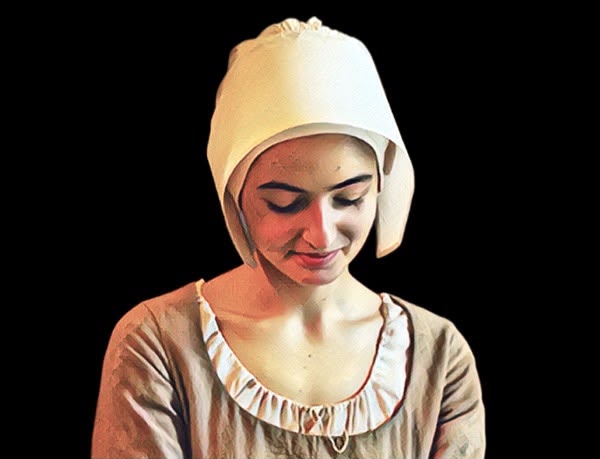
The paradox was that these young women could become the finest musicians in Europe without ever truly being seen. The Pietà’s concerts attracted aristocrats, diplomats, writers, and travelers from across the continent, yet the performances took place behind screens and grilles. Audiences listened to some of the greatest performers of the eighteenth century without knowing their faces. The mystery, initially created for moral and social reasons — many of these girls were believed to be the illegitimate daughters of Venetian aristocrats — eventually became part of the fascination itself. Rousseau, Burney, and countless travelers described the experience of hearing these invisible women perform as something close to the supernatural.
It was in this environment that Anna Maria revealed her extraordinary talent. As a child, she attracted the attention of Antonio Vivaldi, who had begun working at the Pietà in 1703. Their relationship would last for decades. Anna Maria was not merely a violinist: she also played the cello, oboe, lute, mandolin, harpsichord, and viola d’amore. Vivaldi wrote at least twenty-eight concertos specifically for her — some scholars believe the actual number was even higher — and many music historians argue that part of the astonishing virtuosity we associate with Vivaldi was only possible because he had an interpreter capable of pushing him to his own creative limits.
During her lifetime, Anna Maria was a celebrity. In 1720, she became a maestra; in 1737, she simultaneously achieved the positions of maestra di violino and maestra di coro, the highest musical posts within the institution. Travelers crossed Europe to hear her perform. One anonymous poet wrote that when Anna Maria played, “countless angels dared draw near.” And yet she never left the Pietà. She lived, worked, taught, and died in 1782, within the same institution where she had been abandoned as an infant. The abandoned child became one of the greatest musicians of her generation without ever leaving the place that had saved her — and, in a sense, confined her.
It is precisely from this historical absence that Primavera emerges.
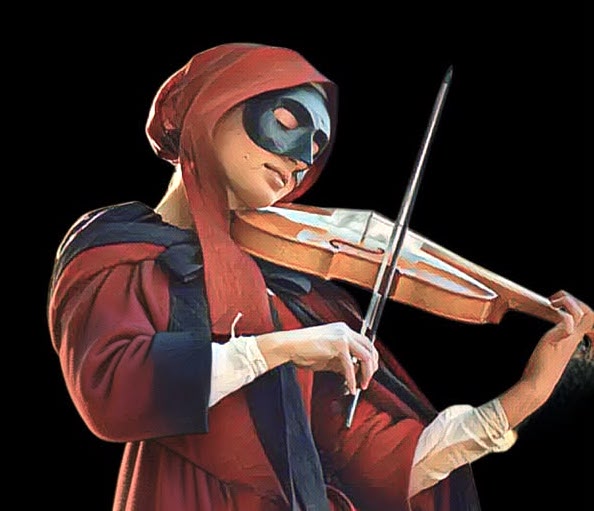
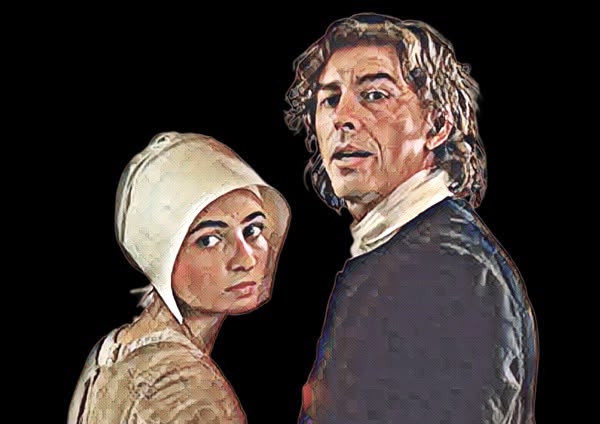
Directed by Damiano Michieletto — one of today’s leading opera directors, with productions at La Scala, the Royal Opera House, and the Paris Opera — the film freely adapts Stabat Mater, the novel by Tiziano Scarpa that won Italy’s prestigious Strega Prize in 2009. Its protagonist is no longer Anna Maria, but Cecilia, played by Tecla Insolia, winner of the David di Donatello for The Art of Joy and nominated once again for her performance here. Cecilia never existed. But perhaps that is precisely why she works so well: she is, at once, Anna Maria and all the other women whom music history relegated to footnotes.
Throughout much of Primavera, I found myself thinking less about Amadeus than about Gérard Corbiau’s The Music Teacher. Perhaps because both films understand something that cinema rarely grasps when portraying artists: the most interesting story is never exactly that of the genius. It is the story of those who surround, challenge, inspire, and ultimately disappear so that the narrative of individual genius may survive.
Visually, Primavera is breathtaking. Daria D’Antonio’s cinematography — she is a longtime collaborator of Paolo Sorrentino — transforms Venice into a candlelit Baroque painting. Yet this is a Venice far removed from postcards: it is damp, dark, melancholic, and at times threatening. The reconstruction of the Ospedale della Pietà itself required an almost archaeological effort, since the original building no longer exists and had to be recreated through studies of other surviving Venetian institutions. The result is a film whose beauty is never merely decorative: it becomes part of the very idea of confinement and transcendence that runs through the narrative.
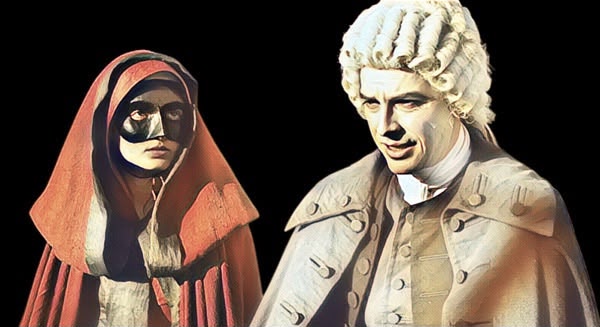
Michieletto has repeatedly stated that he did not want to make a Vivaldi biopic. And perhaps that is Primavera‘s greatest strength. The film is not really interested in explaining how Antonio Vivaldi composed The Four Seasons. It is interesting in something far more unsettling: how many extraordinary women were required for us to spend nearly three centuries believing that we were listening to only one man.
Perhaps the greatest irony of Antonio Vivaldi’s story is that part of the music we associate with his genius may only have been possible because an abandoned Venetian orphan was talented enough to force him to become even greater.
When I left the theater, I wanted to listen to Vivaldi again.
But for the first time, I found myself wondering who else had been playing alongside him.
Descubra mais sobre
Assine para receber nossas notícias mais recentes por e-mail.

