
Mariska Hargitay will host the 78th Emmy Awards, scheduled for September 14, with a live broadcast on NBC and Peacock from the Peacock Theater in Los Angeles. The choice was announced by NBCUniversal and the Television Academy in a symbolic year for the network: NBC celebrates its centennial in 2026, and few figures represent its recent history as powerfully as the eternal Olivia Benson of Law & Order: SVU.
The announcement carries historical weight. Mariska will be the first woman to host the Emmys in 15 years. The last was Jane Lynch, in 2011, at the height of Glee. Before her, in this century, the role had gone to names such as Ellen DeGeneres, in 2001 and 2005, and Heidi Klum, who shared hosting duties in 2008. In other words, for an award show dedicated to television, the absence of a woman at the helm for so long says a lot.
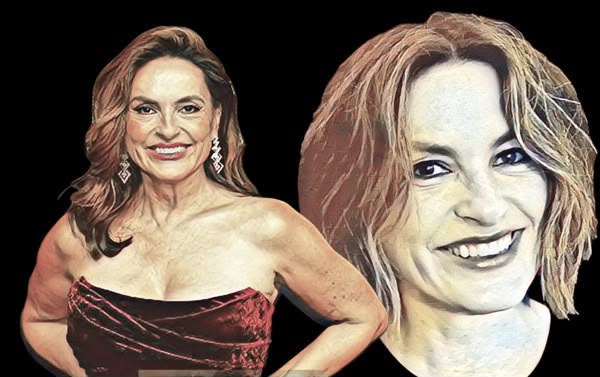
The choice is also curious because Mariska does not fit the most obvious profile of an awards-show host. In recent years, the Emmys have often turned to comedians, stand-up names, late-night stars, or performers used to live humor. In 2025, for instance, the host was Nate Bargatze. Mariska, by contrast, is a dramatic actress, the face of a long-running procedural and of a character associated with gravity, empathy, and justice. The Associated Press highlighted exactly that point: she is a rare non-comedian to receive the job.
But that is precisely what makes the choice interesting. Mariska Hargitay is, in a way, a pure product of Hollywood and, at the same time, one of its great survivors. The daughter of Jayne Mansfield, one of the great sex symbols of 1950s American cinema, she grew up surrounded by myth, tragedy, and public image. Her mother died in a car accident when Mariska was only three years old, and that inheritance was revisited by her in the documentary My Mom Jayne, her directorial debut, which also revealed intimate aspects of her family history.
At the same time, Mariska built a career that stopped being defined by “Jayne Mansfield’s daughter” a long time ago. Since 1999, she has played Olivia Benson on Law & Order: Special Victims Unit, one of the longest-running characters in American television. The series is entering its 28th season and is expected to surpass the 600-episode mark. For Benson, Mariska won the Emmy for outstanding lead actress in a drama series in 2006, received other nominations, and also won a Golden Globe.
That may be the real meaning of the choice. Mariska is not arriving at the Emmys to play the comedian. She is arriving as a television legend. Across nearly three decades of SVU, she turned Olivia Benson into a rare kind of character: a figure of comfort, authority, and trust for the audience. She also used the visibility of the series to become an active voice in support of survivors of sexual and domestic violence, including through the Joyful Heart Foundation.
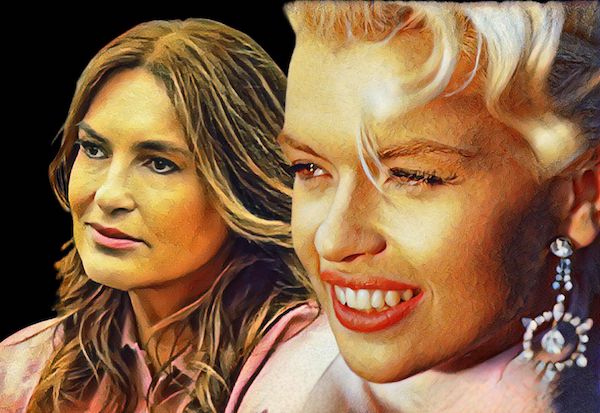
The reaction to the announcement was largely positive, though marked by surprise. NBC and the Television Academy framed Mariska as an affectionate and institutional choice: a beloved, authentic star connected to both the audience and the network’s history. The specialized press also noted the timing. Vulture, for example, joked that she is having a major year, between SVU, her Broadway debut with Every Brilliant Thing, the documentary about Jayne Mansfield, and now the Emmys.
On social media and forums, the response followed the same path: curiosity, surprise, and support. Many people were struck by the fact that she is not a comedian, while others pointed out that Mariska has just come out of a demanding stage experience, in a solo show with audience participation, and that her charm in interviews has always been one of her strengths. There were also plenty of requests for Christopher Meloni to appear onstage at some point, because, of course, the shadow of Benson and Stabler follows any major event involving Mariska.
The challenge will be finding the right tone. If the Emmys try to turn Mariska into a stand-up host, the choice could feel forced. But if the ceremony embraces her as an actual host — someone able to celebrate television, guide the night with elegance, and bring her emotional authority to the industry — the gamble could work very well. At a moment when awards shows are trying to balance humor, reverence, and cultural relevance, Mariska Hargitay may be less of a funny choice and more of a safe choice in the best possible sense.
After all, few people have crossed as many phases of American television as she has. Mariska was born inside the myth of Hollywood, grew up marked by real-life tragedy, became the star of one of NBC’s most important series, and turned into a figure beloved by both audiences and colleagues. Now, as she steps onto the Emmy stage, she will not simply be hosting an awards show. She will be symbolizing an idea of television that has survived changes in format, platform, and consumption: television as habit, companionship, and collective memory.
Descubra mais sobre
Assine para receber nossas notícias mais recentes por e-mail.

