
New Order returns to Brazil in 2026 for a one-off show in São Paulo, on November 25, at Espaço Unimed. The concert marks the band’s return to the country after eight years — their last visit was in 2018, with shows in São Paulo, Uberlândia, and Curitiba — and it comes with an important detail: this will not be a reunion with the classic lineup. Peter Hook, the founding bassist and one of the group’s most recognizable sonic signatures, has been out since 2007. Stephen Morris and Gillian Gilbert will also not be part of the tour for personal health reasons. In practice, the Brazilian show will be led by Bernard Sumner, joined by Phil Cunningham and Tom Chapman.
That does not diminish the importance of the return, but it changes the way we look at it. Seeing New Order live in 2026 is not exactly seeing the band that helped invent part of the sound of the 1980s. It is seeing what remains, what survived, what reorganized itself and, above all, the strength of a repertoire that has crossed decades, fights, losses, transformations, and absences.
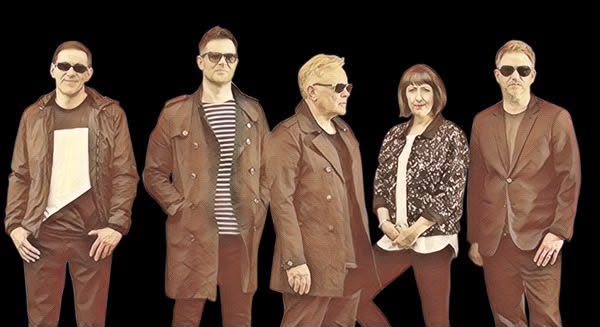
I saw New Order in 1988, 2006, and 2014. Three very different moments in the same story. In 1988, there was still the almost mythical impact of a band that seemed to have arrived from another planet for those who grew up hearing that sound as an absolute novelty. In 2006, the band was already a legend, but Peter Hook was still onstage, with that bass that was never merely accompaniment, but a kind of parallel voice. In 2014, at Lollapalooza, New Order was already something else: still moving, still elegant, still the owner of unbeatable songs, but with an absence impossible to ignore.
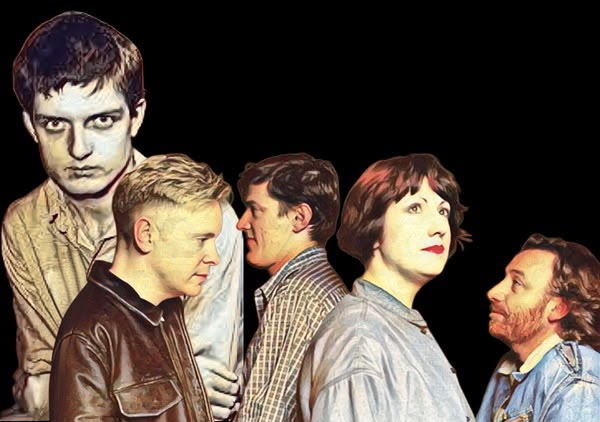
For those who grew up in the 1980s, the musicians from Manchester had two powerful and almost contradictory influences. First came Joy Division, one of the most important sounds for the movement that, in Brazil, many people learned to call “dark” or gothic, even if the label never fully captured it. It was cold, urban, existential, nervous music, made of dry guitars, an almost industrial drum sound, bass at the front, and Ian Curtis’s haunted voice. It was not just a band to listen to. It was an atmosphere, an aesthetic, a kind of emotional dark room.
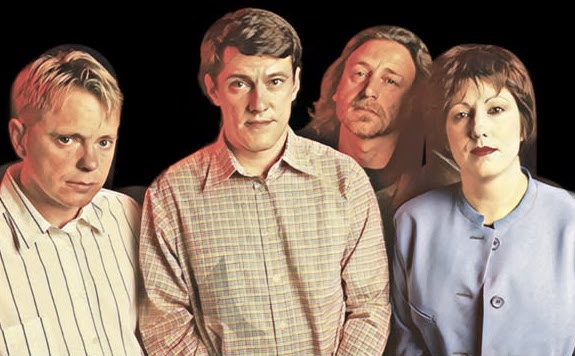
Then, in an almost 180-degree turn, came New Order. After Ian Curtis died in 1980, Bernard Sumner, Peter Hook, and Stephen Morris could have remained trapped in mourning, trying to prolong Joy Division’s shadow. Instead, with the arrival of Gillian Gilbert, they created something else. New Order did not erase the original melancholy, but took it somewhere else: synthesizers, sequencers, drum machines, 12-inch singles, club culture, the dance floor, and an electronic vanguard that seemed to point toward the future.
That is New Order’s greatness. The band was born from tragedy, but did not become a funerary monument. It turned pain into sonic architecture. It kept the disenchantment, but exchanged part of the abyss for artificial light, beat, and movement. For a generation that came from black clothes, post-punk, and adolescent anguish, New Order showed that it was possible to dance without ceasing to be melancholic. It was possible to be modern without being superficial. It was possible to make electronic music with the soul of a band and band music with an electronic pulse.
That is why talking about New Order means talking about vanguard, creativity, and originality. Not only because they recorded “Blue Monday,” “Bizarre Love Triangle,” “True Faith,” “The Perfect Kiss,” “Temptation” or “Age of Consent,” but because they understood before many others that the future of music would not be only in the album, onstage or on the radio. It would also be in the DJ, the remix, the club, the sleeve, the extended single, the collective experience of the dance floor.
The greatest symbol of that vision was the Haçienda, the nightclub opened in Manchester in 1982 by Factory Records and funded in large part by New Order’s money. The Haçienda, identified in the Factory catalogue as FAC 51, was much more than a club. It was a cultural laboratory. There, the DJ stopped being someone who merely filled the gaps between acts and began to occupy the center of the experience. The club would become fundamental to the rise of house music, acid house, rave culture, and the very idea of Manchester as the capital of a new pop modernity.
The list of artists who passed through there says a lot about the instinct of that scene. Madonna gave her first UK performance at the Haçienda in January 1984, in a performance televised by the program The Tube, before becoming the global star who would dominate the decade. The club was also connected to names and movements that would help define British culture in the years that followed, from Happy Mondays to Stone Roses, 808 State, and Chemical Brothers. The Haçienda lost money for years, but gained something much harder to achieve: a place in history.
That is why reducing New Order to “the band that came after Joy Division” is not enough. They were that, of course. But they were also one of the bands that best understood the cultural turn of the 1980s. They moved out of post-punk without completely abandoning its shadow, embraced electronic music without sounding too cold, reached the dance floor without becoming disposable product, and helped anticipate a logic that now feels natural: that rock, pop, electronic music, remix, club culture, and image are all part of the same ecosystem.
“Blue Monday,” released in 1983, became the great symbol of that shift. Long, hypnotic, programmed, cold, and irresistible, the song did not seem designed for radio, but it took over pop culture. The Rock & Roll Hall of Fame cites it as the best-selling 12-inch single of all time, while also recognizing Joy Division/New Order as pioneers of post-punk and electronic innovation. In 2026, the joint induction of Joy Division/New Order into the Hall of Fame arrived as the belated consecration of a story that was always bigger than awards.
The discography follows that transformation. Movement, from 1981, is still the transitional album, marked by Joy Division’s shadow. Power, Corruption & Lies, from 1983, is the definitive turn toward a more electronic and colorful sound. Low-Life, from 1985, and Brotherhood, from 1986, consolidate the balance between guitars, synthesizers, and melancholic melodies. Substance, from 1987, although a compilation, is almost mandatory for understanding the band, because it gathers some of its essential singles. Technique, from 1989, recorded under the influence of the Ibiza scene and acid house, may be the album in which New Order sounds its freest, sunniest, and most completely surrendered to the dance floor.
Then came Republic, in 1993, in a different context and under greater internal tensions; Get Ready, in 2001, with a more rock-driven approach; Waiting for the Sirens’ Call, in 2005, the last studio album with Peter Hook; Lost Sirens, in 2013; and Music Complete, in 2015, the band’s first album of new material without Hook. But New Order’s symbolic heart remains concentrated in that 1980s sequence, when the band seemed not only to keep up with the times, but to get ahead of them.
The internal fight, however, became an unavoidable part of the narrative. Peter Hook left in 2007, after years of tension, especially with Bernard Sumner. What initially seemed like just another band crisis became a public breakup, a dispute over money, royalties, and the use of the Joy Division and New Order legacy. In 2015, Hook sued his former bandmates, claiming financial damage after a corporate restructuring. In 2017, the parties reached a “full and final” settlement, but the emotional reconciliation never seemed to follow the legal one.
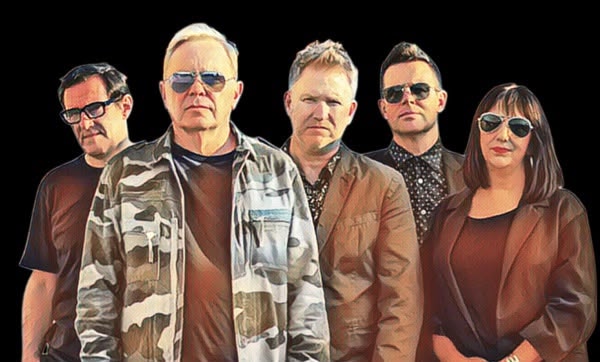
And that absence matters because Peter Hook was never an ordinary bassist. In Joy Division and New Order, his instrument often led the melody, rather than merely supporting the foundation. Hook’s bass was nervous, lyrical, loud, and almost insolent. In many songs, it is the bass line we end up humming without realizing it. Without him, New Order still has the repertoire, the history, and Bernard Sumner, but it loses an essential tension. A band is made of songs, of course. But it is also made of chemistry, friction, incompatible personalities that, by some miracle, produce beauty.
Now, with Stephen Morris and Gillian Gilbert away from touring, the equation becomes even more delicate. Morris was decisive in creating the rhythmic precision that brought the band closer to machines without making it stop feeling organic. Gillian was central to the arrival of keyboards and to the construction of the group’s electronic identity. The lineup coming to Brazil carries the name, the repertoire, and Bernard Sumner, but it does not carry all the bodies that created that language.
Perhaps that is why the 2026 show feels like both a reunion and a farewell. It is not a pure return to the past, because the past does not return whole. It is not merely nostalgia, because the songs remain too alive to be treated like museum pieces. And it is not just any show, because New Order was never just any band. It was one of the rare groups capable of creating two almost opposite legacies in sequence: first, with Joy Division, the soundtrack to a dark melancholy; then, with New Order, the invention of a sadness that danced.
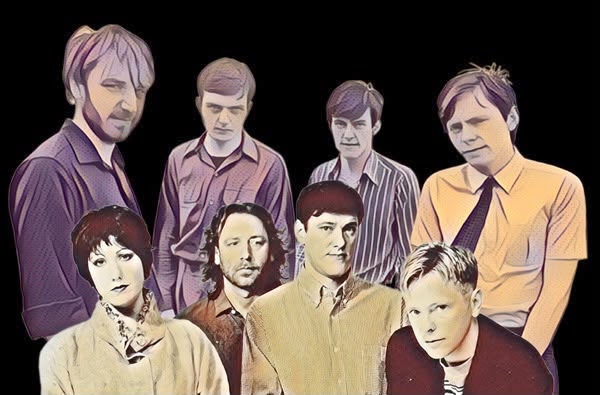
For those who lived through the 1980s, that carries a special weight. New Order was not just a soundtrack. It was an entry point into an idea of modernity. It was proof that pop could be strange, that electronic music could be emotional, that the dance floor could be sophisticated, that rock could stop looking only at guitars, and still preserve intensity.
I saw New Order three times. I will no longer see the band I saw in 1988. Nor the one I saw in 2006. Not even exactly the one I saw in 2014. But perhaps every concert by a band like this is a negotiation between memory and the present. We go for what is still there, but also for what is no longer there.
And in New Order’s case, the absences have always made noise.
Descubra mais sobre
Assine para receber nossas notícias mais recentes por e-mail.

