
For almost two years, one of the most persistent complaints among Fire & Blood readers watching House of the Dragon has been the absence of Nettles. I was one of those readers. The problem was never simply that the adaptation had removed a popular character. Nettles plays a decisive role in the final stretch of the Dance of the Dragons because her relationship with Daemon causes the definitive rupture between him and Rhaenyra and leads directly into one of the greatest mysteries George R. R. Martin ever created around House Targaryen.
For that reason, when Ryan Condal gave Sheepstealer to Rhaena, my reaction was the same as that of many readers: it seemed as though the series had simply discarded one of the most fascinating stories in Fire & Blood. After this episode, however, it may be time for me to admit that I was looking at the change from the wrong angle. The show has not exactly erased Nettles. Instead, it has transferred her dramatic purpose to another character and fused two trajectories that never intersect in the book. In doing so, it may have created an even more devastating tragedy.
The change is much larger than it initially appears because Rhaena and Nettles never serve similar purposes in George R. R. Martin’s story. In fact, they represent opposite moments in the history of the Dance. Nettles embodies the collapse of Daemon and Rhaenyra’s relationship during the war, while Rhaena represents what survives after the war has destroyed almost everything. Understanding that distinction is essential to seeing why House of the Dragon may have changed not only Rhaena’s future, but also the emotional meaning of the entire ending of the Dance of the Dragons.
Ryan Condal has confirmed that the decision was deliberate and emerged, above all, from the writers’ reluctance to turn Daemon and Rhaenyra’s marriage into another story about infidelity. After everything the couple had already endured, the creative team did not believe that introducing a possible lover was the most interesting way to bring their relationship to a breaking point. The challenge was therefore to preserve the conflict caused by Sheepstealer’s rider without repeating the same kind of marital betrayal. Personally, I agree with Condall here.

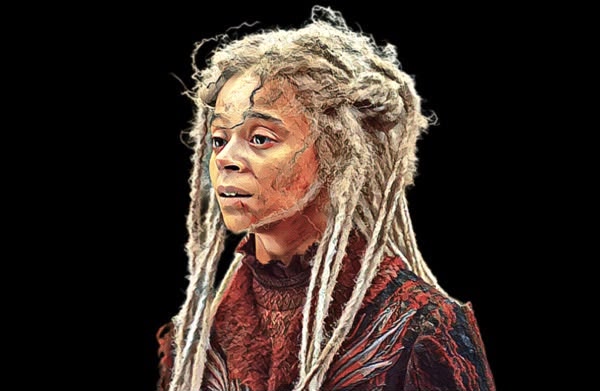
Who is Nettles in Fire & Blood?
Nettles appears relatively late in Fire & Blood, during the search for riders capable of claiming the riderless dragons that remain on Dragonstone. She is introduced as a young bastard of humble origins, with no confirmed Valyrian ancestry. That apparently small detail is one of the most important elements of her story because it challenges one of the central beliefs held by House Targaryen: that only those carrying their blood can bond with and ride dragons.
While other candidates attempt to claim Sheepstealer by relying on force or on the supposed magical connection between Targaryen blood and dragons, Nettles adopts an entirely different strategy. For several days, she approaches the wild dragon with freshly slaughtered sheep, repeating the ritual patiently until she earns his trust. Martin never clarifies whether she secretly possesses Valyrian ancestry or whether she has simply discovered another way of creating the bond. The uncertainty appears deliberate because Nettles places the arrogance of House Targaryen under suspicion. Perhaps the family never fully understood the power it believed belonged exclusively to them.

After claiming Sheepstealer, Nettles begins fighting alongside Daemon Targaryen, and the two develop one of the most ambiguous relationships in Fire & Blood. Martin never confirms whether Daemon regards her as a daughter, a protégé, or a lover. The accounts differ because the book is constructed from conflicting chroniclers, some of whom describe a paternal relationship while others insist that the two were lovers. The author never chooses a definitive version, allowing the uncertainty itself to shape their story.
That ambiguity eventually becomes enough to destroy Daemon’s marriage to Rhaenyra. As the war continues and the distance between husband and wife grows, Mysaria deliberately feeds the queen’s jealousy. Convinced that Daemon has fallen in love with Nettles, Rhaenyra orders the young dragonrider to be arrested and executed for treason. Daemon refuses to obey. Instead of surrendering Nettles, he warns her and allows her to escape during the night. The following morning, he leaves alone for Harrenhal, where he will eventually face Aemond Targaryen in what becomes the most legendary duel of the entire Dance.
His decision to save Nettles is the moment that definitively ends his relationship with Rhaenyra.
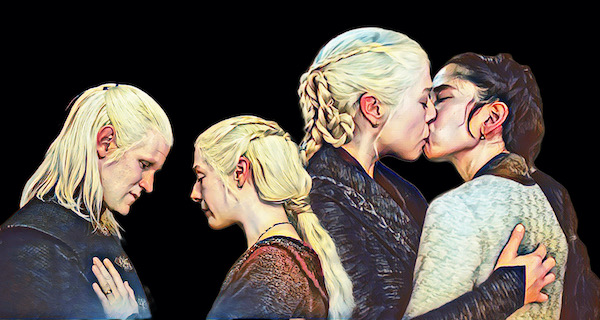
What happens to Rhaena in the book?
While Nettles becomes increasingly important on the battlefield, Rhaena follows a completely different path. Her story is designed to represent almost the opposite of war.
As the conflict intensifies, Rhaenyra sends Rhaena to the Vale of Arryn with her youngest sons, Aegon and Viserys. The princess is not expected to conquer territory or fight the Greens. Her responsibility is to protect the children who represent the future of the dynasty, should the Blacks lose the war. It is an enormous demonstration of trust from Rhaenyra because the survival of Aegon and Viserys may determine whether her branch of House Targaryen has any future at all.
Unlike her counterpart in the television series, Rhaena never abandons that mission. She remains in the Vale for much of the Dance and never becomes involved in the events that bring Daemon and Nettles together. She does not claim Sheepstealer, does not join the major battles, and does not follow her father into war. Instead, Rhaena continues to live with the same frustration that has shaped her since childhood: she remains without a dragon while nearly every other young Targaryen finds one.
That absence defines her identity just as Aemond’s inability to claim a dragon defines his childhood. Both know the humiliation of belonging to a dragonriding dynasty while being unable to fly. Both grow up surrounded by siblings and relatives who soar above them, enter history, and receive the recognition that remains out of their reach. Aemond responds to that humiliation by claiming Vhagar and setting in motion a tragedy that will transform Westeros. Rhaena, by contrast, learns to wait.
George R. R. Martin reserves her reward for after the war.
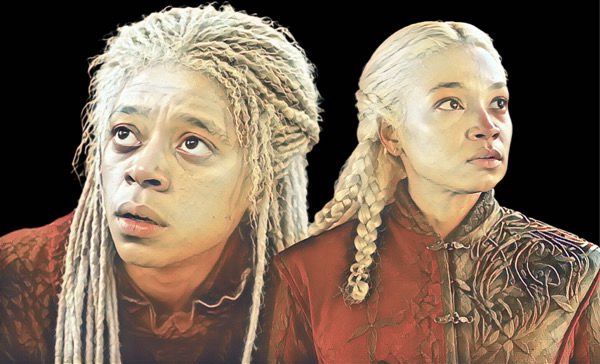
When the Dance is finally ending, and most of the great dragons belonging to House Targaryen have already died, one of the eggs in Rhaena’s care hatches. From it emerges Morning, a small pink dragon who becomes one of the most beautiful symbols in Fire & Blood. Morning’s importance has little to do with size or military power. The dragon represents the possibility of renewal at the very moment when the dynasty appears condemned to decline.
Rhaena finally receives the dragon she has wanted throughout her life, but the bond is not born from conquest, violence, or war. It comes through patience, survival, and hope. That distinction defines her role in the book. Nettles represents the rupture between Daemon and Rhaenyra, while Rhaena and Morning represent the possibility that House Targaryen may still have a future after losing almost everything.
After the war, Morning grows alongside Rhaena, who eventually begins flying over King’s Landing and offering the survivors an image that had seemed impossible only a few years earlier: a Targaryen once again riding a young dragon. She later moves to Dragonstone, believing it will be a better place for Morning to grow. Martin never reveals exactly when or how the dragon dies. Morning simply disappears from the historical record before the final extinction of the dragons, becoming another silent chapter in the slow end of that age.
Rhaena herself continues to play a significant role in the postwar years. She first marries Ser Corwyn Corbray, a knight of the Vale for whom she develops genuine affection while living under Lady Jeyne Arryn’s protection. When Corwyn is later killed, Baela fears that her sister may use Morning to seek revenge, which suggests how powerful the bond between dragon and rider has become. Years later, Rhaena marries again, this time to Garmund Hightower, with whom she has six daughters. There is an unmistakable irony in that fate: Daemon’s daughter, whose family fought a devastating war against the Hightowers, ultimately joins the very house that stood on the opposing side of the conflict.
That is the future the series now appears prepared to rewrite.
By giving Sheepstealer to Rhaena, Ryan Condal has not merely removed Nettles from the adaptation. He has fundamentally altered the narrative function of Daemon’s daughter. The character who represents reconstruction in the books has now been placed at the center of a tragedy that originally belonged to someone else.
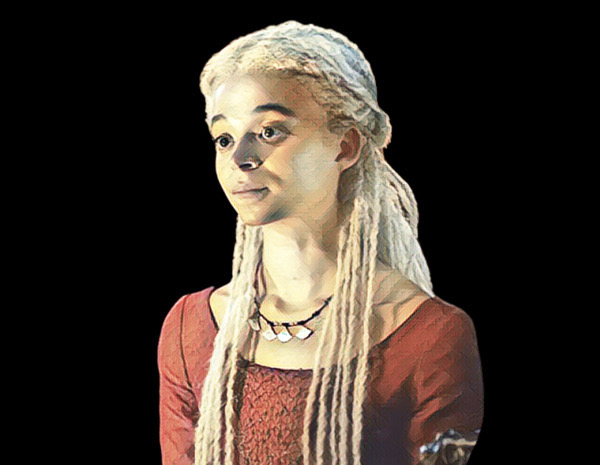
Rhaena no longer represents only the future because she is living the tragedy of the present
This is where Condal’s decision begins to make more sense. For a long time, Nettles’ absence looked like a straightforward cut made by the adaptation. After this episode, however, it becomes clear that the showrunner did not intend to eliminate her dramatic function. Instead, he has transferred it to a character whose story had previously been moving in an entirely different direction.
The change completely transforms Rhaena. In the book, she never disappoints Rhaenyra. She fulfills the responsibility entrusted to her, protects Aegon and Viserys, and survives the war without abandoning her duty. Her great reward comes only after the Dance, when Morning hatches and gives meaning to years of patience and frustration.
The series has chosen the opposite path. Across several seasons, House of the Dragon has developed a feeling that Martin only partially explores: Rhaena’s belief that she is lesser than the other members of her family because she has no dragon. While Baela rides Moondancer, joins war councils, and earns the respect of the adults around her, Rhaena feels condemned to remain in the background. Even the mission Rhaenyra gives her cannot erase that sense of inadequacy. The queen sees Rhaena as the person she trusts to protect her youngest sons, but Rhaena interprets that responsibility very differently. Rather than seeing herself as the guardian of the dynasty’s future, she believes she has been pushed away from the war and reduced to the role of a glorified nanny while everyone else writes history.
Her perspective makes her decision emotionally understandable. When Rhaena abandons the royal children to search for Sheepstealer, she is not simply pursuing a dragon. She is trying to escape the identity she believes has been imposed on her since childhood: the forgotten daughter, the less important sister, and the princess who was never considered enough of a Targaryen to stand beside the others.
That does not make her decision any less disastrous. By leaving the princes, Rhaena disobeys a direct order from Rhaenyra and abandons the very heirs she had been trusted to protect. The series still needs to explain where Aegon and Viserys are, whether they are safe, and who is now responsible for them. Regardless of the answer, Rhaena has failed the only mission the queen personally entrusted to her. Unlike the book, the adaptation has therefore given Rhaenyra a concrete reason to feel betrayed by her.
Another consequence may prove even more painful. By claiming Sheepstealer, Rhaena becomes involved in the Battle of the Gullet and directly influences Jacaerys’ decisions at one of the most critical moments of the war. When Sheepstealer attacks Baela, Jace instinctively flies to protect his fiancée. Once he realizes the rider is Rhaena, he descends to avoid attacking her, making himself a much easier target for the enemy. However, the series ultimately develops this sequence; it is difficult to imagine that Rhaena will not carry a profound sense of guilt. In Fire & Blood, she emerges from the Dance largely spared from its deepest emotional scars. In the adaptation, she now bears a burden that George R. R. Martin never placed upon her.
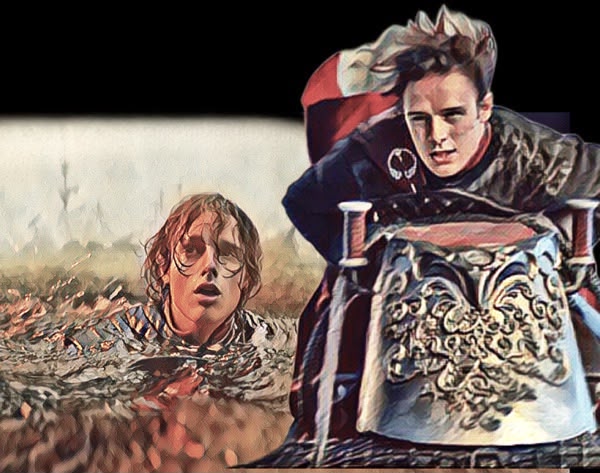
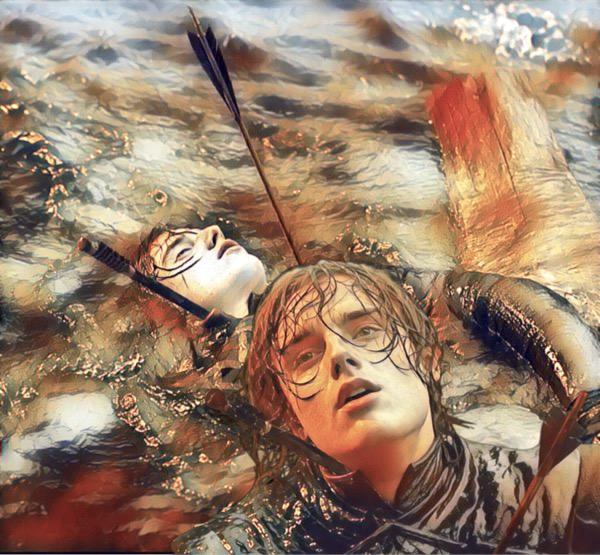
Rhaena and Aemond share the same childhood wound
The parallel between Rhaena and Aemond becomes especially important in the series. Both grow up carrying the humiliation of being the only dragonless children within a family that defines its identity through dragons. Both are forced to watch siblings and relatives claim the power, confidence, and visibility that seem forever beyond their reach. Neither experiences the lack of a dragon as a simple disappointment. It becomes a judgment about their worth.
Aemond transforms that humiliation into rage. By claiming Vhagar, he does more than acquire the most powerful living dragon. He creates the identity through which he will answer every insult he suffered as a child. The moment gives him confidence, but it also deepens the resentment and violence that eventually consume him.
Rhaena’s pain is quieter, but it is no less important. She sees Baela as stronger, more courageous, and more naturally suited to the Targaryen legacy. When Rhaenyra entrusts her with the princes, Rhaena cannot recognise the importance of that responsibility because she has already internalized the idea that caring for children is what remains for the girl who cannot ride into battle. Her pursuit of Sheepstealer is therefore both an act of rebellion and an attempt to redefine herself.
The irony is that, like Aemond, she finds a dragon through an impulsive decision that creates consequences far beyond the victory itself. Claiming Sheepstealer finally gives Rhaena the identity she has always wanted, but it may also cost her Rhaenyra’s trust, her place within the family, and the future George R. R. Martin originally wrote for her.
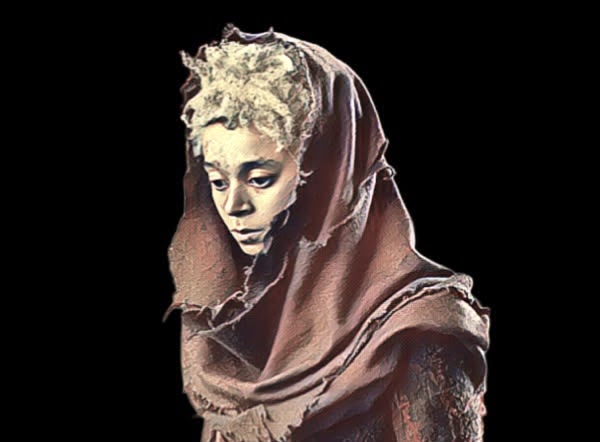
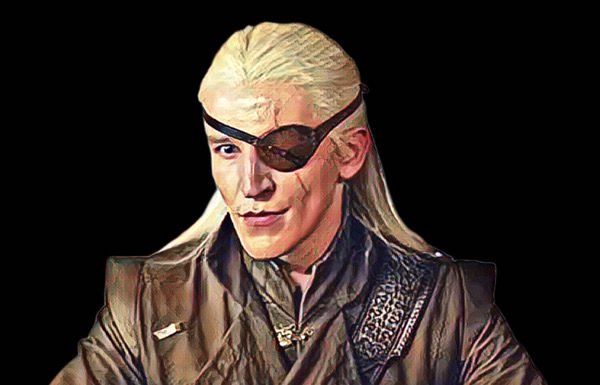
Daemon now faces a much more painful choice than he does in the book
The change also transforms Daemon. In Fire & Blood, his decision to save Nettles destroys his marriage because it can be interpreted as choosing a lover over his wife. Martin never confirms the romantic nature of their relationship, but Rhaenyra’s belief is enough to shatter whatever trust remains between them.
The series appears interested in a much more intimate conflict. Daemon will not have to choose between the queen and a possible lover. He will have to choose between the queen and his own daughter, and that difference alters the emotional meaning of everything that follows.
From the beginning of House of the Dragon, Daemon has never been shown as a present father. Baela and Rhaena grow up much closer to Rhaenys and Corlys than to him. Even after he marries Rhaenyra, the series rarely shows him interacting with Aegon and Viserys, his younger sons. Daemon is gifted at conquering cities, winning battles, and negotiating alliances, but building a family has never been one of his strengths.
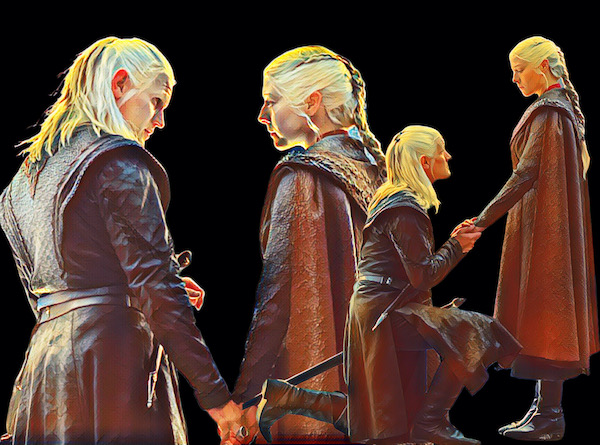
That is why his encounter with Rhaena carries so much emotional weight. When he sees her riding Sheepstealer, Daemon does not merely see a young woman who has disobeyed her queen. He sees a daughter who has spent her life trying to prove that she belongs to the family into which she was born. For the first time, he appears to understand the scale of the abandonment she has experienced and the part he played in creating it.
His actions after returning to King’s Landing make that recognition clear. Daemon presents Rhaenyra with a burned head and claims that he has found and killed the person responsible for Jacaerys’ death. The lie does more than offer the queen a false form of vengeance. It creates a distraction, draws suspicion away from Rhaena, and buys his daughter time to escape. Mysaria almost immediately understands that the story does not make sense, but Daemon has already made his choice.
Curiously, it is the same choice he makes in the book. When Rhaenyra orders Nettles’ death, Daemon allows her to flee. By hiding Rhaena, he once again protects someone he loves rather than obeying his queen. The difference is that the series leaves no room to interpret the gesture as romantic passion. It becomes the act of a father trying, perhaps far too late, to repair a relationship he never truly built.
That makes the potential rupture between Daemon and Rhaenyra much more painful. In the book, their marriage collapses because Rhaenyra believes another woman has taken her husband away. In the series, it may collapse because Rhaenyra discovers that Daemon has finally chosen to be a father at precisely the moment when she most needs him to remain entirely loyal to her as queen.
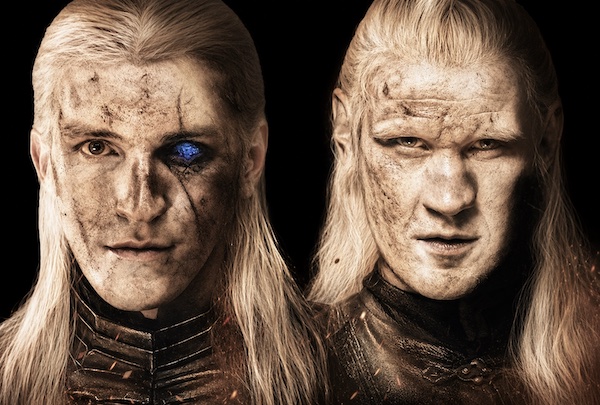
What happens to Daemon in the book? Does he die?
If the series has transferred Nettles’ dramatic function to Rhaena, it is inevitable to ask whether the change will also alter Daemon’s fate.
After allowing Nettles to escape in Fire & Blood, Daemon travels alone to Harrenhal and waits for Aemond. Their confrontation takes place above the Gods Eye and becomes one of the most famous sequences in the history of Westeros. During the battle, Daemon leaps from Caraxes onto Vhagar and drives Dark Sister through Aemond’s remaining eye. Both dragons crash into the lake.
Vhagar’s body is later recovered, with Aemond still chained to the saddle. Caraxes manages to drag himself from the water before dying from his wounds. Daemon’s body, however, is never found.
That detail has fuelled one of the oldest theories among readers. Because Nettles also disappears from the narrative on Sheepstealer, some believe Daemon survived the fall and eventually fled to live with her far from Westeros. Nothing in the book confirms that interpretation, but Martin has never definitively disproved it either. Officially, Daemon is presumed dead after the Battle Above the Gods Eye, but the absence of his body preserves the possibility of another ending.
The series may be preparing a different version of the same mystery. If Rhaena has inherited Sheepstealer, the escape, and the conflict with Rhaenyra, she may also inherit the part of Nettles’ story that remains unresolved after Daemon disappears.
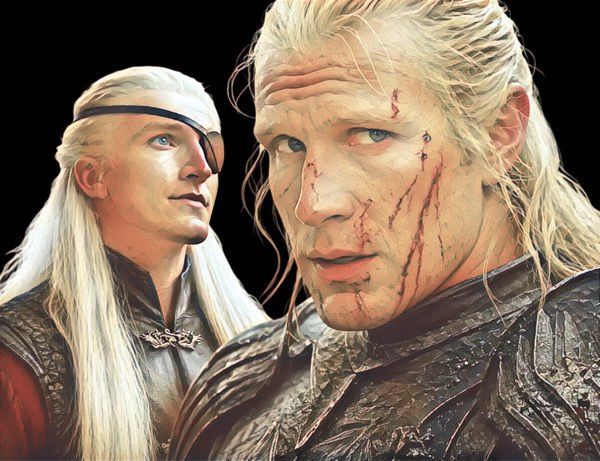
What happens to Rhaena, and does she die?
In Fire & Blood, Rhaena does not die during the Dance. She survives the war, rides Morning, marries twice, and has six daughters with Garmund Hightower. Nettles also survives the immediate events of the war, escaping on Sheepstealer after Daemon warns her of Rhaenyra’s order. She and the dragon then disappear from the central political history of Westeros.
The series has now placed those two different destinies inside a single character. Rhaena may still survive the war, but the route through which she does so is likely to be radically different. Because she has claimed Sheepstealer and is already preparing to flee, the adaptation may give her Nettles’ disappearance rather than the postwar life George R. R. Martin wrote for Daemon’s daughter.
There is another possibility. Rhaena may eventually release Sheepstealer, return to the Vale, and resume some version of her original story. Morning could still hatch, allowing the series to preserve at least part of her symbolic role in the reconstruction of House Targaryen. That path would reconcile the two versions, although it would require the show to justify why a character who has already claimed a powerful dragon would later lose or abandon him, only to bond with another.
The alternative is that Morning never appears at all. If Rhaena remains with Sheepstealer, her original dragon may simply be removed from the adaptation, or reduced to a detail without the importance it carries in the book. That would be a significant loss because Morning is not merely another dragon. The pink hatchling represents the promise that life can continue after the Dance has reduced the Targaryen dynasty to grief, fear, and ashes.
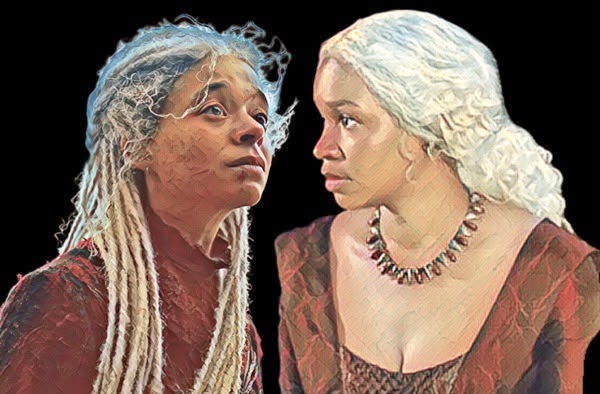
What happens to Sheepstealer in the book?
After Daemon helps Nettles escape, Sheepstealer disappears with her. Later stories and rumours place the dragon in the Vale, where he may have become connected to the wild mountain clans. The precise fate of both rider and dragon remains uncertain, which is one of the reasons their story has inspired so much speculation.
By giving Sheepstealer to Rhaena, the series can preserve that same disappearance while changing its emotional meaning. In the book, a mysterious outsider flees after becoming the focus of Rhaenyra’s jealousy. In the series, Daemon’s daughter may vanish because she has disobeyed the queen, abandoned the royal princes, and become the person her father is willing to betray his wife to protect.
Rhaena could therefore disappear with Sheepstealer just as Nettles does, but the possibility that she releases him and returns to the Vale cannot yet be dismissed. The adaptation has merged two stories, but it has not revealed which parts of each will survive. That uncertainty is now one of the most interesting questions surrounding the future of the series.
The adaptation has changed two characters at once
For a long time, I believed House of the Dragon had simply lost one of the most fascinating characters in Fire & Blood. After this episode, I am beginning to think Ryan Condal has attempted something far more ambitious. Instead of maintaining two parallel trajectories, he has combined them into a single character.
The price of that decision is considerable. In the book, Rhaena represents reconstruction. She survives the war, protects the future of the dynasty, receives Morning when almost every other dragon has died, and becomes a symbol of hope after destruction. Nettles represent rupture. Her presence leads Daemon to defy Rhaenyra and helps precipitate one of the most painful endings in the Dance.
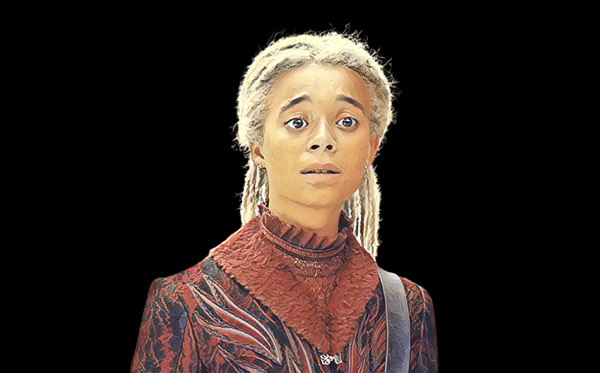
In the series, both functions now belong to Rhaena. She remains the young woman who has spent her life believing she would never have a dragon, who lives in Baela’s shadow, and who longs to prove that she truly belongs to House Targaryen. The difference is that her victory comes earlier and demands a much higher price. By choosing Sheepstealer, she abandons the princes, breaks Rhaenyra’s trust, carries guilt over Jace, and forces Daemon to lie to protect her.
If this reading is correct, Condal has not merely altered Rhaena. He has transformed the emotional centre of the final stretch of the Dance of the Dragons. Instead of watching a marriage collapse under jealousy and suspicions of adultery, we may be watching the story of a father who, after failing his children for most of his life, finally chooses to protect one of them at the exact moment when his queen most needs his loyalty.
I never expected to write this after complaining so much about Nettles’ absence, but if this is truly where House of the Dragon is going, the adaptation may have found a tragedy that is even more human than the one George R. R. Martin originally wrote.
Descubra mais sobre
Assine para receber nossas notícias mais recentes por e-mail.


1 comentário Adicione o seu