
There are episodes in which a war changes because of a battle, a death, or a decision so obviously disastrous that everyone can identify the exact moment when a character began to lose. The fourth episode of House of the Dragon Season 3 does something far more interesting with Rhaenyra Targaryen. She does not make one catastrophic mistake. Instead, she makes several small decisions that, when considered separately, are almost all defensible. The problem is that those choices, combined, are precisely what will help cost her the crown.
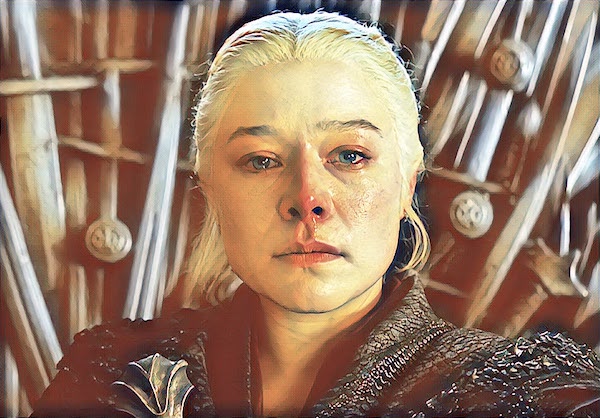
Rhaenyra has already created tension with Corlys Velaryon by resisting the legitimization of his sons. Her position is understandable because the suspicions surrounding the parentage of Jacaerys, Lucerys, and Joffrey followed her throughout virtually her entire adult life and were used to undermine not only her sons but her own claim to the Iron Throne. She has also just put bastards of Valyrian blood on dragons, altering a hierarchy that sustained her family’s power for centuries. Even so, there is a contradiction that is impossible to ignore: after doing all of that, why deny Corlys the recognition of the sons he himself wishes to claim?
Rhaenyra also creates a problem with Daemon when she orders the death of the person who claimed Sheepstealer before she even understands who the rider is or what role that person played in the battle. Because we know that the rider is Rhaena, the decision stops being purely military and begins to affect the queen’s own family. Daemon has already chosen to protect his daughter and, without realizing it, Rhaenyra has turned a threat she does not even understand into yet another conflict within her own house.
At the same time, Rhaenyra goes back on what she promised Alicent and Helaena. Here lies another of the most painful ironies of her position. We may agree with her resistance to the logic defended by Otto Hightower and Daemon himself, according to which anyone who occupies the throne must eliminate every person who could represent a threat to the succession. Morally, Rhaenyra’s refusal is understandable. Politically, however, Helaena is pregnant with the child of the king who occupied the throne Rhaenyra has just taken. In Westeros, that is not a family detail. It is a dynastic problem that can grow very quickly.
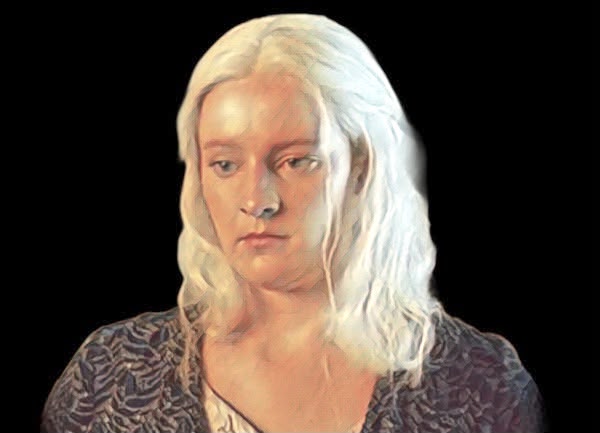


All of these decisions can be debated because all of them have arguments for and against them. Rhaenyra’s greatest mistake, however, may be the one she does not yet recognize as a mistake at all, because it comes from a blindness she shares with Daemon toward the people who exist beneath them in the social structure of Westeros. That blindness has two names, Hugh Hammer and Ulf White, but Hugh has now become the more interesting character in this equation.
We have already discussed Ulf’s trajectory and the way House of the Dragon established early on why he would never be an easy man to control. Ulf is the most obvious weak point among the dragonseeds because he likes money, drink, fame, and, above all, the recognition he never had. When he returns to Flea Bottom and sees how people react to his new status, he makes no attempt to hide his pleasure. Everyone knows him, everyone wants something from him, and, for the first time, Ulf is no longer the man telling stories about a supposed Targaryen ancestry. He has become someone whose importance no one can deny.
The danger Ulf represents is visible to everyone because he has never hidden who he is. His ambition grows from an old resentment and from a persistent sense that the world denied him what he should have received. Ulf does not simply believe he deserves more. He believes the world owes him more. Silverwing does not create that resentment, but validates it, because Ulf now possesses one of the most powerful creatures in Westeros as proof that perhaps he was right about himself all along.
Hugh is different, and that is precisely why he may become far more important.
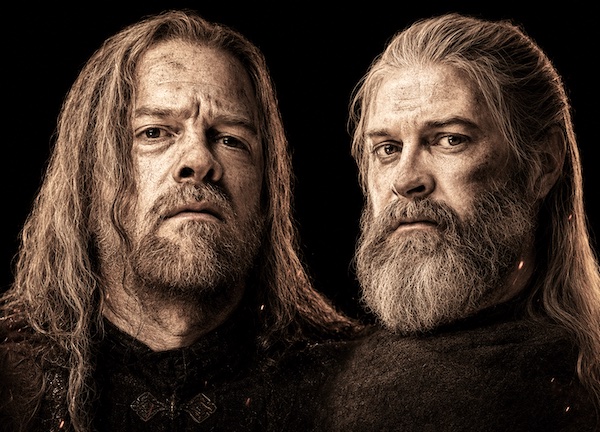
Who Is Hugh Hammer?
When Hugh first appeared in House of the Dragon, he was still very far removed from the man readers of Fire & Blood know as one of the great traitors of the Dance of the Dragons. The series introduced him as a blacksmith in King’s Landing, a skilled worker trying to survive in a city preparing for war. Hugh did not want a crown, a castle, or a place among the great lords of Westeros. He wanted enough work to support his family.
Hugh had a wife, Kat, and a sick daughter, and that apparently simple choice completely transformed the character. In Fire & Blood, he is a much less psychologically developed figure. We know that he is physically strong, claims Vermithor, fights for Rhaenyra, and later changes sides alongside Ulf White at the First Battle of Tumbleton. His ambition grows until he begins to desire something far greater than the rewards he was originally promised. That trajectory exists in the book, but the transformation from the queen’s dragonrider into a man willing to claim something close to royal power happens relatively abruptly.
The series began preparing for that change long before Hugh ever encountered Vermithor. We saw hunger in King’s Landing, the lack of resources, the desperate attempts of a man trying to get help, and the illness of a daughter he could not save. We watched Hugh work for a Crown that could not guarantee food for his family and, above all, we watched an ordinary man pay for a conflict between Targaryens long before any of the war’s great players understood the price they were imposing on the people.

When Rhaenyra called for people of Valyrian blood to try to claim the riderless dragons on Dragonstone, Hugh did not arrive as an adventurer searching for power. He arrived as someone whose life had already been destroyed by the war. By finding Vermithor, he gained a position he could never have imagined holding, but claiming a dragon did not erase what had happened before. Hugh remained the man who had gone hungry, watched his daughter die, and learned in the most brutal way possible that people like him pay for war long before those who declare it.
Now, Tumbleton adds another loss to that story. The series is not merely moving Hugh closer to the place where we know his trajectory will change. It is making that change emotionally understandable.
Rhaenyra Believes She Gave Hugh Everything
It is easy to understand Rhaenyra’s perspective. She allowed men without titles to claim dragons belonging to House Targaryen, something that for centuries represented the most exclusive element of her family’s power. She then gave those men recognition, status, and titles. To a queen raised within the logic of the Westerosi nobility, that is an extraordinary reward and, in a sense, it should be enough.
In Rhaenyra’s mind, Hugh and Ulf have received more than they could ever have imagined. The problem is that she never seriously asked what they wanted.
Ulf wants money, drink, comfort, and recognition. The series has never tried to hide that. He enjoys fame and, above all, the feeling of finally occupying a place that was previously denied to him. His ambition grows from an old resentment and finds in Silverwing confirmation that he no longer has to accept the position the world imposed upon him.
Hugh wants security, and that difference between the two men is essential.
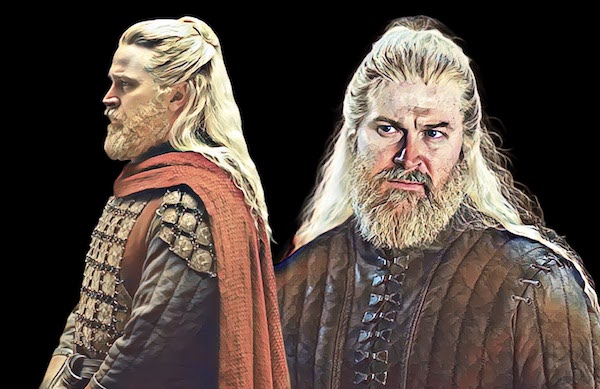
Hugh did not begin his story trying to climb the hierarchy of Westeros. He wanted a home, food, and the means to protect his family. Even after becoming Vermithor’s rider, those concrete needs did not disappear. A title may change what other people call him, but it does not necessarily put a roof over his head. Prestige does not buy food on its own, and the honor of serving the queen does not replace what was promised to the men who now risk their lives while controlling two of the most powerful creatures in the world.
Every time Hugh and Ulf approach Rhaenyra to collect what they believe was promised, she becomes exasperated. Daemon is even worse and goes so far as to strike Ulf across the face when he persists. The scene matters not only because Ulf is a dangerous and resentful man, but because it reveals that, for Rhaenyra and Daemon, the relationship between the Crown and its new dragonriders still operates according to a hierarchy that ceased to exist the moment Silverwing and Vermithor accepted their new riders.
The two Targaryens seem to believe that Hugh and Ulf should remain eternally grateful for the opportunity. The problem is that Rhaenyra and Daemon were the ones who needed them. The queen did not give these men dragons out of generosity. She did it because she needed riders. Hugh and Ulf, therefore, are not merely receiving privileges. They are putting their own lives at the service of her war.
That is the part Rhaenyra seems unable to understand. A dragon does not pay for food, a title does not necessarily provide a home, prestige does not replace security, and gratitude is not a salary. To someone born into the nobility, granting a title may seem like the greatest possible reward. To someone like Hugh, who lost a daughter because he lacked the means to protect her, the question is much simpler: what, in practical terms, has actually changed in his life?
The Mistake Rhaenyra Cannot See
Perhaps this is the greatest irony of Rhaenyra’s politics. To survive, she had to break one of the oldest and most exclusive structures in Targaryen society. She had to acknowledge that Valyrian blood existed outside officially recognized families and opened the dragons to bastards and people who would never have been considered worthy of that power in ordinary times.
After breaking that hierarchy, however, Rhaenyra still expects those people to behave as though nothing has changed.
You cannot place Vermithor under the command of a blacksmith and continue treating that man as nothing more than a blacksmith. Nor can you allow Ulf to ride Silverwing and expect him to accept humiliation as he did before. Power changes the relationship between those who command and those who obey, and Hugh and Ulf now control weapons that Rhaenyra desperately needs. From that moment on, their loyalty can no longer be treated as the natural consequence of gratitude. It has to be maintained.
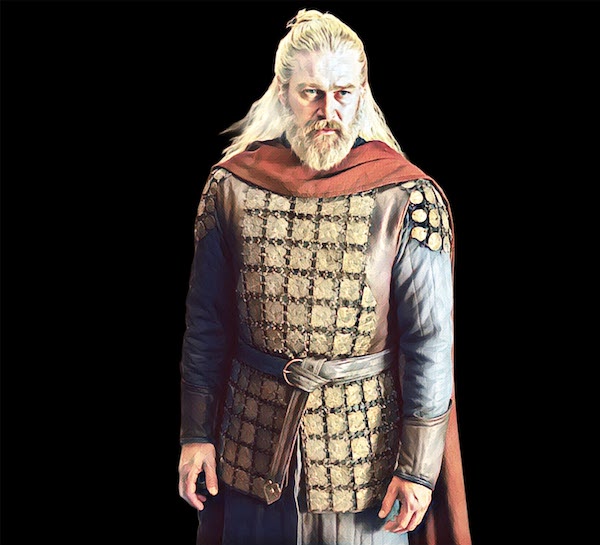
This is where the difference between the two men becomes even more important. In Ulf’s case, the dragon confirms something that was always there. He spent his life believing he deserved more, and now he possesses a creature capable of destroying armies as proof that he was right. His resentment finds power.
In Hugh’s case, however, the process is much more tragic. He did what was asked of him, survived hunger, lost his daughter, claimed Vermithor, fought for Rhaenyra, and now loses again. Gradually, the question stops being simply why Hugh will betray Rhaenyra and becomes why he should remain loyal to her.
Hugh and Ulf Are No Longer the Same Betrayal
For a long time, Hugh Hammer and Ulf White have been remembered together. They are the dragonseeds who abandon Rhaenyra during the First Battle of Tumbleton and defect to the Greens. History itself turned them into a pair and immortalized them as the Two Betrayers.
House of the Dragon, however, is doing something far more interesting by separating them.
Ulf moves toward betrayal through ambition, while Hugh moves toward it through loss. Ulf discovers that possessing a dragon means he no longer has to accept the place the world has reserved for him. Hugh begins to discover that obeying a queen does not mean that the queen will protect what he loves.
One wants more because he always believed he deserved more. The other begins to want more because everything he truly wanted has gradually been taken from him.
That does not mean Hugh will remain forever the honorable man we first met. If the series follows the general course of Fire & Blood, his trajectory will still be marked by ambition, a hunger for power, and the conviction that he could occupy a far greater position than the one he was given. The difference lies in how that transformation is being built.
Ambition does not have to appear from nowhere. Loss can come first, followed by resentment and, finally, the realization that loyalty did not save his daughter, did not protect his wife, and did not give him the life for which he entered this war. Only then can the most dangerous idea of all begin to take shape: if possessing Vermithor is what truly gives him power, why should he continue waiting for someone else to keep their promises?
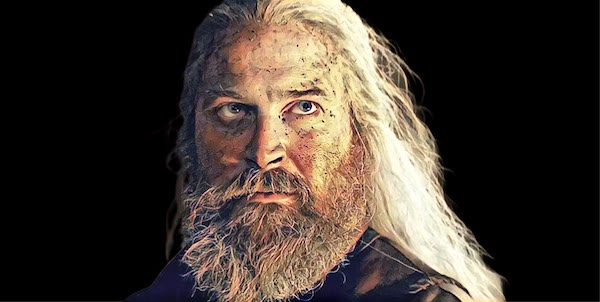
The Betrayal Fire & Blood Never Fully Explained
This may be one of the smartest changes House of the Dragon has made to George R.R. Martin’s book. The series does not need to change what happens. It can change why it happens.
Hugh may still betray Rhaenyra, change sides at Tumbleton, and become ambitious, violent, and dangerous. When that happens, however, it will not simply be because a poor man received a dragon and was suddenly corrupted by power. We will have watched the road that led him there and seen the hunger, the death of his daughter, the fate of his wife, the promises, the demands, the queen’s impatience, and Daemon’s contempt.
Above all, we will have watched the slow realization that the Targaryens may need men like Hugh while still finding it enormously difficult to truly see them.
Rhaenyra believes she has done a great deal for him. Hugh may begin to believe exactly the opposite, and that is the difference between a betrayal that simply happens and a tragedy we have spent seasons watching come to life.
In the fourth episode, Rhaenyra makes several decisions that may eventually turn against her. She alienates Corlys, creates a new conflict with Daemon, and reopens the problem represented by Alicent and Helaena. Every choice has a justification, and every mistake seems small when considered on its own. The most dangerous of them all, however, may be standing right in front of her, mounted on Vermithor.
Rhaenyra gave Hugh Hammer a dragon, but she still has not understood that, after doing so, she could no longer treat his loyalty as a debt of gratitude. By ignoring what Hugh is actually asking for, she may be doing far more than losing an ally. She may be teaching him that possessing a dragon is worth more than being loyal to a queen.
Descubra mais sobre
Assine para receber nossas notícias mais recentes por e-mail.

