
Maybe it is simply the frustration of watching Brazil get knocked out just as the World Cup started getting serious. That would be an easy explanation, except for one small detail: I never truly considered Brazil one of the favorites to win it. I cheered, of course. I suffered, obviously. And I developed a completely irrational and momentary dislike of the Norwegians (already forgotten), those annoyingly likable Vikings happily rowing away after sending Brazil home, which somehow makes it even worse. But they are not why I consider this the worst World Cup I can remember.
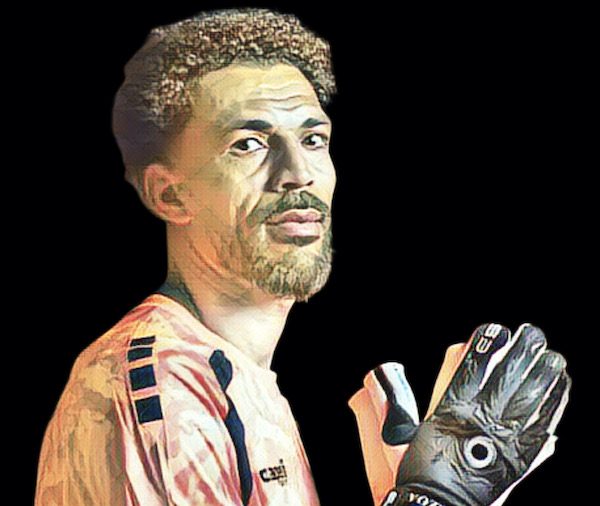
There were, in fact, some wonderful things about 2026: Cape Verde was one of them. A debutant nation with a tiny population gave us Vozinha, the 40-year-old goalkeeper who became one of the tournament’s most lovable characters, helped his country reach the knockout stage, and left the competition as a national hero. Cape Verde held its own against Spain, faced Argentina without behaving like an extra in someone else’s story, and reminded us why expanding the tournament to 48 teams, for all the flaws of the new format, also created room for stories we might never otherwise have seen.
Then there were the Norwegians. Grrr. Back at the World Cup after 28 years, they eliminated Brazil, reached the quarterfinals, and turned their collective Viking Row — rowing, chanting, and clapping in rhythm — into one of the tournament’s most endearing images. Even after losing to England, thousands took to the streets of Oslo to celebrate the team. This is exactly what makes a World Cup a World Cup: for a few weeks, an entire country suddenly speaks the same language without needing to explain a thing.
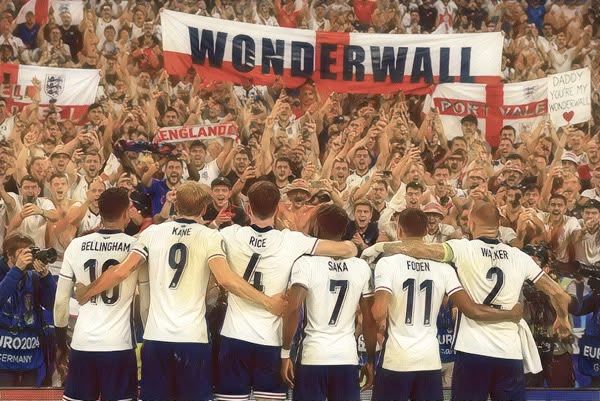
The English also gave us one of the tournament’s best images by turning Wonderwall into something close to an unofficial anthem for their campaign. Players and fans singing Oasis together after victories was one of those scenes no marketing strategy could ever genuinely manufacture, precisely because it happened spontaneously.
We also had Paraguay knocking Germany out on penalties in one of the tournament’s biggest upsets (we call it karma), Morocco once again proving that 2022 was no accident, and supporters reminding us that the World Cup belongs far more to the people who travel in costumes, sing, suffer, and take over the streets than to the executives sitting in VIP boxes. The Scots arrived in kilts with bagpipes, the Norwegians rowed, and Cape Verde lived through a historic debut. A wonderful World Cup was fighting to survive inside the 2026 World Cup.
The problem was almost everything else.
Never have I felt so strongly that FIFA was trying to adapt football to the logic of American entertainment instead of letting Americans discover football as it has always existed. It started with the infamous hydration breaks, mandatory throughout the tournament, whether or not conditions actually required them. Protecting players is obviously legitimate, and no responsible person would argue that athletes should be forced to compete in dangerous heat without proper care. The problem was turning what should be an exceptional measure into a universal rule. In practice, football matches were divided into four quarters.

And that interferes with the very nature of the game. One of football’s greatest challenges has always been that a coach cannot simply stop everything when his team is being overwhelmed, gather the players, redraw the tactical plan, and send them back reorganized. There were two halves of 45 minutes in which problems largely had to be solved in motion, and a 15-minute halftime for genuine intervention. Now there are two additional opportunities that function, whatever name we choose to give them, as tactical timeouts.
But the Americanization did not end there. The final will have a halftime show, because apparently the World Cup final — an event that already attracts billions of people without needing absolutely anything else — suddenly discovered it wanted to be the Super Bowl. And, in a detail so perfect it feels like satire, FIFA has also decided to give the champions rings in the style of major American sports leagues. At this rate, someone will soon suggest cheerleaders behind the goals and a Kiss Cam while VAR decides whether someone was offside.
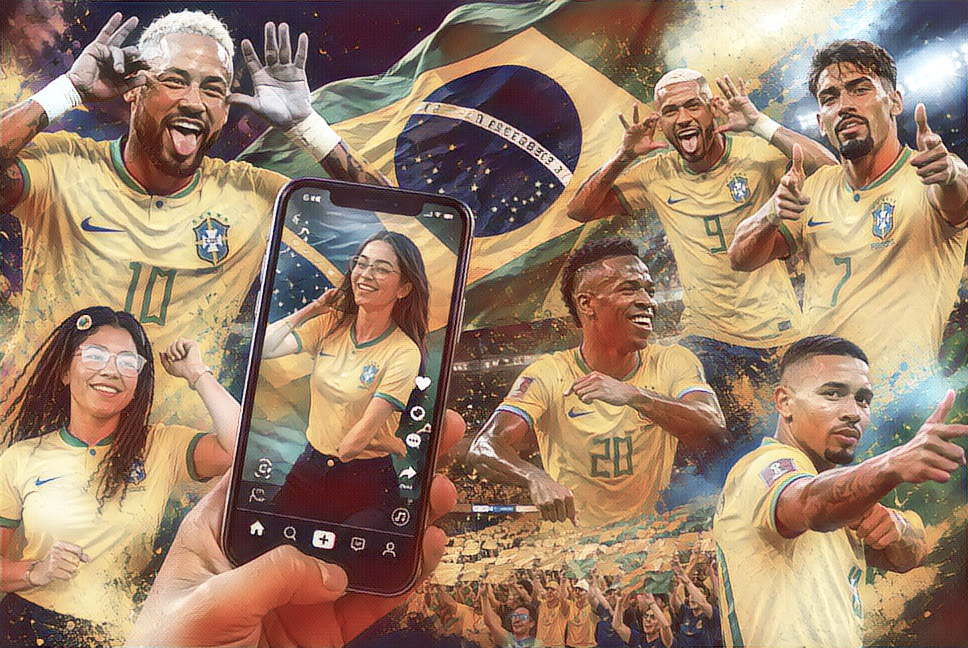
In Brazil, even the way we watch the World Cup has changed for good. Television had already been losing the emotional monopoly it once held over the tournament, but CazéTV consolidated an entirely different language: online broadcasting, absolute informality, shouting, swearing, influencers, reactions, and the permanent sensation that we are all sitting at one enormous digital bar table. That can be fun, and clearly it found an enormous audience. What bothered me deeply was something else: the almost suffocating presence of sports betting.
It was not merely the impression of someone who felt that another betting opportunity was being pushed every few seconds. The way gambling advertising appeared during World Cup broadcasts prompted official scrutiny. There is something profoundly disturbing about watching a sport being presented simultaneously as a competition and as a permanent opportunity to gamble money on whatever might happen in the next few minutes.
And then we come to what most poisoned my relationship with this World Cup: the refereeing and VAR.
I do not need to believe in an organized conspiracy to find the sheer number of controversial decisions surrounding Argentina’s run to the final absolutely repulsive. Argentina is an excellent team and most likely 20206’s champion. Lionel Messi is still Lionel Messi at 39. Perhaps that is precisely why it is even more unfortunate that their campaign has been accompanied by enough controversial episodes to produce the nickname “VARgentina.” There were formal complaints from opponents, disputed decisions, and a growing sense that similar incidents were being judged very differently depending on who was involved.
Messi’s incident against Algeria was particularly infuriating. He stepped on an opponent’s calf in a challenge that did not lead to a red card. We can debate intent, force, and interpretation forever. What is harder to ignore is the feeling of a double standard when other players are sent off after microscopic VAR reviews, while an incident involving the tournament’s biggest star simply disappears into the game.
The worst interference, however, may not even have come from a referee. Donald Trump managed to turn the World Cup into an extension of his own political spectacle. A head of state publicly interfering in a disciplinary matter involving his own national team and then seeing that decision reversed should be treated as something extraordinarily serious, regardless of which country is involved.
Perhaps that is why I took such petty pleasure in seeing France eliminated. Sorry, France, I still live 1998 and 2006 too vividly in my memories. They arrived as one of the great favorites, were treated as an attacking spectacle, and still failed to reach the final. May 2026 become their 1982: they can spend the next 44 years explaining that they had one of the best teams in the world and should have been champions. Brazilians understand perfectly how that works. And in that fact alone lies the beauty of football: you can still be the best, and yet, go home empty-handed. You never know until the game starts.
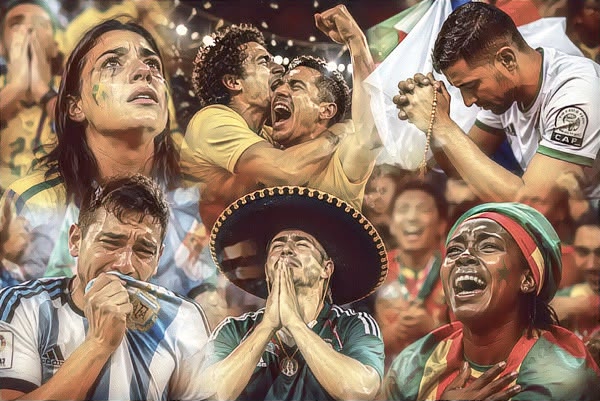
Okay, maybe it is unfair to simply call 2026 the worst World Cup ever. It gave us upsets, unlikely heroes, wonderful supporters, and that unique mechanism only a World Cup can produce. My problem is that never before have I felt so strongly that all of this had to compete for space with the product created to sell it.
There were 48 teams, 104 matches, hydration breaks turned into timeouts, betting invading broadcasts, VAR intervening when it feels like it and disappearing when it does not, politics entering the pitch, championship rings, and finally a halftime show because, apparently, even the World Cup final is no longer enough on its own.
Maybe 2026 has been an enormous commercial success. Maybe it will break records for audiences, revenue, engagement, and every other word that looks wonderful on a PowerPoint presentation. But the World Cup never needed to be improved this way. It was already the greatest show on Earth. The mistake was believing it needed to become something else.
Descubra mais sobre
Assine para receber nossas notícias mais recentes por e-mail.
 miscelana.com