
It is hardly news, or any kind of secret, that cinema has always known how to age its men. They acquire wrinkles, history, authority, new romances, and, quite often, much younger women. They remain heroes, lovers, men in crisis, men in search of a second chance. With women, the story was, for a very long time, quite different. Aging often meant no longer being desired, no longer being allowed to desire, and, little by little, moving away from the center of the narrative. Actresses over 40, for that matter, were rarely offered many roles. Paulina García helped disrupt that logic.
The Chilean actress, who is being honored at the fourth edition of Bonito CineSur, beginning this Friday, July 24, in Mato Grosso do Sul, has built much of her career precisely by playing women whom cinema, for decades, would have pushed to the margins of the story. Mature women, ordinary women, sometimes lonely, with no particular vocation for heroism, but who still desire, make mistakes, fall in love, feel fear, and, above all, continue to change. The festival opens with Dear Tropics, one of her most recent films to arrive in Brazil, and also places Paulina at the center of a conversation about female protagonism and resistance in South American cinema.
And, of course, for that very reason, it is impossible to talk about her without going back to Gloria.
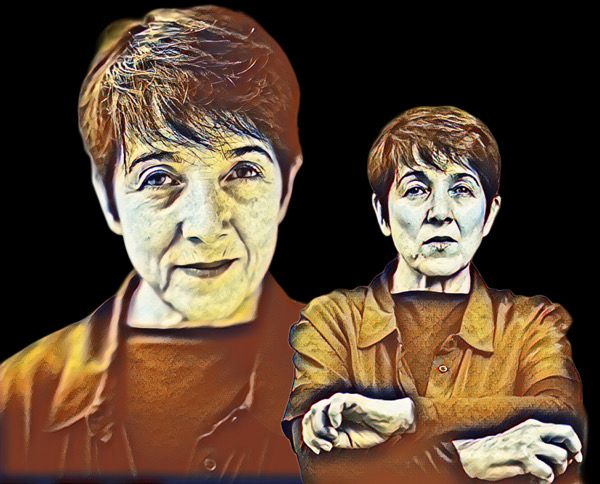
In 2013, long before the discussion about the invisibility of mature women gained the prominence it has today, Paulina appeared on screen as a middle-aged divorcée who went to singles dances, drank, danced, had sex, fell for the wrong man, and kept searching for something she may not even have known how to define. There was no miraculous transformation, no surgery, no rejuvenation, and none of that old familiar script in which a woman needs to be rescued by a new love to prove that her life is still worth living.
Gloria simply wanted to live. It may sound like very little, but it was not. Paulina won the Silver Bear for Best Actress at the Berlin Film Festival for a character whose great revolution lay precisely in refusing to apologize for still wanting something from life. I highly recommend watching — or rewatching — the film. It is beautiful.
There is an important difference between telling stories about aging and allowing an older woman to remain a complete character. Gloria is not admirable all the time. She is also needy, impulsive, vulnerable, and capable of clinging to a relationship that clearly gives her less than she wants. Perhaps that is exactly why she remains so alive. The film does not need to turn her into an inspiration to justify her existence.
Four years later, in The Desert Bride, Paulina returned to similar territory, although by a different route. Teresa is 54 and has spent decades working as a domestic employee for the same family until she is forced to leave that house and cross the Argentine desert in search of a new job. After a life organized around other people’s needs, she suddenly finds herself literally displaced, unsure what to do with a freedom she never asked for. The film, screened in the Un Certain Regard section of the Cannes Film Festival in 2017, transforms an apparently ordinary journey into a late opportunity to discover that there is still life beyond the role she was assigned.
There is something that connects Teresa and Gloria without making them the same woman, simply because they share Paulina’s face. Neither of them is at the beginning of life, but neither accepts that everything that matters has already happened. It is a seemingly simple idea that cinema took a surprisingly long time to understand.
When the Woman Who Has Always Cared for Others Needs Care Herself
Now, in Dear Tropics, that question acquires an even more delicate dimension. Paulina plays Mercedes, a wealthy woman beginning to face dementia who is cared for by Ana María, a Colombian immigrant. Between two women separated by class, origin, and circumstance, a relationship begins to take shape precisely as the identities each of them has sustained start to reveal their fragility.
And perhaps this is where one of the film’s most painful questions lies: what happens when a woman who has spent her life occupying certain roles — mother, professional, homemaker, boss, wife, caregiver to everyone else — begins to lose the very things she once used to recognize herself?
Memory is a fundamental part of identity, but it is not the only one. We are also what others remember about us, the bonds we have built, the roles we have performed, and even the identities we spent years trying to escape. When all of that begins to slip away, it is not only the past that disappears. The narrative we have constructed to explain who we are is threatened as well.
In Dear Tropics, that loss unfolds in front of another woman whose own existence is also marked by precarity. Ana María provides care, but she also needs to be cared for. Mercedes appears to have power, money, and an established life, yet she begins to lose control over what once seemed most intimate and inalienable: her own story. Their encounter gradually dismantles the simple idea that one is strong and the other vulnerable.
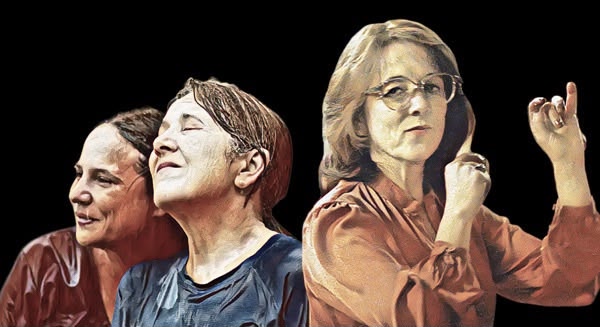
Perhaps this is also one of the invisible threads running through Paulina García’s career. Her characters are rarely women who “win” in the conventional sense. They do not grow younger, they do not magically recover everything they have lost, and they do not necessarily end up with their lives neatly resolved. What they gain is something less spectacular and, for that very reason, more interesting: the right to continue existing as subjects of their own stories.
Aging Should Not Mean Disappearing
It is curious that we still need to call revolutionary something that should be perfectly ordinary: a woman in her 50s, 60s, or beyond, having desire, fear, sexuality, selfishness, ambition, loneliness, and a future. Especially because the problem was never simply the absence of mature women from the screen. They were always there — as mothers, grandmothers, abandoned wives, neighbors, or caregivers. Characters helping someone younger move through their own story.
The real change happens when the camera stays with them after everyone else has left.
When we want to know what Gloria will do after that relationship. What Teresa will find after crossing the desert. Who will Mercedes continue to be when her memories begin to fail? By honoring Paulina García, CineSur is also celebrating an actress who has spent years doing something apparently small and deeply political: rejecting the idea that there comes a point in a woman’s life when all that remains is to look back.
Her characters do look back, naturally. There are losses, regrets, relationships that failed, and choices they might make differently. But there is still something ahead. Precisely the part that cinema has taken the longest to see.
Descubra mais sobre
Assine para receber nossas notícias mais recentes por e-mail.

