
In 1995, Beverly Hills, 90210 placed Kelly Taylor in a situation that seemed to demand a definitive romantic answer. On one side was Brandon Walsh, offering marriage. On the other hand was Dylan McKay, asking her to leave everything behind and travel around the world with him. They were her two great loves at that moment, and they represented completely different futures. The narrative structure left little doubt about what was expected of her: choose one.
Kelly chose a third possibility.
“I choose me.”
Seen almost 30 years later, the line has lost some of its shock because “choosing yourself” has firmly entered our contemporary vocabulary. We talk about self-love, boundaries, self-care, emotional dependence, and toxic relationships with a familiarity that did not exist in 1990s television. Even so, perhaps the power of that scene lies less in the image of a woman rejecting two men and more in the question it introduces: Is it possible to truly choose someone when we still need that person to tell us who we are?
That distinction matters because psychoanalysis has never proposed self-sufficiency as an ideal of mental health. Freud did not imagine that a person should learn not to need anyone. On the contrary, we are constituted through bonds, dependent on them from birth, and we spend our lives loving, desiring, identifying, projecting, idealizing, and transferring parts of our own history onto others.
The problem, then, is not needing relationships. It needs a relationship to resolve who we are.

Freud: We never choose only a person
One of Freud’s most unsettling contributions to the way we think about love is precisely the idea that our romantic choices do not begin at the moment we meet someone. Long before that, there was already a history.
In our earliest relationships, we learn, without any awareness of it, something about closeness, absence, abandonment, recognition, safety, desire, and frustration. These experiences do not produce a simple formula. Being abandoned, for example, does not mean that someone will necessarily choose people who abandon them. But they do create emotional models that may reappear in later relationships.
This is where the repetition compulsion becomes essential. Freud realized that human beings do not pursue only what gives them pleasure. We may return, in altered forms, to situations that consciously caused us pain. Not because we deliberately want to suffer, but because there is something psychologically familiar in that configuration.
We change the characters and, sometimes, keep the plot. Someone may repeatedly fall for emotionally unavailable partners. Someone else may need to win over a person who does not initially want them. Another may turn every relationship into an attempt to rescue the other person. Consciously, every love feels new. Analytically, there may be an earlier question: why is this particular position so familiar to me?
Kelly Taylor is especially interesting from this perspective because, for years, her identity was deeply tied to the gaze of others. She was the beautiful, popular, sexually desired girl, constantly being watched. Her relationship with Dylan began while still entangled in a rivalry with Brenda. It was not only about loving a man. It was also about the experience of being chosen instead of another woman.
Being chosen, in that context, acquires a narcissistic dimension.
When Freud writes about narcissism and object choice, he shows that love is not an operation entirely separate from the image we have of ourselves. We may invest in another person something of what we wish to be, what we feel we have lost, what we idealize, or what we hope will return a particular image of ourselves to us. The love object is never merely “the other.” They may also carry important parts of our fantasies about ourselves.
Dylan and Brandon, then, do not merely offer Kelly two relationships. They offer two possible versions of Kelly. Dylan represents intensity, risk, movement, and rupture. His proposal is to leave the known world behind and go. Brandon represents stability, recognition, belonging, and an organized future. His proposal is marriage. The options seem opposite, but they share something: both arrive with an identity attached. With one man, Kelly would become one kind of woman. With the other, another.
Perhaps “I choose me” is revolutionary precisely because, for a moment, she refuses to choose a ready-made identity through a man.

Lacan: Who am I when you desire me?
Lacan makes the discussion even more interesting because he dismantles the fantasy that there is some completely independent “true self” simply waiting to be discovered beneath everyone else’s gaze.
From his formulation of the mirror stage onward, the ego appears marked by identification with an external image. Our experience of identity is built in relation to the other and, later, to what Lacan calls the Other: the field of language, codes, expectations, and desire in which we attempt to locate our own place.
His formulation of desire as shaped by the desire of the Other helps explain why being desired can acquire such enormous psychic force. We do not only ask, “Whom do I desire?” We often ask, without realizing it, what it is about me that makes you desire me? That question can organize an entire life.
Being chosen can function as confirmation of value. If someone loves me, perhaps I am lovable. If someone desires me, perhaps I am desirable. If someone leaves me, perhaps something in me has lost its value. When two people compete for us, the narcissistic experience can be even more powerful because we are apparently placed at the center of desire.
That is exactly where Kelly finds herself. And that is precisely where she steps away.
Her decision does not necessarily mean that she has finally discovered an “authentic self” hidden beneath Dylan and Brandon. A Lacanian reading is more uncomfortable than that. Perhaps it only means that, for the first time, she can suspend the urgency of answering what other people’s desires demand from her.
They ask: Which one of us do you choose? Kelly introduces another question: who is doing the choosing?
Being alone is not the same as needing no one
This is where Donald Winnicott helps us avoid a simplistic reading of the scene.
In his work on the capacity to be alone, Winnicott proposes something apparently paradoxical: the healthy ability to be alone is born from a sufficiently secure relational experience. We do not learn to be alone because we discover that we need no one. We become capable of being alone because something of a reliable bond has been internalized.
That completely changes the meaning of “choosing yourself.” There is an enormous difference between saying “I don’t need anyone” and being able to think: “I continue to exist even when you do not choose me.” The first statement may conceal a defense against dependence. The second reveals a greater capacity to tolerate dependence without being destroyed by it.
Freud also never romanticized solitude. In his conception of human functioning, love is one of the greatest possible sources of satisfaction and, at the same time, one of the greatest sources of vulnerability. There is no meaningful relationship without risk because loving means investing emotionally in someone we do not control, someone who may change, disappoint us, leave, or die.
Psychic maturity, then, would not consist in ceasing to need others. It may consist of becoming more able to recognize what we are asking the other person to do for us.
Do we want companionship, or permanent confirmation of our value? Do we desire that person, or do we need to defeat someone else to be chosen? Do we stay because we love, or because separation awakens an older sense of abandonment? Are we grieving the loss of the relationship itself, or the loss of the version of ourselves that existed while we were loved by that person?
That is where choosing yourself stops being a slogan.

Kelly, Keeley, and the refusal to choose between two men
Almost three decades after Kelly Taylor, Ted Lasso created a strikingly similar situation with Keeley Jones.
Roy Kent and Jamie Tartt, two men who had both shared important relationships with her and who had also developed a friendship with each other, end up once again placing Keeley at the center of a rivalry. When they come to her expecting, in one way or another, that she choose between them, Keeley rejects the premise itself. She chooses neither.
The ending shown in 2023 leaves Keeley focused on her own life and work instead of resolving her arc by choosing Roy or Jamie. The most interesting detail is that the scene does not have to mean she could never love either of them again. Like Kelly, Keeley is not necessarily proclaiming permanent singlehood. She is refusing to be turned into the prize in a male competition.
That distinction matters. Because “choosing yourself” does not necessarily mean choosing against someone. It may mean rejecting the conditions under which the choice is being presented.
Rachel Green and the right to choose again
Rachel Green offers an even more interesting variation because her arc in Friends ultimately dismantles the idea that a choice made in the name of oneself must be irreversible.
Rachel begins the series by running away from a wedding. It may be one of the clearest images of a woman abandoning a ready-made identity: Barry’s wife, a daughter supported by her parents, a woman whose life seemed already organized in advance. Over ten seasons, she builds a career, learns to support herself financially, becomes a mother, and eventually receives a major professional opportunity in Paris.
At first, she chooses to leave. Then, she chooses Ross. Rachel gets off the plane and decides to stay in New York. The series ends with the two of them reunited, although it does not show another marriage.
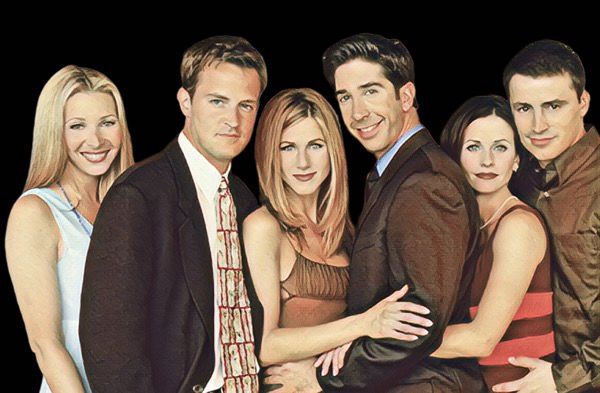
That decision has always divided viewers. Some see it as the inevitable conclusion of a love story built over ten years. Others see Rachel as giving up precisely the professional opportunity that represented the culmination of her independence. The criticism of the finale remains alive because the question is not simply “Ross or Paris?”, but whether returning to Ross represents a free choice or a narrative regression to the old idea that female fulfillment must end in coupledom.
But perhaps another reading is possible. Choosing yourself does not necessarily mean always choosing career, independence, or solitude. Rachel may have learned to exist without Ross and, precisely because of that, later became capable of choosing him again.
The psychoanalytic question is not the outcome of the choice, but the subjective position from which it is made. A woman who stays with someone because she believes she cannot exist without him is making a different choice from a woman who knows she could leave, knows she would survive the separation, and still decides to stay.
Externally, both women may end up in exactly the same place. Psychically, they are not making the same choice.
Kelly did not have to remain alone to validate her decision
The same applies to Kelly. After the famous “I choose me,” her romantic life does not end. She later gets back together with Brandon, the two become engaged, and they even reach their wedding day, but ultimately decide not to marry. Later still, at the end of the original series, Kelly reconnects with Dylan. None of that invalidates the choice she made years earlier.
This may be one of the most common misunderstandings of the phrase “choosing yourself”: we imagine that to prove the choice was real, the person must never return to that relationship, never fall in love again, or remain permanently independent.
But a choice can be true for a particular psychic moment without becoming an eternal sentence. The fact that Kelly later chooses a relationship does not mean she should have chosen Brandon or Dylan when she was pressured to do so. Perhaps precisely the possibility of not choosing at that moment was necessary for any later choice to occur under different conditions.

Carrie Bradshaw and the contradiction we never resolved
Few characters reveal our ambivalence about this question better than Carrie Bradshaw.
Sex and the City spent six seasons building a woman who wrote about relationships, questioned romantic conventions, valued female friendship deeply, and repeatedly tried to understand why she remained emotionally tied to Mr. Big. When the series ended in 2004, Carrie was rescued by Big in Paris and returned to New York with him.
The finale was loved by millions of viewers, but it was also criticized precisely because a series that had challenged so many conventions ended by falling back on one of the oldest: the great love finally chooses the heroine and confirms her romantic worth. Years later, the show’s creator, Darren Star, said he believed that ending contradicted part of the series’ original premise, which had challenged the idea that female happiness must necessarily culminate in marriage or the traditional couple.
The irony is that the final episode still tries to say that the most important relationship is the one we have with ourselves, but it does so only after giving Carrie exactly what she had pursued for years: being finally chosen by Big. That tension helped make the ending both beloved and controversial.
Two decades later, And Just Like That… did almost the opposite.
After Big’s death, the return and end of her relationship with Aidan, and other romantic possibilities, Carrie’s story ended in 2025 without a partner. In the final episode, she rewrites the conclusion of her own book so that a woman being alone no longer automatically means she is condemned to loneliness. The creators explicitly framed the ending around the possibility of Carrie finishing her story on her own, without a romantic relationship functioning as the final punctuation mark.
And then something fascinating happened. A lot of people rejected that ending, too. Some critics saw the conclusion as liberating. Others felt the series had not emotionally earned Carrie’s independence and that her solitude looked more like resignation than fulfillment. The response was deeply divided. Perhaps that contradiction says less about Carrie than it does about us.
When Sex and the City ended with a man choosing Carrie, we complained that she should have chosen herself. When And Just Like That… ended with Carrie choosing herself, part of the audience asked why she had to end up alone.
So what exactly do we want from these women?

Why do we accept “choosing yourself” only as a phase?
Perhaps there is a quiet cultural expectation that “I choose me” is acceptable only if it functions as an interval.
A female character may stay single to grow, discover who she is, build a career, travel, overcome trauma, and learn self-love. We celebrate that stage. But we still expect that, once the process is complete, she will find someone.
As though the relationship were the diploma proving that the growth worked. That logic reveals an important confusion between autonomy and solitude. Psychoanalysis does not suggest that healthy development ends in absolute independence. In fact, no independence is absolute. We remain dependent on bonds, recognition, language, and affection.
What may change is the quality of that dependence.
Melanie Klein helps us think about this maturation through her concept of the depressive position, in which the subject gradually becomes able to tolerate the fact that the loved object is simultaneously a source of pleasure and frustration. The person we love ceases to be entirely good when they satisfy us and entirely bad when they disappoint us. We become able to love a more whole, complex person, someone separate from ourselves.
Perhaps this is one of the greatest challenges of adult love. Accepting that the other person did not come to complete us. They do not exist to repair our childhood, permanently confirm our value, erase our insecurities, or guarantee that we will never be abandoned.
They are another person. And perhaps we can only truly choose them when we are capable of tolerating that fact.
Choosing yourself is not choosing solitude
For this reason, “choosing yourself” should not be confused with choosing solitude or embracing the fantasy that emotional independence means needing no one. Freud, Winnicott, and Klein all point in the opposite direction. Human beings are formed through relationships; the capacity to be alone develops from a sufficiently secure bond, and emotional maturity depends on recognizing the other as a separate and complex person rather than someone whose function is to save, satisfy, or repair us.
Autonomy does not begin when dependence disappears. It begins when dependence becomes less catastrophic.
Many relationships are sustained not only by love but also by unconscious necessity. Someone may remain with a partner because separation would reactivate an old experience of abandonment. Another may repeatedly seek unavailable people because desire has become inseparable from the effort to be chosen. Someone else may need romantic attention to stabilize a fragile sense of worth.

None of this means that the affection involved is false. Psychoanalysis rarely offers such simple divisions. Love can coexist with repetition, projection, narcissistic investment, and unresolved conflict. That is precisely why understanding what binds us to someone is often far more difficult than deciding whether we love them.
Choosing oneself can become a meaningful psychic act when it interrupts the automatic movement of repetition long enough for another question to emerge. The issue is no longer only whether to stay or leave, choose one person or another, accept the proposal, or take the plane. The more difficult question is what part of us is making the decision and what we unconsciously expect the relationship to provide.
Are we choosing someone because we genuinely desire a life with that person, or because being desired by them protects us from confronting something about ourselves? Are we staying because the relationship remains meaningful, or because leaving would force us to face a fear that began long before that person entered our lives?
This is what connects Kelly, Rachel, Keeley, and Carrie. Their stories do not offer a single model of female emancipation because choosing yourself can lead to different outcomes. Kelly refuses to choose between two men and later loves again. Rachel builds an identity independent of Ross and eventually chooses him. Keeley refuses to become the prize in a rivalry without declaring that love is no longer possible. Carrie spends decades wanting to be chosen and eventually reaches a point at which living without a partner no longer has to mean being incomplete.
The issue was never simply whether to choose “myself” or “the other.” That opposition is false. The real challenge is to build a “we” without requiring one person to disappear inside it.
Kelly’s “I choose me” remains powerful because she does not choose herself in opposition to love. She interrupts the assumption that her future must immediately be organized around one of the identities being offered to her. For a woman whose sense of worth had so often been mediated by desirability, rivalry, and the experience of being chosen, refusing both possibilities creates a temporary but meaningful distance between her own desire and the desire directed at her.
Perhaps that is the truly revolutionary element in choosing yourself. It is not the victory of the individual over the relationship, but the possibility of entering a relationship without asking it to provide the entire foundation of your identity.
The goal is not to stop needing others. Neither Freud nor the psychoanalytic tradition would consider that realistic or desirable. The goal is to become more capable of distinguishing love from the unconscious demand that another person repair what existed before them.
The true opposite of choosing yourself, then, is not choosing someone else. It is abandoning yourself to be chosen.
A mature relationship does not eliminate dependence, vulnerability, or need, because all three remain part of loving someone. What it may allow is for two people to remain psychologically distinct enough that neither must become the answer to the other’s unresolved question of worth.
Under those conditions, choosing another person no longer contradicts choosing yourself. It may be the first time the choice is truly yours.
Descubra mais sobre
Assine para receber nossas notícias mais recentes por e-mail.

