
Anyone familiar with ballet knows that it can be a cruel art form. First, it demands that a girl decide far too early what she will do with her life. Then it takes her body, her time, her discipline, her toenails, her feet, her youth, and, finally, almost always suggests that she disappear before the audience notices that she has grown old. There are exceptions, such as Alessandra Ferri, who returned to dance after the age of 50 and continues to perform at 63; Maya Plisetskaya, who retired her pointe shoes at 65; and Alicia Alonso, who left the stage at 75.
Among these legends, Yoko Morishita’s story is extraordinary because, at 77, she is still dancing. She does not merely take part in tributes, teach classes, or appear in small roles created to preserve a great star’s presence onstage. Morishita continues to perform characters from the classical repertoire, rehearsing every day and preparing for her next performance.
As a former ballerina, it is impossible to read this without a mixture of astonishment, admiration, and, I confess, a certain disbelief. We know what a body must endure to make it through a full performance. We know what pointe work, jumps, turns, balance, and, above all, the daily repetition required to make it all appear effortless truly mean.
By the age of 30, ballet already begins to treat many women as veterans. By 40, it expects them to have learned how to say goodbye. At 77, Yoko Morishita is still rehearsing.
This is not merely longevity. It is almost an act of defiance, the kind that makes us want more and more.
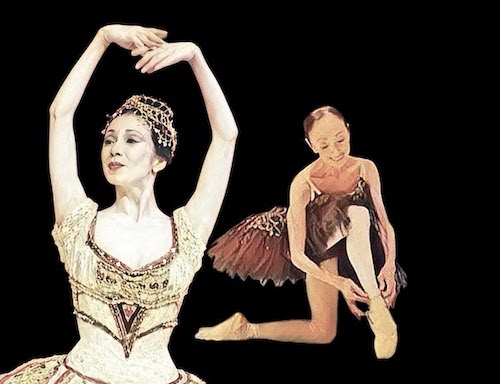
A fragile girl who found ballet by chance
Yoko Morishita was born in Hiroshima on December 7, 1948, just three years after the atomic bomb. She therefore grew up in a city that was still trying to rebuild not only its streets, but also its identity and its hope.
She was a fragile child. A doctor recommended that she take up some form of physical activity, and her parents found ballet classes at a kindergarten near their home. Morishita was only three years old. That was how, almost by chance, one of the longest careers in the history of dance began.
At six, she performed for the first time on a small stage set up in front of the screen at a Hiroshima movie theater. By 12, she was certain enough of her path to leave her family and move to Tokyo in search of professional training.
It is an age when many children still need to be reminded to do their homework. Morishita had already chosen ballet. She studied with important masters of Japanese dance and, in 1971, joined the Matsuyama Ballet, the company that would become her artistic home and with which she would remain connected throughout her life.
The medal that changed everything
The great turning point came in 1974, when Yoko Morishita took part in the Varna International Ballet Competition in Bulgaria.
Varna was not just another competition. It was one of the great institutions of recognition in the ballet world, which was still strongly dominated by European and Soviet schools. Morishita won the gold medal and became the first Japanese ballerina to win the competition.
Today, when Japanese dancers hold prominent positions in the world’s greatest companies, it may be difficult to understand the magnitude of that achievement. At the time, Japan was still regarded mainly as a country that admired, consumed, and reproduced Western ballet. Morishita forced the world to recognize that Japan was also capable of producing an international star. She did not merely win a competition. She broke through a barrier.

From that moment on, her career took on an international dimension, but there was something especially significant about her choice: Morishita did not leave Japan behind to become a star abroad. She received invitations, danced on the world’s greatest stages and alongside its greatest names, but kept her base at the Matsuyama Ballet.
She did not become a Japanese ballerina absorbed into a European company. She became a Japanese ballerina who brought her company and her country to the center of the international ballet world.
Rudolf Nureyev’s partner
Her most famous partner was Rudolf Nureyev. That fact alone would be enough to convey the scale of her importance. Nureyev did not choose his partners solely for their technique. He needed ballerinas capable of responding to the intensity of his presence and holding the stage beside someone who seemed to occupy the entire space before he had even begun to dance.
Morishita danced with him for the first time in 1976. The following year, they performed the grand pas de deux from Don Quixote during the celebrations for Queen Elizabeth II’s Silver Jubilee in London. Together, they shared the stage in approximately 200 performances.
Two hundred times.
This was not, therefore, an occasional encounter between a European star and a young Japanese ballerina invited to appear at a gala. It was a genuine artistic partnership, built over the course of years.
Nureyev later danced with her in full productions of Swan Lake and Giselle, including during the Matsuyama Ballet’s 35th-anniversary celebrations in 1983. Morishita also shared the stage with Margot Fonteyn, her great inspiration. She had first seen Fonteyn perform when she was young and described the sensation that the entire stage lit up whenever the ballerina appeared. Years later, she was dancing beside her.
There is something very beautiful about this kind of encounter: the young girl who watches a great star in fascination and, some time later, finds herself occupying the same stage. In ballet, where the hierarchy can seem so rigid and its idols so frequently out of reach, stories like this always move me.
Maurice Béjart’s muse
Another fundamental encounter was with Maurice Béjart.
The choreographer created the ballet Light especially for her. It premiered in Brussels and Paris in 1981. Morishita danced alongside Georges Don, the great star of the Ballet du XXe Siècle and perhaps the dancer most profoundly associated with Béjart’s universe.
To be chosen by Béjart meant far more than being given a new role. He was not interested only in technically perfect dancers. He looked for artists capable of carrying ideas, symbols, emotions, and contradictions in their bodies.
Morishita, known primarily for the great classical heroines, demonstrated that she could also exist within that more modern, theatrical, and philosophical universe.
This may be one of the reasons why her career cannot be reduced to physical endurance. She did not remain because she mechanically repeated the same steps for decades. She remained because she built a stage presence.
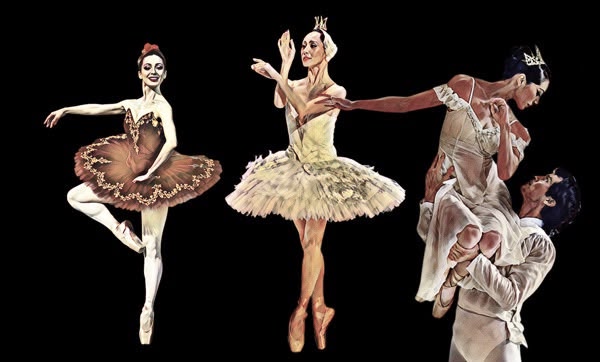
Odette, Odile, Giselle, Kitri, and Juliet
Yoko Morishita danced all the great heroines of the repertoire. She was Giselle, Kitri in Don Quixote, Swanilda in Coppélia, Juliet in Romeo and Juliet, Clara in The Nutcracker, and, naturally, Odette and Odile in Swan Lake.
Perhaps the dual role of Odette and Odile best encapsulates her strength as an interpreter. The White Swan demands lyricism, vulnerability, and the impression that the ballerina might disappear before our eyes. The Black Swan demands seduction, precision, brilliance, and authority.
They are two women within the same body, and changing the costume is not enough to distinguish between them.
Morishita is around five feet tall, which, according to the traditional standards of classical ballet, might have been regarded as a limitation. But she never depended on height to appear commanding onstage. Her presence came from her intensity, musicality, and ability to transform movement into narrative.
She also maintained an especially long relationship with Juliet. Tetsutaro Shimizu’s production of Romeo and Juliet premiered in 1980, and Morishita continued performing the role for more than three decades.
It is worth stopping to consider what that means. Juliet is almost always associated with absolute youth, the discovery of love, and the impulsiveness of an adolescent girl. Morishita did not abandon the character once she was no longer the age conventionally expected of those who dance her. She brought to Juliet an emotional memory that only time could provide.
A husband and lifelong partner
Yoko Morishita is married to Tetsutaro Shimizu, a dancer, choreographer, and director of the Matsuyama Ballet.
The two took part in the Varna Competition together in 1974 and built an artistic partnership that has endured for more than five decades. Shimizu created and directed productions that became fundamental to his wife’s career, while she became the company’s great international face.
It is tempting to transform such a long relationship into a perfect romantic story, especially when speaking of two people united by the stage. But perhaps its most interesting aspect lies in the concrete dimension of their partnership: together, they built a company, a repertoire, and a tradition.
The Matsuyama Ballet became the couple’s great shared work.
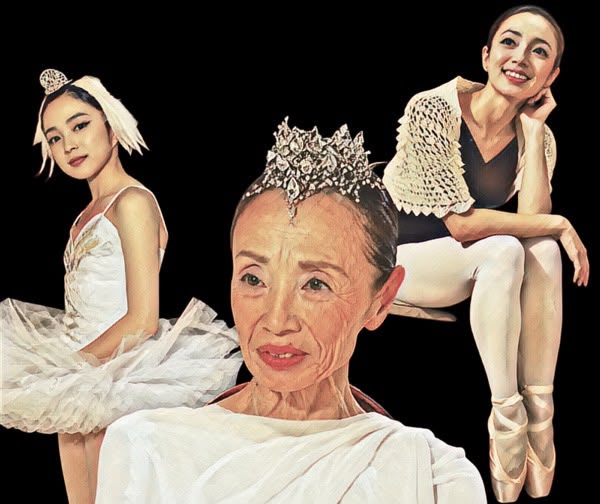
Does Yoko Morishita still dance?
Yes. At 77, she is still dancing. In 2026, she returned to the roles of Odette and Odile in Swan Lake, performed in Coppélia, and remained connected to The Nutcracker, in which she has danced Clara for approximately 45 years.
Her routine remains astonishing: around six hours of rehearsals a day, six days a week. Even on her day off, she continues stretching. Morishita explains her longevity in a way that sounds almost too simple. She says that she never made a decision to keep dancing for 70 years. She simply finished one day and prepared for the next.
Perhaps that is precisely how an impossible career happens. Not as one grand heroic declaration, but as a sequence of small decisions: taking class, repeating the step, correcting the arm, trying again, and returning the following day.
Her body has certainly changed. It would be absurd to pretend that a ballerina dances at 77 exactly as she did at 27. But ballet is not only about youth, despite having spent centuries trying to convince us that it is.
There are things that only time can offer: intention, understanding, economy, memory, and the ability to know exactly why a gesture must be made.
Youth may offer height to a jump. Maturity may offer meaning to the fall.
Yoko Morishita in Brazil
Yoko Morishita was also part of a legendary period in the history of dance in Brazil.
Dalal Achcar brought to the country a season that gathered some of the greatest names in international ballet, including Natalia Makarova, Fernando Bujones, and Morishita herself. For those who witnessed that era, it was not simply a matter of watching a succession of international stars. It was an opportunity to see, in Brazil, artists who were already part of dance history.
Morishita would return to the Theatro Municipal do Rio de Janeiro and, in 1982, take part in the premiere of Dalal Achcar’s production of Don Quixote. She danced Kitri and, once again, took the audience’s breath away.
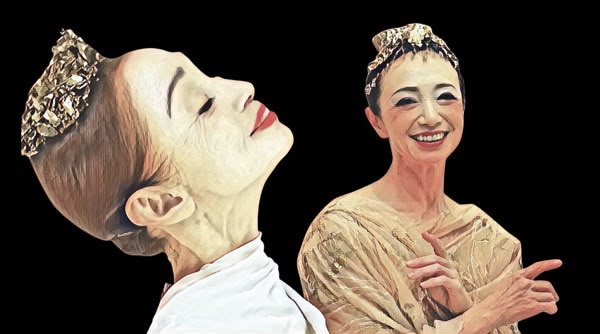
Kitri is a role that demands speed, precision, brilliance, musicality, and an almost explosive personality. It is not enough to execute the steps correctly. The ballerina must enter the stage and immediately convince everyone that all eyes should be fixed on her.
Morishita was physically small, but she never appeared small onstage. The 1982 production also featured dancers such as Fernando Bujones and Jean-Yves Lormeau in different performances and became one of the most memorable chapters in the repertoire of the Ballet do Theatro Municipal. Her connection to Brazilian dance, however, would not end there.
The collaboration with Cisne Negro
In the second half of the 1980s, Yoko Morishita established an important international collaboration with the São Paulo-based company Cisne Negro Cia. de Dança.
In August 1987, Morishita and Fernando Bujones took part in a season at London’s Royal Festival Hall, sharing the program with the Brazilian company. The following year, between March and April 1988, the two opened another prominent season at New York City Center, once again alongside Cisne Negro. It was an association as unexpected as it was interesting.
On one side, Morishita and Bujones represented the highest level of international classical ballet. On the other hand, Cisne Negro was taking abroad the strength of a Brazilian company that moved between classical training and a more contemporary language.
The encounter placed Brazilian artists alongside two of the greatest dancers of that era and created a rare exchange between worlds that appeared distant but had much to offer one another.
This collaboration also demonstrates that Morishita’s relationship with Brazil was not limited to a brief appearance at the Municipal. She remained connected to Brazilian dance outside the country, taking part in seasons that helped to raise the international profile of one of São Paulo’s most important companies.
Between the season organized by Dalal Achcar, her unforgettable Kitri at the Theatro Municipal, and her international performances with Cisne Negro, Yoko Morishita built a relationship with Brazilian ballet that deserves to be remembered.
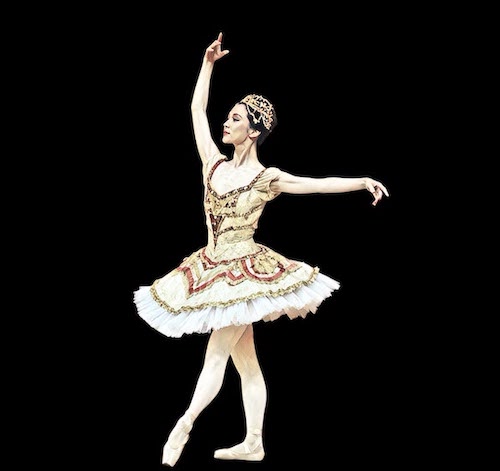
What Yoko Morishita represents for Japan and the world
In 1982, Morishita became the first Japanese ballerina to perform at the Paris Opera. In 1985, she became the first Japanese artist to receive a Laurence Olivier Award. She took part in major galas, served on the juries of competitions such as the Prix de Lausanne, and became president of the Matsuyama Ballet.
But her importance cannot be contained in a list of awards.
Yoko Morishita helped change Japan’s place in the ballet world. Before her, a Japanese ballerina might be regarded as an excellent student of a European art form. After her, it became possible to see Japan as one of the world’s great centers for dance training.
Despite the obvious differences, her journey recalls that of Alicia Alonso in Cuba. Both were great interpreters, but became something larger: national symbols of an imported art form that their countries transformed into a tradition of their own.
And then there is the question of age.
Ballet has always loved ghosts. Giselle dies young. Odette remains trapped beneath an enchantment. Juliet never reaches adulthood. The great classical heroines are preserved forever in an impossible youth, while the women who perform them are expected to abandon the stage as soon as time begins to show itself. Yoko Morishita refused that destiny.
At 77, she continues to dance characters that ballet taught us belonged to the young. Not because time has stopped for her, but because she decided that it would not be solely responsible for determining when her art should end.
Perhaps that is her greatest revolution. Not having defeated age, because no one does, but having remained onstage without apologizing for growing older.
Descubra mais sobre
Assine para receber nossas notícias mais recentes por e-mail.
 miscelana.com