
How many Ecuadorian films do you know? How many Venezuelan films have you seen? And how many productions from Paraguay, a country that shares a border with Mato Grosso do Sul, have ever reached Brazilian cinemas or streaming platforms?
The questions raised by Nilson Rodrigues, founder and director of Bonito CineSur, may sound simple, but they reveal one of the continent’s great cultural paradoxes: South America produces films recognized at the world’s leading festivals, yet its countries still know very little about the cinema being made by their own neighbors.
“How many Ecuadorian films do you know? How many Venezuelan films have you seen? How many Colombian or Chilean films? We see very little,” Nilson points out in an exclusive interview with Caderno B+ from Bonito. “It is not that relevant work is not being produced. Paraguay has won awards in Berlin, Chile goes to the Oscars, and Colombia goes to the Oscars. Argentina has an incredible film industry, and Brazil has a very strong one. What exists is an enormous barrier to circulation.”
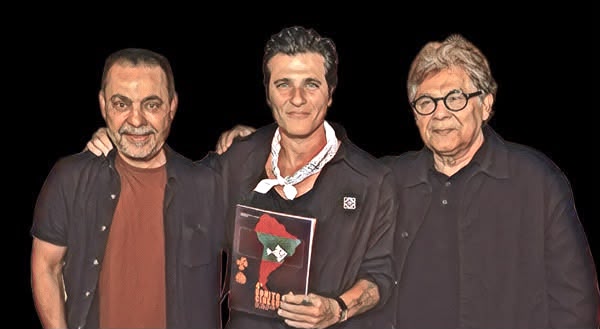
Bonito CineSur was created in 2023 to begin breaking down that barrier. In only four editions, the South American Film Festival has transformed Bonito, already known worldwide for its natural beauty, into a meeting place for filmmakers, producers, actors, distributors, critics, and audiences from different countries.
The 2026 edition, held from July 24 to August 1, received a record 905 film submissions. The inaugural edition received 657, representing an increase of 37%. Attendance has also more than doubled, rising from 4,200 people in 2023 to 9,000 in 2025, an increase of 114%. Even before this year’s results were counted, more than 18,200 people had already taken part in CineSur activities.
The fourth edition selected 32 films from ten South American countries for its competitive sections, divided among South American features and shorts, environmental cinema, and films from Mato Grosso do Sul. Regional production gained even more space: eight films from Mato Grosso do Sul entered the competition, two more than the previous year. For Nilson, however, the numbers tell only part of the story.
“We started with a premise: to bring together recent South American productions and create an environment where producers, actors, actresses, and filmmakers could meet. A place where projects could also be discussed and co-productions encouraged,” he explains. “There is an enormous barrier between our countries. The festival was created to make this connection possible.”
A Life Dedicated to Cinema
CineSur is also the result of a career spanning more than four decades. A producer, exhibitor, and cultural administrator, Nilson Rodrigues began working with film festivals in the 1980s. He served as coordinator and director of several editions of the Brasília Brazilian Film Festival, created the Bonito Winter Festival and Festcine Pantanal in Campo Grande, and was a member of the Collegiate Board of Brazil’s National Film Agency, Ancine, between 2005 and 2009.
As an exhibitor, he founded Cine Cultura in Campo Grande and, later, Cine Cultura Liberty Mall in Brasília, dedicated especially to Brazilian cinema and independent films from around the world. As a producer, he worked on titles including Tainá 3 – A Origem, O Outro Lado do Paraíso, and O Pastor e o Guerrilheiro.
He is now going through an especially busy period with two new films. Nilson is a producer of Honestino, directed by Aurélio Michiles and starring Bruno Gagliasso in its dramatized sequences, and Justino – Nos Bastidores do Reino, the new feature by José Eduardo Belmonte. During the interview, he joked about the coincidence between the names: “Honestino and Justino. Honest and fair.”
“I’m very excited. One of the films is opening in theaters, while the other is beginning its journey through the festivals,” he says.
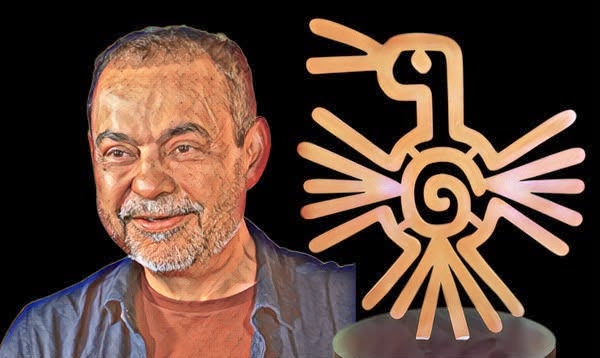
His experience across festivals, movie theaters, production, and public policy has given Nilson a broad understanding of the difficulties facing the audiovisual industry.
“The market is dominated by mainstream American cinema, and not even by American cinema in all its diversity. Independent cinema in the United States is also very powerful. What reaches us here is what comes from the major studios,” he observes. “And just as that industry dominates the Brazilian market, it also dominates Argentina, Paraguay, Bolivia, and Chile.”
CineSur does not intend to solve on its own a problem that involves legislation, distribution, investment, regulation of streaming platforms, and public policy. Nilson is the first to acknowledge the limitations of a festival.
“The festival does not solve the problems of the market, circulation, or regulation. But it connects people. It encourages both film production and acquisition,” he says.
A concrete example came after the previous edition, when an award-winning Chilean film shown in Bonito caught the attention of a Brazilian distributor. For a feature that might otherwise never have found a place in Brazil, that encounter created a real opportunity to reach a new audience.
“That matters. We need to bring more distributors here to see these films, as well as more producers. But that also depends on the festival’s financial resources and on expanding support and sponsorship,” Nilson says.
Stars from Across the Continent in Bonito
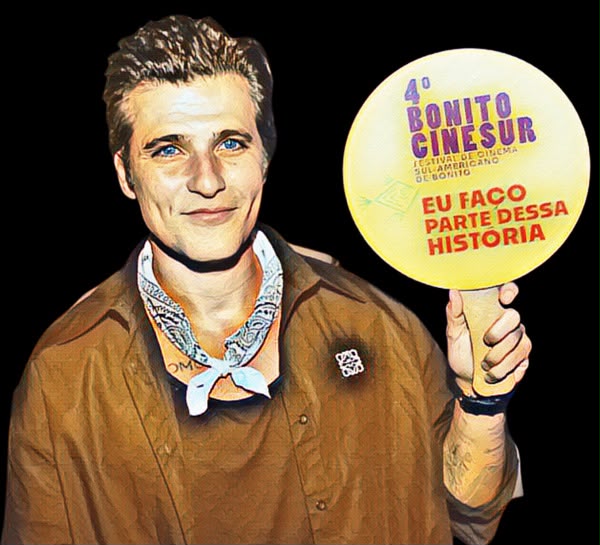
The strength of a festival can also be measured by its ability to bring together major names in cinema without distancing them from the public. In 2026, Bonito welcomed nationally and internationally renowned artists while keeping screenings, debates, and other events free of charge.
The opening ceremony was hosted by Reynaldo Gianecchini and actress and general coordinator Andrea Freire. The first weekend also featured Bruno Gagliasso and director Aurélio Michiles, who presented the Brazilian premiere of Honestino, a film about student leader Honestino Guimarães, who was kidnapped and disappeared during Brazil’s military dictatorship.
João Moreira Salles gave a masterclass on documentary filmmaking and presented Minha Terra Estrangeira, co-directed by Louise Botkay. The program also brought together documentary filmmaker Vincent Carelli, creator of the Vídeo nas Aldeias project; filmmaker Luiz Carlos Lacerda, known as Bigode; and producers, curators, critics, and filmmakers from several countries.
Before the festival closes, it will also welcome Paulo Betti, who will lead a conversation about acting for film and television, and I’m Still Here actress Valentina Herszage, who will join him in hosting the awards ceremony.
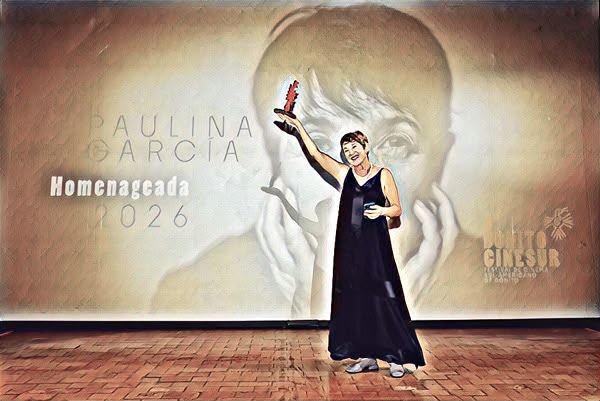
The festival’s main honoree was Chilean actress Paulina García, winner of the Silver Bear for Best Actress at the Berlin Film Festival for Gloria. An actress, theater director, and playwright, she received the Pantanal Trophy during the opening ceremony, which featured a screening of Dear Trópico, a Panama-Colombia co-production in which she plays a woman confronting the progression of dementia.
“Paulina is an incredible, wonderful actress and a source of pride for Latin America and South America,” Nilson says. “These moments are special because they place us in front of the people who have made, and continue to make, the history of our cinema. They are artists who reveal the greatness of our film production.”
The festival also celebrated Argentine filmmaker Luis Puenzo with a screening of The Official Story, the first Latin American film to win the Academy Award for Best International Feature. Released in 1985, the film exposed the kidnapping of children during Argentina’s dictatorship and helped the country confront a memory that was still an open wound.
“The impact of that film in Argentina was enormous,” Nilson emphasizes. “When The Official Story revealed the kidnapping of children and the brutality of the military, it helped the country look at what had happened.”
Cinema That Reaches the Community
Although stars help give the event national visibility, one of CineSur’s most important initiatives takes place far from the red carpet. Bonito CineSur Educa offers free workshops, lectures, debates and screenings designed especially for students, children, young people, audiovisual professionals and local residents.
This year’s educational program included workshops on documentary filmmaking, screenwriting, audiovisual project development, and the film market. The so-called “film charlas” discussed subjects including female leadership, content acquisition and licensing, film criticism, memory, acting, and the 40th anniversary of the Vídeo nas Aldeias project.
An animation workshop was held at Projeto Garoto Cidadão, an initiative that assists children and adolescents from public schools and socially vulnerable backgrounds outside regular school hours. Over five mornings, participants were introduced to animation creation and production techniques. The work developed by the children will be presented to the public during the Community Showcase, alongside documentaries made by local residents during the festival.
The initiative changes the community’s relationship with the event. Instead of simply welcoming artists and films from elsewhere, Bonito also begins to produce its own images, record its own stories, and train new filmmakers.
The festival also offered free screenings for children and teenagers, featuring films such as Colegas e o Herdeiro, Eu e Meu Avô Nihonjin, and Dentro da Caixinha – Mundo de Papel. By creating space for children who often have no regular access to a movie theater, CineSur turns a cultural experience into an act of inclusion.
“We need to produce films, produce series, and see ourselves,” Nilson summarizes. “It is very strange to live in one country while experiencing only what supposedly happens in the United States. We need our own images and our own stories.”
Environment, Identity and Territory
Holding a festival in Bonito also means accepting an environmental responsibility. CineSur therefore created a competitive section dedicated to the subject, bringing together films that examine climate change, water contamination, the exploitation of natural resources, the preservation of territories, and the resistance of Indigenous peoples.
“We could not hold a film festival in Bonito without creating an environmental section,” Nilson says. “Cinema is an extraordinary tool for debate and reflection on the need to preserve the planet and on the environmental responsibilities we all have.”
The director points out that the most urgent issues are not the same in every country. Chile faces certain challenges, while the Brazilian, Colombian, and Ecuadorian Amazon regions face others. Bolivia, Argentina, and Paraguay also arrive at the festival with their own environmental conflicts.
“In these films, you see each country bringing its own urgent issues. Cinema takes part in this debate and allows us to discover realities different from our own,” he says.
An Impact Beyond the Screen
CineSur also benefits hotels, restaurants, transportation services, technical crews, and professionals working in the creative economy. In 2025, the program brought together 63 films from ten countries, offered 120 hours of free activities, and involved 60 public and private institutions. The festival hired 250 professional services connected to production, equipment, accommodation, food, and transportation. It reached 9,000 people in person and more than 619,000 through social media.
The results help demonstrate that culture and tourism are not competing forces. On the contrary, a festival expands the city’s calendar, attracts visitors, generates income, creates temporary jobs, and offers new experiences to those who come to Bonito.
The logistics, however, remain challenging. Expensive airfare, long distances, and the need to transform spaces into theaters that meet cinema exhibition standards all increase costs.
“Of course, it is more expensive. Bringing people here is a challenge. But Bonito is in the heart of South America,” Nilson argues. “Mato Grosso do Sul shares borders with two countries. The festival had to be held here. Little by little, we are building a meeting place for these South American cinemas. I have never had any doubt about that.”
The Bridges Ahead
For the fifth edition, Nilson wants to expand the presence of distributors, funding institutions, and authorities responsible for film policy in the participating countries. The goal is to move forward not only with co-productions but also with co-distribution.
“Co-production is essential because, when a film is made by two countries, it has two nationalities and can be treated as a domestic production in both,” he explains. “We still have very few co-productions among South American countries.”
The next step would be to create mechanisms allowing these films to be distributed jointly as well.
“We already have some co-production programs and funding initiatives involving Brazil, Argentina, and Uruguay, but we need to go further. We have not yet given enough thought to co-distribution: creating incentives for a film to be distributed both there and here. That would expand our opportunities to discover what we produce.”
Nilson recalls a phrase by Luiz Carlos Barreto, honored at the festival’s opening ceremony only a few days after his death: a country that does not produce its own cinema is like a house without mirrors, where people are unable to see themselves.
Bonito CineSur expands that image. A continent that does not watch its own cinema also loses the ability to recognize itself.
In four years, the festival has not yet broken down every barrier to circulation, nor has it ever promised to do so on its own. But it has already shown that, within the borders of Mato Grosso do Sul, it is possible to create a space where South America finally begins to look at itself.
Descubra mais sobre
Assine para receber nossas notícias mais recentes por e-mail.

