
On an episode of the third season of House of the Dragon, Ormund Hightower was not merely annoyed because Daeron knew so little about Dorne. To him, the gap was far more serious than a flaw in a prince’s education. Daeron is the son of a king, rides a dragon, fights in a war, and is increasingly being viewed as a possible alternative to his own brother. Someone in that position should understand the land he hopes to rule, the families that inhabit it, and, above all, the reasons the Targaryens failed so many times to subdue the Dornish.
The scene feels almost like an oral examination, but it also highlights one of the most fascinating aspects of this season of House of the Dragon: the sheer number of references to Westeros’ own history woven into the dialogue. Characters casually mention ancient kings, battles, conquests, defeats, and rebellious regions in the same way we might refer to well-known historical figures. They rarely stop to explain who Aegon, Maegor, Jaehaerys, the Field of Fire, or Dorne are because, to them, this is shared history.
These references are not there simply to reward readers of George R. R. Martin. They reveal who is speaking, how each character understands power, and how they use the past to defend decisions being made in the present. Some characters genuinely enjoy learning. Others know the facts without understanding the lessons. And a few cherry-pick only the parts of history that support what they already wanted to do.
This has always been part of Game of Thrones, appears in an even more immediate and personal way in A Knight of the Seven Kingdoms, and becomes especially significant in House of the Dragon—a story about people surrounded by historical examples that should prevent disaster, yet rarely do.

Ormund and the importance of knowing Dorne
Ormund is one of the clearest examples of a character who treats knowledge as an instrument of power. Raised within House Hightower’s intellectual tradition in Oldtown, close to the Citadel and its maesters, he understands geography, bloodlines, military campaigns, and political precedent. His relationship with Daeron is not simply that of an uncle advising his nephew. He constantly evaluates him, testing how the prince thinks and whether he possesses anything beyond a famous name and a dragon.
When Ormund criticizes Daeron’s ignorance of Dorne, he has a point. For generations, Dorne represented the greatest exception to Targaryen conquest. Aegon, Visenya, and Rhaenys united six of the Seven Kingdoms, but they never conquered Dorne in the same way. Dragons destroyed castles, yet they could not force the Dornish into decisive battles. Their enemies disappeared, endured, and struck again once the invaders believed victory had already been achieved.
Any prince should know that history—not only because Dorne remains politically important, but because it proves dragons alone cannot solve every problem. Daeron may ride Tessarion and inspire his soldiers, but that does not necessarily mean he understands the kingdom. Ormund’s frustration comes from recognizing that courage and military strength cannot replace knowledge.
At the same time, there is a delicious irony in his criticism. Ormund knows history, insists Daeron should study it, yet still helps prepare another devastating war, manipulates another prince, and believes he can control the consequences. He knows history. Whether he has actually learned from it is another matter.
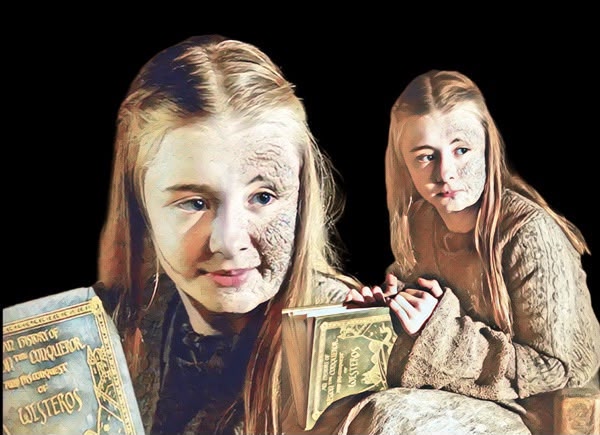
Shireen explained the Dance of the Dragons long before House of the Dragon
Long before House of the Dragon introduced audiences to Rhaenyra, Aegon, and the Dance itself, Shireen Baratheon had already explained the conflict to Davos. She tells him how the half-siblings fought for the Iron Throne, divided the realm, and plunged Westeros into a catastrophic civil war.
The moment matters not simply because it foreshadowed the prequel years in advance. It also demonstrates how deeply Shireen understands what she reads. When Davos asks which side she would have supported, she refuses to turn the conflict into a story of heroes and villains. To Shireen, both sides bear responsibility for the devastation.
She recognizes something almost every adult involved in war ignores. Studying history should not simply help us choose a side. It should help us understand the cost of the choices made by everyone involved. Shireen is not interested in discovering who won. She wants to understand who paid the price.
She may well be Westeros’ finest reader because she never uses knowledge to make others feel inferior. She teaches Davos to read and treats books as something meant to be shared, not hoarded.
Watching House of the Dragon unfold only strengthens her insight. We now understand the motives, fears, and losses on every side of the conflict, yet the child who lived generations later still saw the truth more clearly than the people who fought it: when one family turns the kingdom into its battlefield, everyone else suffers.
Joffrey knows the ending, but not the lesson
Joffrey Baratheon also knows Rhaenyra’s story. During his walk with Margaery Tyrell, he casually explains how the queen died, unintentionally delivering one of the biggest House of the Dragon spoilers years before the series was ever announced.
The difference between Joffrey and Shireen lies not only in personality but in the way they approach history. Shireen seeks understanding. Joffrey is fascinated by the gruesome ending. He knows the event, but presents it as entertainment, choosing the detail most likely to shock.
It is a perfect illustration of how two people can study the same event and take away entirely different lessons. Joffrey memorized Rhaenyra’s death, but learned nothing about the consequences of cruelty, arrogance, or civil war. As with nearly everything else in his education, history becomes another way to reinforce his idea of power rather than restrain it.
Arya and the stories that were never part of a lady’s education
Arya Stark appeared to hate her lessons. In reality, she hated the lessons chosen for her.
Sewing, etiquette, marriage, and proper behavior never interested her. That did not mean she disliked learning. Arya knew the stories of warrior women, conquerors, and figures who had escaped the roles assigned to them.
While serving Tywin Lannister, she reveals surprising knowledge about Aegon, Visenya, Rhaenys, and the Conquest of Westeros. Tywin quickly realizes she knows far more than an ordinary servant should—not simply because she remembers names, but because she understands their political significance.
Arya pays attention to banners, noble houses, and competing versions of history. The figures she admires are not obedient queens or celebrated ladies, but women who rode into battle, conquered kingdoms, and made their own decisions.
History offers Arya something her upbringing never could: proof that different lives are possible.


Viserys loves history, but romanticizes it
Few characters in House of the Dragon have such an emotional relationship with history as Viserys. His enormous model of Old Valyria is almost an attempt to rebuild a lost civilization. He knows his ancestors, admires Jaehaerys, and constantly wonders how his own reign will be remembered.
His relationship with the past, however, is deeply romantic.
Viserys celebrates the greatness of Old Valyria and the early Targaryens, yet struggles to confront the weaknesses within his own family. He understands the dangers of a disputed succession, but still leaves behind enough resentment, rivalries, and competing claims to create exactly the war he hoped to avoid.
One of the series’ most revealing conversations comes when Viserys laments that he has not fought glorious wars or achieved legendary conquests. Lyonel Strong offers a far wiser perspective: preserving peace and maintaining Jaehaerys’ legacy should be an achievement enough.
Lyonel understands something Viserys takes far too long to recognize. The rulers most celebrated by history are not always those under whom people lived best. A peaceful reign may inspire fewer songs, but it saves countless lives.
Viserys knows the kings of the past. Lyonel understands what they were meant to teach.
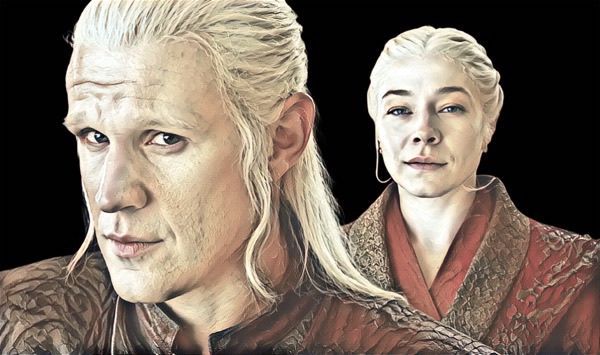
Daemon uses the Field of Fire as an argument
Daemon is another character deeply familiar with Targaryen history, particularly its military triumphs. Whenever he wants to justify extreme action, he can almost always point to an ancestor who did something similar.
The Field of Fire is the clearest example. Daemon invokes Aegon, Visenya, and Rhaenys’ victory to argue that overwhelming violence can end a war quickly.
Rhaenyra immediately challenges that interpretation. Aegon burned armies still resisting conquest, not civilians who had already surrendered. Both characters know the same historical event. They simply interpret it differently. Daemon sees proof that fear brings peace. Rhaenyra sees an important moral distinction. The exchange perfectly illustrates why historical references matter in House of the Dragon. They are not included merely to explain the past. They become weapons in debates about the present.
Daemon never makes history up. He simply selects the part that supports the decision he has already made.
Rhaenyra turns history into destiny
Rhaenyra also grows up under the weight of Targaryen history. She knows the dynasty’s ancient rulers, its symbols, and the responsibilities attached to the Crown. More importantly, Viserys entrusts her with Aegon’s prophecy, turning it into a sacred inheritance passed from ruler to ruler.
To Rhaenyra, history is not simply a collection of events. It is a responsibility. Aegon’s Conquest, the prophetic dream, and the duty to preserve the realm all become intertwined with her own claim to the throne.
The danger comes when history begins to resemble destiny. Rhaenyra increasingly interprets the past as proof that only she can fulfill that mission. Her legitimacy does not depend entirely on the prophecy, but the prophecy reinforces her belief that her struggle represents something greater than a family dispute.
She is capable of correcting Daemon when he twists historical precedent, yet she also interprets history through the lens of her own role within it.
In Westeros, prophecies and history rarely remain neutral. They become political arguments.
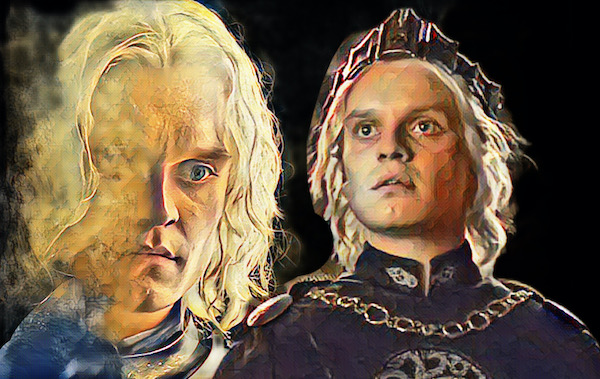
Aegon II wears history
Aegon II’s relationship with history is far more symbolic.
He bears the Conqueror’s name, inherits his crown, and wishes to wear his armor. These objects are meant to establish a visible connection between the first Aegon and the young king ruling during the Dance.
Aegon seems less interested in understanding the Conqueror’s decisions than in resembling him. The crown, the name, and the armor create the appearance of legitimacy. Symbols certainly matter in a monarchy, but they cannot replace preparation, judgment, or understanding. Wearing Aegon’s armor does not make someone another Aegon.
While Ormund demands that Daeron genuinely understand Dorne, Aegon searches for authority in the costume of history itself.
Sam researches what everyone else ignores
If Shireen is Westeros’ finest reader, Samwell Tarly may be its greatest researcher. He does not merely consume books. He searches for forgotten information, compares sources, and finds value precisely where everyone else sees irrelevance.
That is how he discovers the importance of dragonglass, investigates the White Walkers, uncovers forgotten medical knowledge, and helps confirm Jon Snow’s true parentage. Sam understands that old legends sometimes preserve genuine history, and that the most neglected manuscript may contain the answer to the kingdom’s greatest threat.
His story also exposes the weakness of institutions responsible for preserving knowledge. The Citadel possesses enormous archives, but many maesters dismiss anything that challenges their assumptions.
The knowledge exists. The danger lies in deciding beforehand what deserves to be believed.
Tyrion knows precedent, but not always repetition
Tyrion Lannister reads because intelligence is his greatest defense.
He understands the history of the great houses, their rivalries, the failures of previous rulers, and the dangers of governing through fear alone.
Time and again, he uses that knowledge to anticipate political reactions. He understands that defeating a family does not erase generations of resentment, that King’s Landing can quickly turn against its rulers, and that alliances require more than promises.
Yet Tyrion’s story also reveals that knowing history does not guarantee recognizing it while it is happening.
He takes far too long to accept that Daenerys may be repeating mistakes committed by rulers whose histories he knows so well. He understands the failures of the dead.
Recognizing those same failures in the living proves far more difficult.

Bran: Complete memory is not the same as understanding
Bran begins as a child enchanted by Old Nan’s stories. She fills his imagination with ancient kings, monsters, heroes, and legends so old that memory and myth seem inseparable.
As the Three-Eyed Raven, Bran gains access to something no historian could ever possess: the past exactly as it happened.
He witnesses forgotten events, uncovers hidden truths, and corrects official histories. He no longer depends upon chronicles written by victors or biased witnesses. Yet his transformation raises an important question. Knowing everything does not necessarily mean understanding everything. Bran becomes a living archive, but also grows increasingly detached from the emotions that give history its meaning.
History is not simply a record of events. It is also the experience of those who loved, suffered, and endured them. Bran preserves every memory.
Whether he can still truly tell those stories is another matter.
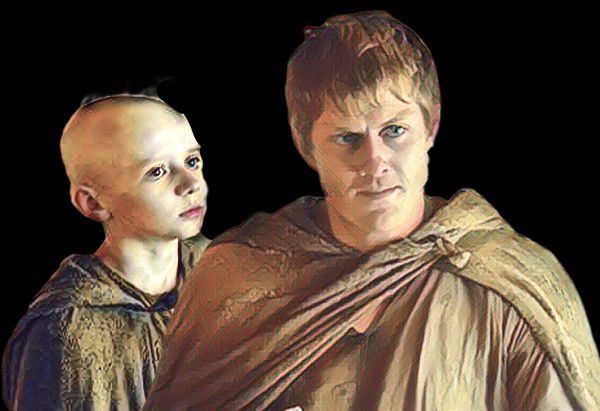
Egg learns from books and from the road
In A Knight of the Seven Kingdoms, history is still close enough to hurt.
The Blackfyre Rebellion has ended, but its survivors remain alive, its divisions continue to shape politics, and its battles are already becoming songs.
Egg understands lineages, heraldry, court etiquette, and recent political history because he was educated as a prince. His real education, however, begins alongside Dunk.
Away from court, Egg discovers the kingdom he may one day rule. He sees how peasants live, how knights treat common people, and how decisions made by powerful families affect those with no voice at all. Books explain who won. The road reveals who continued paying the price.
Dunk lived history without mastering its official version
Dunk fought in the Blackfyre Rebellion but possesses little sophisticated understanding of its dynastic arguments or political causes.
He knows what he saw, the fear he felt, and what happened to the men beside him. Ironically, that makes him one of history’s most valuable witnesses. Dunk represents the countless people who live through history without ever controlling how it will be recorded.
While nobles debate legitimacy and succession, he remembers bodies on the battlefield, abandoned soldiers, and survivors left behind once the celebrations ended.
In A Knight of the Seven Kingdoms, history spreads not only through books but through songs, rumors, and competing versions of the truth.
Dunk may never explain the war like a maester. But he can explain what it did to those who fought it.
Criston Cole wants to control future history
Criston Cole is not portrayed as a scholar, but he understands the power of storytelling.
His greatest concern is not merely winning or surviving. He wants to be remembered, transformed into song, and associated with an image of heroism.
Criston is not trying to learn from history. He wants to decide how history will remember him. The song would erase his resentments, failures, humiliations, and contradictions, leaving behind only the legendary knight he wishes he had been.
His relationship with history is fascinating because it approaches the subject from the opposite direction.
Some characters study history. Others use it as a political argument. Criston simply wants to become part of it before anyone else has the chance to write his story. He understands that history is not only what happened. It is also what someone successfully turned into a narrative.

Three series, three different relationships with history
Game of Thrones offers the greatest variety of readers, researchers, and storytellers. Shireen teaches. Sam investigates. Arya searches history for role models. Tyrion studies precedent. Joffrey remembers the deaths. Bran eventually becomes the realm’s living memory. History travels through books, family stories, legends, and quiet conversations.
A Knight of the Seven Kingdoms presents history while it is still raw. The Blackfyre Rebellion has ended, but its survivors remain, its political divisions endure, and its battles are already becoming songs. Egg knows the official version. Dunk knows the lived experience.
House of the Dragon, however, approaches history with particular irony. Its characters know Aegon, Dorne, the Field of Fire, Jaehaerys, Old Valyria, and the disasters caused by disputed succession. They possess enough historical examples to recognize nearly every trap before them.
They walk into them anyway. Westeros has never lacked stories. They exist in books, songs, castles, prophecies, and family memories. The real problem is what people choose to do with them.
Ormund is right to insist that Daeron should understand Dorne. A prince who ignores history may lead his kingdom toward a defeat that should already have been understood. Yet Ormund himself proves that knowledge alone is not enough. A person can memorize every king, battle, and date, and still pay attention only to the parts of history that justify what they already wanted to do.
In Westeros, almost everyone knows a story.
Very few learn the lesson.
Descubra mais sobre
Assine para receber nossas notícias mais recentes por e-mail.


1 comentário Adicione o seu