
As published on Caderno B+ and Blog do Amaury Jr./Splash UOL
When we hear the name Mikhail Baryshnikov, it is virtually impossible to think of anything other than dance. For several generations, he has represented the complete dancer, an artist whose extraordinary technique never eclipsed his intelligence, personality, or ability to turn every movement into interpretation. Baryshnikov Arts, however, demonstrates that his legacy is not limited to what he accomplished onstage.
Founded in New York in 2005, the center supports artists working across different disciplines, offering residencies, rehearsal spaces, performance opportunities, and the conditions necessary for ideas that are still taking shape to become fully realized works. There is dance, naturally, but also theater, music, film, and multimedia projects. “I think the right word is incubator,” explains Carlo Di Dio, an Italian former dancer and member of the organization’s Board of Directors.
Di Dio visited Brazil for the first time during the Joinville Dance Festival, and his presence had a mission that could become important for Brazilian artists: to experience the event, observe its talent, and explore possible avenues for collaboration with American institutions. Before discussing this potential bridge, however, he made a point of explaining why Baryshnikov Arts should not be mistaken for a ballet school or company.
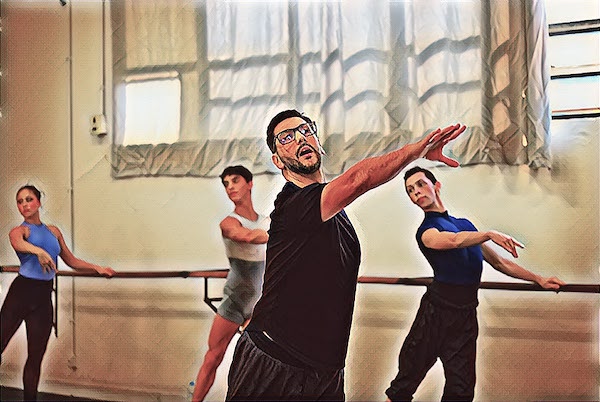
“The center’s mission is to provide opportunities for different art forms and for artists who need to develop an idea or a particular work. They may be choreographers, actors, directors, musicians or other creators. We offer them the space and conditions they need to put that work together and leave with something solid,” he says.
It is a coherent continuation of Baryshnikov’s career. After a trajectory that included the Kirov Ballet, American Ballet Theatre, New York City Ballet, film, theater, and contemporary dance, he began using his prestige to create opportunities for other artists. At 78, he remains the center’s founder and artistic director and, according to Di Dio, follows its projects closely, talks to resident artists, and shares his experience.
“Misha loves the arts with all his heart. It is inspiring to see him involved, talking to artists, sharing his story, and remaining so relevant to today’s world. It is easy to think of him only as a dancer and an icon of dance, but it is important for the world to know about the organization he created as well. This is his legacy.”
Carlo Di Dio’s own journey helps explain why he was invited to participate in that process. Trained at the San Carlo Theatre Ballet School in Naples, he danced with Italian and American companies, became a principal dancer in California, and shared the stage with major names in international dance. When he decided to leave his performing career behind, he did not follow the more predictable path of becoming a teacher, ballet master, or artistic director.
Di Dio studied business administration, completed an MBA, and began working in strategy and consulting at PwC. The transition, which might appear to represent an abandonment of the arts, was actually born from his desire to understand why some institutions survive while others disappear.
“I don’t think there is anything more beautiful than being onstage and feeling the audience, but over time, I realized that I was also inspired by creating the conditions the arts need to grow and endure. The question became: how do we build an arts organization capable of providing opportunities not only for one season, but for generations?” he says.
That was why he entered the consulting world. “Many people assumed that I had left dance because I wanted to work in the corporate world. In fact, it was the opposite. I joined a global company because I wanted to understand how large organizations operate, how strategic decisions are made, how they sustain themselves, and what kinds of models they develop. I did not leave the arts. I simply expanded how I could serve them.”
For Di Dio, the discipline acquired through ballet continues to shape his work. Dance taught him leadership, responsibility, adaptability, and teamwork, qualities that are as important in a boardroom as they are in front of an audience. It also taught him that talent, however great, cannot solve everything.
“My teacher used to tell me, ‘Carlo, when your legs cannot take you somewhere, get there with your head.’ I have never forgotten that sentence. You have to be intelligent because that will be what sets you apart. Talent is not enough.”
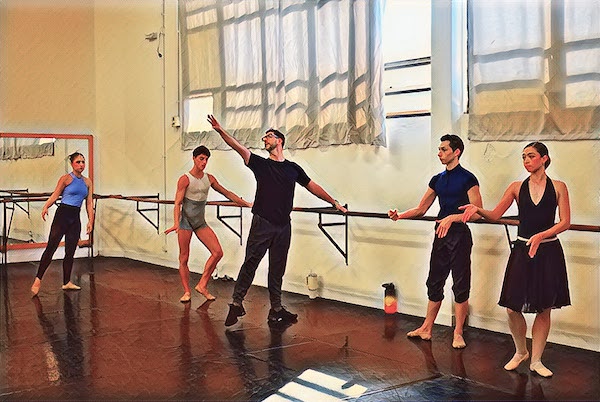
In Joinville, he found an enormous amount of talent, but he was particularly impressed by the investment made to ensure that children and teenagers have the opportunity to develop it. The organization, the quality of the schools, and the involvement of the families revealed a structure that, in his opinion, is already capable of engaging with international institutions.
The next step will be to transform that impression into a concrete plan. Among the possibilities discussed are exchanges, intensive programs in the United States, residencies for choreographers, and bringing artists and teachers to Brazil. Current difficulties in obtaining American visas may affect the format of the collaboration, but they do not eliminate the possibility altogether.
“We will look at where our interests align and determine the best way to offer these opportunities. I like the word partnership because it must be a 50-50 relationship, with risks and benefits shared by both sides,” he explains.
It is still too early to announce a specific project, but Di Dio’s presence in Joinville has already established the first connection. If this bridge moves forward, it could bring young Brazilian artists closer not only to the Baryshnikov name but also to what he chose to build after becoming a legend. Preserving culture, after all, does not mean merely safeguarding the memory of great artists. It means creating the conditions for the next generation to exist.
“We need to make the world understand that culture is indispensable,” Di Dio says. That may be the idea that best explains Baryshnikov Arts and why a closer relationship with Joinville could become so important.
Descubra mais sobre
Assine para receber nossas notícias mais recentes por e-mail.

