
Less than four years after the murders that shocked the United States, Bryan Kohberger’s case has returned to the center of public conversation. The Idaho Student Murders debuted as Netflix’s most-watched English-language series worldwide, drawing 18.2 million views, reaching the Top 10 in multiple countries, and reigniting interest in the platform’s previous documentaries about the crime.
The timing could hardly have been more striking. The documentary premiered just as Kohberger—who pleaded guilty to the murders of Kaylee Goncalves, Madison Mogen, Xana Kernodle, and Ethan Chapin—is now attempting to withdraw that plea and once again declare his innocence.
Apparently, this story isn’t over yet.

By true crime standards, the murders of the four University of Idaho students are not even among the most complicated cases. There was no unidentified serial killer who evaded capture for decades, no missing victim whose body was never found, no sprawling conspiracy involving countless suspects. Four young people were murdered inside an off-campus house. A suspect was arrested weeks later, his DNA was identified on the sheath of a knife found beside one of the victims, and a series of circumstantial pieces of evidence connected his car, his cellphone, and his movements to that night.
And yet, nearly four years later, it remains one of the recent criminal cases that continues to resonate emotionally with people around the world.
Perhaps because justice managed to close the legal case—but never the story itself.
Kohberger pleaded guilty in 2025, accepting four consecutive life sentences without the possibility of parole. In exchange, prosecutors removed the death penalty from the table. For the state, it was the safest outcome: four permanent convictions without the uncertainty of a jury trial or the decades of appeals that usually follow a capital sentence.
For some of the families, it was also the only possible ending.
Ethan Chapin’s parents seemed to accept that no sentence could ever bring their son back. Ethan was one of triplets, and their concern also included allowing his two siblings to move forward instead of spending years emotionally tied to the man who killed their brother. Justice, in their view, could never restore what had been lost. It could only ensure that Kohberger would never walk free and allow the family to begin rebuilding their lives.
Kaylee Goncalves’ family saw things very differently. From the beginning, the Goncalves family became the most outspoken, the most involved, and the most openly critical of the investigation. They wanted a trial, a full public presentation of the evidence, and the possibility of a death sentence.
To dismiss their position as simple revenge would overlook a grief that was also driven by the need to know the truth. For them, the plea agreement did not merely remove the harshest punishment. It eliminated the only opportunity to see the entire case presented before a jury.
The families of Madison Mogen and Xana Kernodle occupied less defined—or at least less public—positions. There was never a single unified response from the families, just as there is no single way to grieve. For some, continuing the legal battle meant honoring their children’s memory. For others, it meant allowing the killer to continue shaping the future of those left behind.
Legally, the plea agreement resolved that conflict. Emotionally, it left almost every question that made this case so compelling unanswered.
Why did Kohberger choose that house? Who was his intended target? Was it Kaylee? Madison? Did he know any of them, or had he simply been watching them? Were Xana and Ethan killed because they happened to be awake? How did one person manage to kill four young adults in a matter of minutes? Why were two roommates spared? Where are the murder weapon and the clothes he wore that night? Above all, why did he do it?
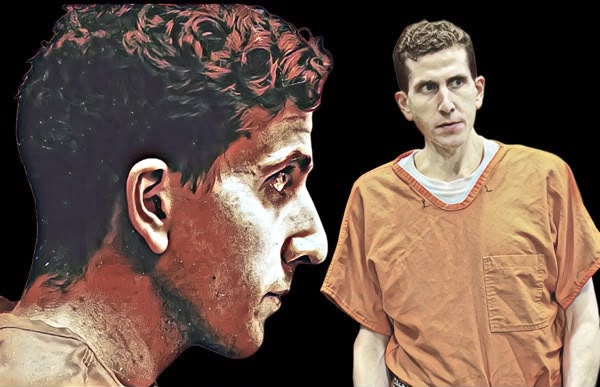
A trial would never have guaranteed answers to every one of those questions. Prosecutors did not even need to prove motive to secure a conviction. But they would have been required to present a complete reconstruction of the crime.
We would have seen maps, cellphone records, surveillance footage, forensic evidence, text messages, timelines, the movements inside the house, and testimony from the surviving roommates. The defense, in turn, would have been forced to challenge that reconstruction and explain why Kohberger’s DNA was found on the knife sheath lying beside Madison’s body.
We also would have confronted one of the most uncomfortable aspects of the case: what happened between the murders and the 911 call placed nearly eight hours later.
The surviving roommates’ delay never necessarily suggested involvement in the crime. They apparently did not understand what had happened inside the house. One of them saw a masked man leaving, heard unusual noises, and tried to contact her friends, but may have interpreted everything as yet another confusing situation inside a college house where people frequently came and went.
Fear, alcohol, paralysis, denial, and the inability to recognize a situation completely outside any normal human experience may all help explain behavior that, in hindsight, appears almost impossible to understand.
Still, those hours would almost certainly have become one of the defense’s central arguments. They would have questioned the survivors’ memories, the people who entered the house before police arrived, the possibility of contamination at the crime scene, and the accuracy of the prosecution’s timeline. Perhaps that was one of the risks prosecutors ultimately chose to avoid.

The case against Kohberger appeared strong, but it was not built on a single unquestionable piece of evidence. His DNA was found on the knife sheath—not on the murder weapon itself, which has never been recovered. The white Hyundai matched his vehicle, but did not identify its driver. Cellphone records suggested movement and periods without service, but they did not capture the murders themselves. The surviving witness saw a masked man, not Kohberger’s face.
Taken individually, each piece of evidence could be challenged. Together, they formed a narrative that would have been extraordinarily difficult to dismiss as a coincidence. Even so, all the defense needed was to create a reasonable doubt in the mind of one juror to transform what looked like a straightforward prosecution into an unpredictable trial.
That is exactly what the plea agreement eliminated.
Now, however, Kohberger is trying to undo the very agreement that spared him the death penalty. He claims that his former attorneys pressured him, misled him about death row, and failed to properly inform him about evidence that could have supported his defense. After formally admitting before a judge that he entered the house and deliberately killed four people, he is once again declaring himself innocent.
His new claims remain a long way from overturning his conviction. He must now prove that his legal representation was constitutionally ineffective and that his guilty plea was neither fully voluntary nor fully informed. Regret alone is not enough. And if he somehow succeeds in setting the plea aside, he could once again face the death penalty he originally avoided.
Yet his legal maneuver reinforces the feeling that has lingered ever since the plea agreement: nothing was ever truly resolved.

Netflix’s documentary offers few major revelations for those who have followed the investigation closely since November 2022. Its greatest strength is something else entirely: it reconstructs the chronology of a tragedy that still lacks its most fundamental answers. By placing the victims back at the center of the story, it reminds us that we know their names, their faces, their friendships, and their dreams—but we still do not know why their lives crossed paths with Bryan Kohberger’s.
Perhaps that is exactly what continues to haunt us. Human beings do not seek justice alone. We seek meaning. We accept tragic endings far more easily than incomplete ones. When a tragedy appears random, we instinctively try to reorganize it into a story that makes the world feel understandable again.
In the Idaho case, we have a convicted killer, but no motive. We have a confession, but no explanation. We have four life sentences, but not the complete story of what happened inside that house.
Now, by once again claiming innocence, Kohberger has restored the very uncertainty that the plea agreement was supposed to eliminate.
Perhaps that is why a documentary about a seemingly solved crime attracted 18.2 million views within days of its release. We are not watching simply to learn who committed the murders. We are watching because we are still searching for what the justice system could never provide: meaning.
The legal system may have reached its conclusion. Much of the public—and some of the victims’ families—remain exactly where they have always been: standing outside a house where four young people were murdered, still trying to understand a story that received a sentence, but never found an ending.
Descubra mais sobre
Assine para receber nossas notícias mais recentes por e-mail.

