
There are only a few hours left until the Season 3 finale of House of the Dragon, and while the First Battle of Tumbleton promises fire, blood, and probably a few significant farewells, the series has been quietly building another kind of conflict. Not exactly about who has the right to sit on the Iron Throne — by now, both sides have their arguments and their supporters — but about who is actually learning how to handle power. And, above all, about what the series is doing with Rhaenyra Targaryen, just as it finally brings her closer to becoming the queen she believes she was born to be.
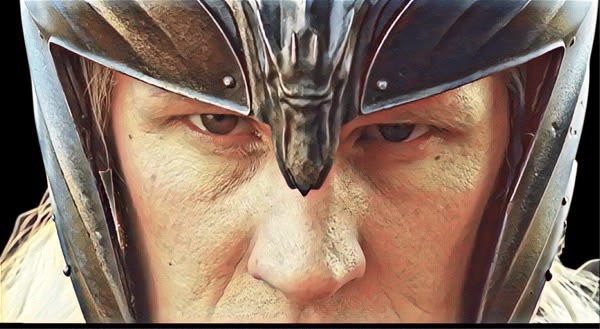
Seven episodes ago, the answer would have seemed obvious. Rhaenyra was raised knowing she would be queen. She watched Viserys rule, knew the Small Council, governed Dragonstone, and spent most of her life dealing with the consequences of being the first woman chosen to inherit the Iron Throne. Aegon never wanted to be king, was never prepared for it, and was introduced as spoiled, irresponsible, cruel, and spectacularly unfit for any position of leadership.
And yet they reach the end of the season moving in almost opposite directions. Not because Aegon has been redeemed or Rhaenyra has suddenly become a villain. That would be far too simplistic for two characters that House of the Dragon is finally making more interesting. But while Aegon is beginning to recognize his limitations, Rhaenyra seems increasingly convinced that something greater demands that she prevail.
Curiously enough, both are products of the same failure: Viserys.
Viserys chose Rhaenyra, but never prepared her to rule
As I have said before, Viserys never publicly wavered in his choice. Rhaenyra would be his heir. But naming someone to a position does not mean preparing that person to hold it, much less building the structure necessary for them to keep it. By remarrying, having sons, and spending years pretending the obvious succession crisis created by his own decisions would disappear simply because he ordered everyone to ignore it, Viserys left Rhaenyra with a legitimacy that essentially depended on his word.
When he died, Rhaenyra discovered that being chosen by the king did not necessarily mean having a kingdom willing to recognize her.
Season 3 has exposed another weakness that may be even more important: Rhaenyra has enormous difficulty building a team. And that is far more serious than losing a battle. If a queen cannot manage the people around her, establish trust, recognize competence, listen to advice, and keep allies close, how does she intend to manage Westeros? She wants to conquer a kingdom before she has fully managed to organize her own court.
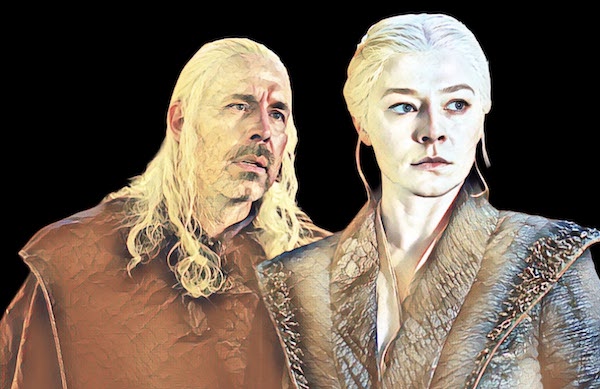
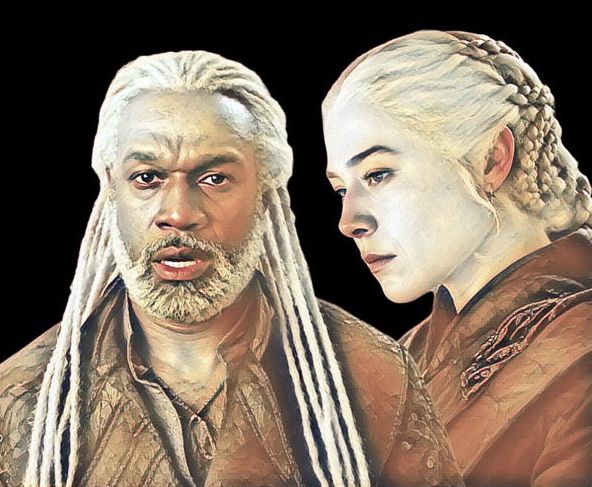
Corlys Velaryon may be one of the most frustrating examples of this adaptation choice. In Fire & Blood, he represents exactly the kind of person Rhaenyra should want beside her: experience, wealth, a fleet, pragmatism, political knowledge, and a lifetime spent understanding how power works. In the series, his commitment to the Black cause has been written as much more reluctant, and even after formally becoming her Hand, we rarely get the sense of a strong political partnership between queen and adviser that could stabilize her wartime government. She has one of the most experienced men in Westeros at her side, yet the series rarely gives us the impression that she knows how to make full use of him.
Daemon is an even more revealing case. At this point, he is committed to Rhaenyra and her cause, but the series spent far too much time planting doubts about his loyalty for those doubts to simply disappear. Daemon has considered his own claim to power, challenged Rhaenyra, and knows her insecurities perhaps better than anyone else.
He may be completely sincere now, and yet there is a history ready to be exploited whenever someone wants to awaken Rhaenyra’s fear that her husband wants to take what belongs to her. Mysaria understands that very well.
That does not mean everything Mysaria says is a lie or manipulation. It means she knows how to occupy an emotional space in which Rhaenyra is vulnerable. She knows how to reinforce her importance, her worldview, and the idea that Rhaenyra sees something others cannot.
When Daemon offers an unpleasant truth, Rhaenyra often withdraws, becomes suspicious, or reacts as though criticism itself were a threat to her authority. When Mysaria offers an interpretation that confirms what Rhaenyra already wants to believe, she finds a much more receptive queen. And that is an enormous problem for any ruler.
When prophecy stops being a responsibility
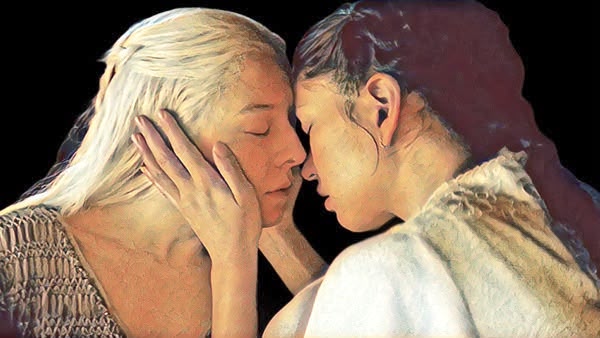
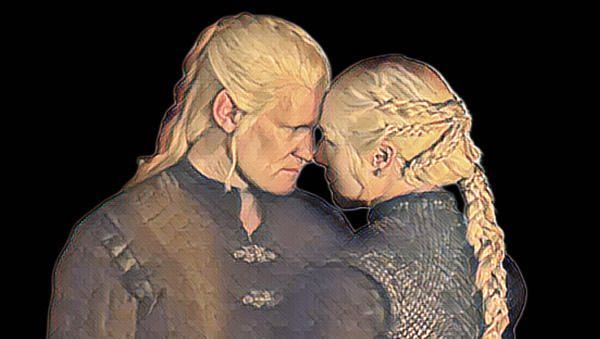
Perhaps Rhaenyra’s most important transformation this season is not happening on the battlefield, but through prophecy. Over these seven episodes, she has moved dangerously close to a position we know very well from Targaryen stories: the point where political conviction, identity, and destiny begin to merge. Rhaenyra no longer simply believes she has the right to the Iron Throne. She is beginning to believe there is a greater purpose behind her ascension.
The Song of Ice and Fire, passed down by Viserys as a secret and initially presented almost as a burden attached to the Crown, is beginning to serve a different purpose. It is no longer simply a responsibility. It is becoming confirmation.
Emma D’Arcy has spoken about Rhaenyra’s growing religiosity and a kind of radicalization that can come close to religious fanaticism. Ryan Condal has also promised a profound transformation for Rhaenyra this season, and perhaps the real question is where the conviction of a woman whose legitimacy has been challenged throughout her life ends, and the dangerous certainty of someone who believes she has been chosen begins.
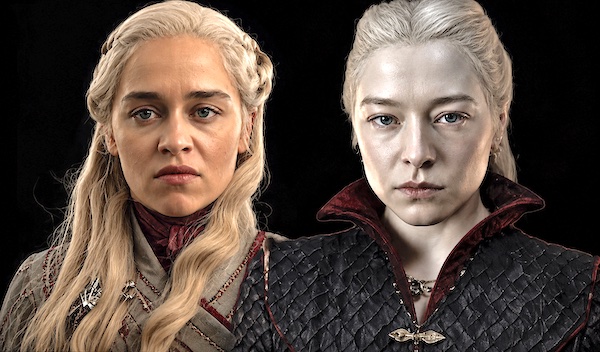
It is impossible not to think of Daenerys.
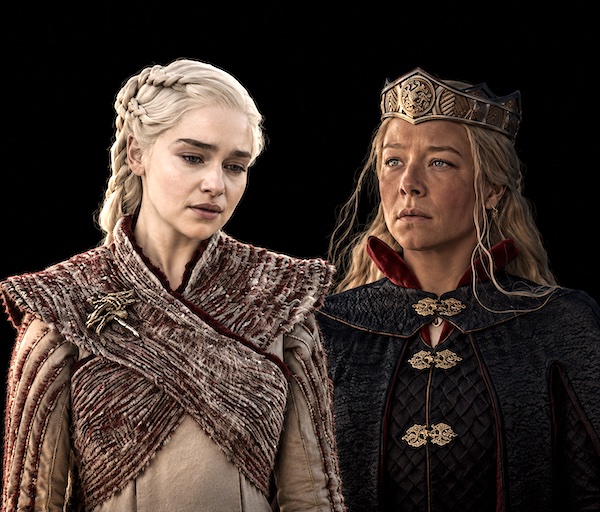
Not because Rhaenyra must repeat her arc, or because every Targaryen woman must inevitably end up consumed by madness. The interesting parallel lies somewhere else: in the transformation of a political claim into messianic certainty.
Daenerys also gradually began to interpret her journey as evidence that there was something greater in her destiny. Rhaenyra is approaching the same trap when she moves from thinking “this throne is mine by right” to believing “I need to sit this throne because there is a greater reason for me to be there.”
And it is important to remember that this messianic dimension of Rhaenyra is largely a creation of the adaptation. Fire & Blood does not give her this same connection to Aegon’s prophecy, nor does it frame her political actions through it. So this is not simply a minor change to the source material. The series is structurally changing the character by giving her a motivation that alters the way we interpret her decisions.
The Targaryen Joan of Arc
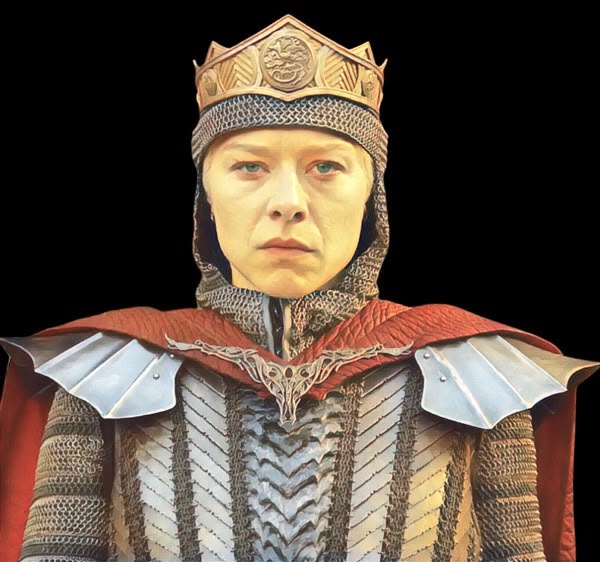
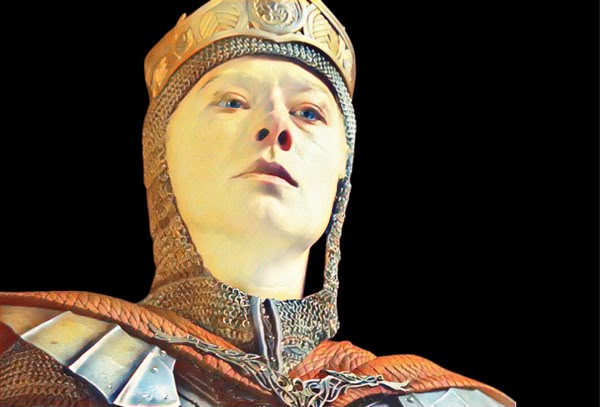
The clearest image of that transformation may arrive in the finale itself: Rhaenyra in armor, ready to personally enter the war.
Emma D’Arcy had long argued that the character should wield a weapon and take a more active role, and the series has finally embraced that idea. It also represents a significant departure from the place Rhaenyra occupies in the original story.
This is not simply about putting a sword in the protagonist’s hand because it looks good on screen. It changes the language of the character. There is something almost like a Targaryen Joan of Arc in this image: a woman in armor, driven by the certainty of a greater mission, confronting men who question her legitimacy and determined to personally fight a war in the name of what she believes.
There is another important question behind this change. For a long time, Rhaenyra was written as a reactive character. She suffered losses, hesitated, tried to prevent war, weighed consequences, and watched events accumulate around her. Now that the series is finally turning her into an agent of her own story, it needs to be careful not to suggest that female agency automatically equals radicalization. What makes this interesting is precisely being able to watch her act while also recognizing that some of her choices may be wrong.
Grief does not automatically make anyone wiser
Personal loss makes all of this even more complicated. Rhaenyra has lost children, accumulated trauma, and gone through moments in which she stops reacting solely as a queen and reacts as a mother. It would be impossible to demand absolute rationality in the face of that kind of grief. At the same time, war does not suspend its consequences simply because grief is understandable. Pain can produce a desire for revenge, resentment, and the need to find meaning in what has been lost.
There may be another important question here about the way the series has written Rhaenyra. For a long time, it allowed her to suffer, hesitate, and mourn, but was much more reluctant to give her the same freedom to experience emotions considered less noble, such as anger, ambition, resentment, or revenge.
That is particularly curious when we remember that this is a civil war. Alicent has also been softened and repeatedly rewritten by the adaptation, and both central women have often been placed in the position of trying to restrain a war the men around them supposedly wanted to fight. This is not a limitation of Emma D’Arcy or Olivia Cooke. It is a writing choice. Now that House of the Dragon is finally allowing Rhaenyra to become more active, the series has to deal with the consequences of that decision without automatically equating female agency with losing control.
The people don’t live on prophecies
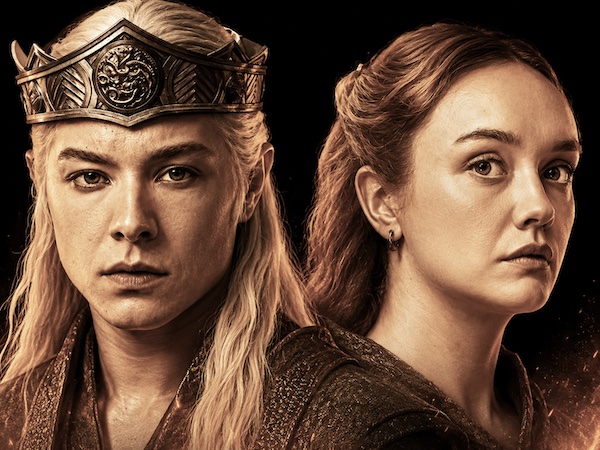
While Rhaenyra becomes increasingly immersed in symbols, prophecies, dragons, and destiny, one element remains brutally concrete: the people. She seems to believe they will recognize in her what she has increasingly come to recognize in herself. Westeros has already shown us many times that this is not how it works.
The people are hungry, frightened, and insecure, and most of the time, they are profoundly indifferent to who sits on the Iron Throne. The question of who has the stronger genealogical claim matters far less than food reaching their tables, safety in the streets, and some reasonable hope of surviving until the next day.
It is one of the season’s most interesting ironies. Rhaenyra believes more and more in legends and prophecies precisely when governing requires brutally practical decisions. She imagines the people may support her because her cause is legitimate, but dynastic legitimacy feeds no one. And this brings us back to the original problem: if she cannot even build a solid team around herself, how does she intend to win the trust of millions of people who know nothing about her prophecy, do not live on Dragonstone, and have no personal reason to believe her victory will improve their lives?
Daenerys also discovered that conquering or liberating a people was very different from governing them. Rhaenyra risks making the same mistake by confusing legitimacy with popular support. Perhaps the people simply do not care.
Dragons are no substitute for politics
Tumbleton may be where all these contradictions finally collide. In theory, the Blacks enter this stage of the war with an extraordinary advantage: dragons. But Rhaenyra made an important mistake by treating her new dragonriders almost as though she had simply expanded her arsenal. She did not acquire new weapons. She handed nuclear weapons to people. Ulf still has desires, vanity, resentments, and ambitions after mounting a dragon. So does Hugh.
Putting someone on the back of a creature capable of destroying an army does not erase that person’s individuality. It turns that individuality into a matter of state. And Ormund Hightower understands this.
The adaptation has significantly expanded Ormund’s importance and turned him into more than a military commander. He watches people, identifies weaknesses, and seems to understand that perhaps there is no need to defeat a dragon if you can win over the man sitting on its back. Politics, after all, can bring down what military force alone cannot, and that may be precisely the tragedy of the First Battle of Tumbleton.
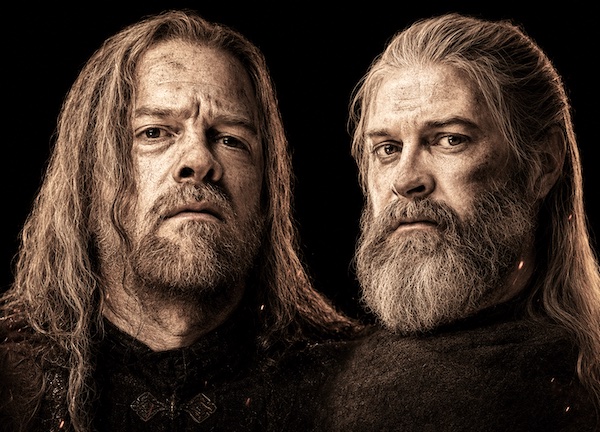

The Blacks may lose a battle they appear, mathematically, capable of winning because the Greens have understood something Rhaenyra still has not fully grasped: dragons are no substitute for politics.
There is also an intriguing question surrounding Ormund’s fate.
In Fire & Blood, his story is directly tied to the First Battle of Tumbleton. Will the series really let James Norton go now, after making him one of the season’s most interesting additions?
It certainly could. Game of Thrones was never afraid to cast excellent actors in relatively short roles.
But considering how many plots and characters the adaptation has already merged or altered, it would hardly be surprising if Ormund’s fate were changed precisely because he has been given a much larger strategic role on television.
Aegon is learning what Rhaenyra is forgetting
And then we return to Aegon, because the contrast between the two claimants helps reveal what is happening to Rhaenyra.
Viserys failed his son even more obviously. Because he never intended Aegon to rule, he also seems never to have bothered giving him purpose, discipline, or responsibility. Aegon grew up knowing his father had chosen his sister and reached adulthood with no preparation whatsoever for governing.
When the crown was placed on his head, he was probably the least prepared person imaginable to receive it. And he behaved exactly as someone that unprepared would. He confused power with ability, wanted to be loved because he had never felt loved, made impulsive decisions, behaved cruelly, and paid a brutal price for it. None of that disappears. Aegon has not been absolved by suffering, and the series does not need us to forget who he was to acknowledge that something in him has changed.
Losing almost everything seems to have given him precisely what victory has not yet given Rhaenyra: an awareness of his own limitations. His relationship with Larys is central to that change.

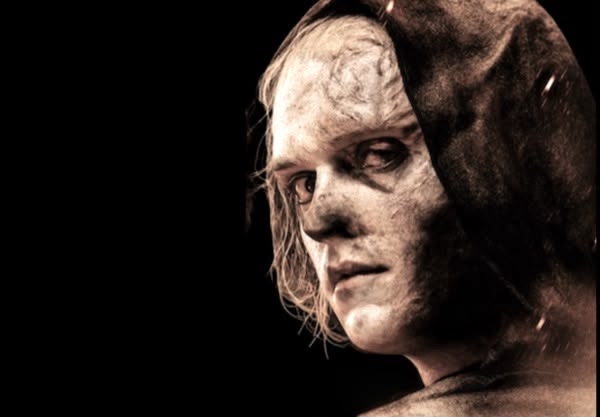
Larys tells him unpleasant truths. He forces Aegon to confront things he does not want to see about his body, his political position, his possibilities, and his dependence on others. His first reaction is resistance, but he listens. Later, when he encounters someone unable to offer the same degree of honesty, he recognizes the difference. It may be the first real lesson in leadership Aegon has ever learned: the person who agrees with a king is not necessarily the person most loyal to him. Sometimes loyalty means risking the consequences of telling the king exactly what he does not want to hear.
That creates an almost perfect contrast with Rhaenyra.
Aegon began surrounded by people who wanted to rule through him, and is beginning to recognize who can actually help him. Rhaenyra is moving in the opposite direction: she seems increasingly drawn to those who validate her certainties. He is beginning to learn how to hear what he does not want to hear; she risks listening only to what she already wants to believe.
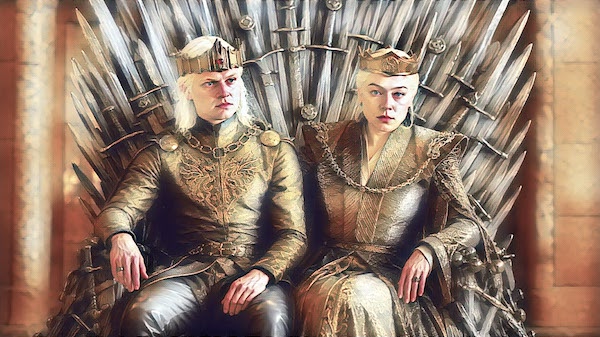
Helaena could change everything
And there is one final piece that could make this arc even crueler: Helaena.
If the finale truly connects Helaena’s death to Rhaenyra, or simply makes King’s Landing believe the new queen was responsible for it, then the question of who actually gave the order may cease to matter.
Politically, the truth can become almost secondary. Governing also means fighting over the story that will be told about you, and Rhaenyra may be about to discover that it is possible to win a battle, occupy a city, and still lose that fight completely. Helaena is probably the worst possible victim for her.
Helaena has never been portrayed as someone actively fighting for power and may be the Green most easily perceived by the people as innocent. She is vulnerable, traumatized and has been swept along by decisions made by her own family. If she dies and the population believes Rhaenyra ordered her sister’s death, the Greens gain something more powerful than any proclamation.
They gain a martyr.
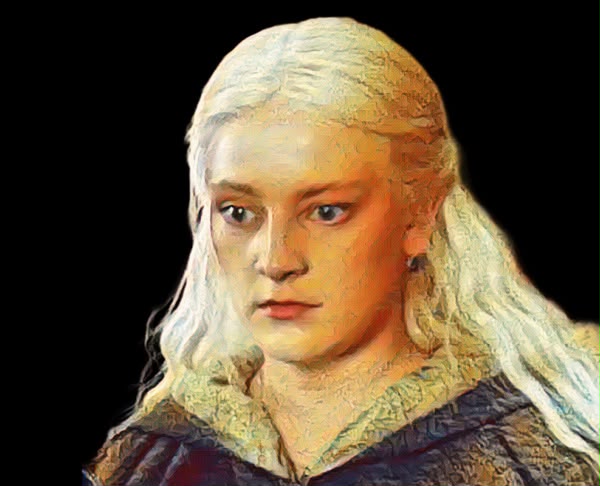
This is where the grotesque “Maegor with teats” stops being merely an insult and begins to perfectly capture the political danger facing Rhaenyra. There is obvious misogyny in the expression, just as misogyny has always been embedded in the resistance to her claim. But propaganda does not have to be fair to work. Maegor represents the image of a cruel, bloodthirsty Targaryen willing to use terror to keep the throne. If that image becomes attached to Rhaenyra, explaining that her claim was legitimate will no longer be enough.
And what an extraordinary irony it would be if this happened precisely when she finally puts on the armor. Rhaenyra could enter the battlefield as a kind of Targaryen Joan of Arc, convinced that she has finally taken control of her own destiny, while in the streets of King’s Landing, the saint is already being called Maegor.
It may not even matter whether the accusation is true. What matters is that the people believe it.
The fine line between queen and savior
That may be the greatest clash between the Rhaenyra who exists inside her own mind and the Rhaenyra who is beginning to exist in the eyes of those she intends to rule. To herself, she may be Viserys’s chosen heir, the keeper of a prophecy, a mother who has endured unbearable losses, and a woman finally willing to fight for what she was always told belonged to her. To those going hungry in King’s Landing, she may simply be another Targaryen flying over their heads on a dragon while ordinary people die.
None of this erases the misogyny that has always shaped Rhaenyra’s story. But acknowledging the injustice done to her does not require us to consider every decision she makes correct. Perhaps that is exactly where House of the Dragon becomes most interesting: she can be right about what was taken from her and profoundly wrong about how to take it back.
That is why Tumbleton may reveal much more than who wins the battle. It may show us where Rhaenyra stands politically and emotionally as she approaches the fourth and final season — and whether she can still distinguish the legitimacy of her cause from the certainty that she was chosen to fulfill it.
Rhaenyra may lose control over who her subjects believe she has become. And that is one defeat not even a dragon can solve.
Descubra mais sobre
Assine para receber nossas notícias mais recentes por e-mail.

