
UPDATE: The text below contains spoilers for the House of the Dragon Season 3 finale and Fire & Blood
The House of the Dragon Season 3 finale changed several pieces on the Dance of the Dragons board, but not necessarily the destination toward which they are moving. And that is precisely what makes the final season so interesting. Anyone familiar with Fire & Blood still knows some of the major events that need to happen before the war is over, but can no longer be certain who will play each role, how we will get there, or even who will still be alive when they happen.
Tumbleton made that very clear. Ulf betrayed Rhaenyra on his own, while Hugh remained with the Blacks and found Kat dead. Ormund Hightower died, but Gwayne and Daeron apparently survived. Aegon reappeared riding Sunfyre and forgave Aemond. Mysaria was dismissed. Helaena died. Corlys ended the battle looking for a way out of the war. Rhaenyra, on the other hand, emerged even more convinced that violence and destiny are sufficient arguments for ruling.
So after Tumbleton, it is still possible to look at Fire & Blood and identify the major events yet to come. But there is one important caveat: almost all of them have already begun to be changed by the series.
Perhaps the biggest surprise of the House of the Dragon Season 3 finale is not who won or lost the battle. In fact, after everything that happened, even that question is difficult to answer. Knowing the destination no longer necessarily means knowing the road. By the end of its third season, House of the Dragon made it clear that Ryan Condal is increasingly less interested in simply dramatizing the sequence of events described by George R.R. Martin.
And that can either be great or a huge problem.
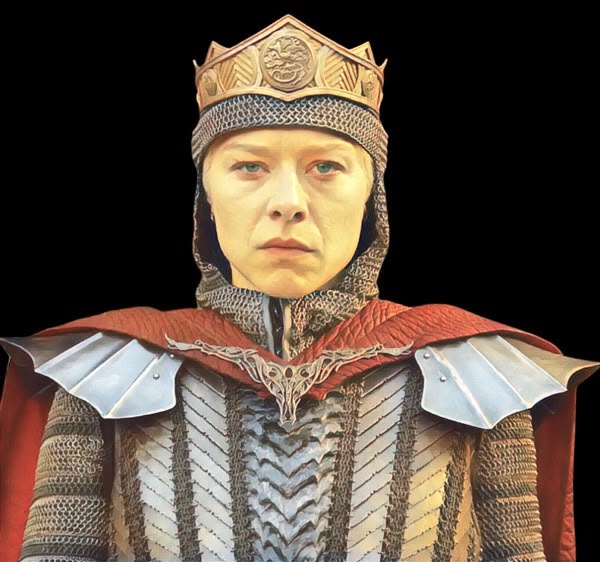
Rhaenyra is becoming increasingly isolated
Perhaps this is the most important point. Rhaenyra has finally achieved what she wanted ever since Viserys died: she is in King’s Landing, sitting on the Iron Throne and recognized as queen by those who have remained at her side. At the same time, she has never been more isolated.
Her allies have spent the season being pressured, threatened, used, or discarded according to whatever she needed from them at the time. Corlys is tired of the war. Baela questions her decisions. Addam has already made it clear that his priorities lie much closer to Daemon’s daughters than to the queen. Alyn may have become one of her most trusted men, but there is a fairly obvious limit to that loyalty: he is unlikely to calmly accept an order to kill his own brother.
And Mysaria, who plays a fundamental role in Rhaenyra’s emotional deterioration in Fire & Blood, has just been dismissed. In the book, after Hugh and Ulf’s betrayal, Mysaria fuels the queen’s belief that none of the dragonseeds can be trusted. She is also the one who brings Rhaenyra the rumors about Daemon and Nettles. The queen then orders Nettles killed while sparing her husband. Daemon learns of the order, helps Nettles escape, and, rather than returning to King’s Landing, goes alone to Harrenhal, where he waits for Aemond for a battle he clearly has no intention of surviving.
In the series, Nettles is Rhaena. That turns a decision rooted in jealousy, paranoia, and prejudice against a bastard in the book into something potentially even more brutal. Rhaenyra would have to want her own stepdaughter dead, Daemon and Laena’s daughter, and Daemon would have to choose to protect his daughter from the wife with whom he has only just reconciled.
It is difficult to imagine a more effective way of finishing off their marriage.
Who will become the show’s “Shepherd”?
Here is another enormous question.
In Fire & Blood, the Shepherd is a messianic figure who emerges among the people of King’s Landing and transforms resentment against Rhaenyra into something larger: a revolt against the Targaryens and, above all, against the dragons. He preaches to an exhausted, starving, and terrified population that these creatures are not gods but monsters that can be killed. When the city collapses into chaos, thousands follow his call and attack the Dragonpit.
So far, House of the Dragon has not introduced anyone who clearly occupies that role. But it has introduced Sylvi, Mysaria’s former friend and associate, who looks at the White Worm living inside the castle in the penultimate episode and accuses her of becoming the very thing she once claimed to oppose. It may mean nothing. But it could also be the door.
Sylvi knows Flea Bottom, knows Mysaria, knows the resentment of the population, and apparently no longer believes that her friend’s proximity to power has improved the lives of those left outside. If Ryan Condal decides to replace the Shepherd with someone we already know, she is an interesting candidate. The other, ironically, is Mysaria herself.

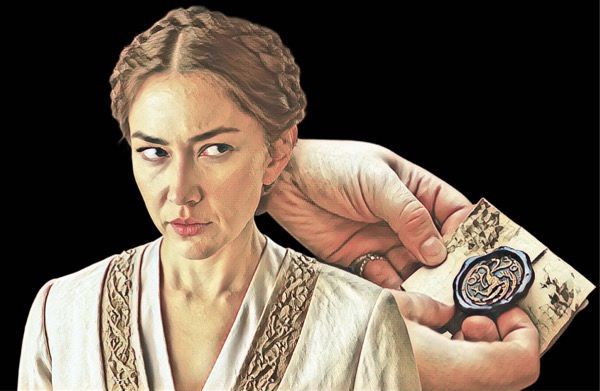
Dismissed by Rhaenyra after spending months trying to drive her away from Daemon, Mysaria knows the tunnels, the city, and its people. Her entire discourse has been built around the promise of representing those the nobles ignore. Now she also has personal reasons to turn against the queen. And then there is Larys.
Mysaria and Larys may still destroy Rhaenyra together. For years, I have suspected that Mysaria and Larys could somehow end up working toward the same outcome: Rhaenyra’s destruction. The season finale did not eliminate that possibility. It may actually have made it more interesting.
Rhaenyra dismissed Mysaria without even giving her an explanation. We can imagine several reasons. The queen may already have realized that her Mistress of Whisperers was far more invested in separating her from her husband than simply serving her, but there is an even more objective problem: Mysaria was a terrible Mistress of Whisperers.
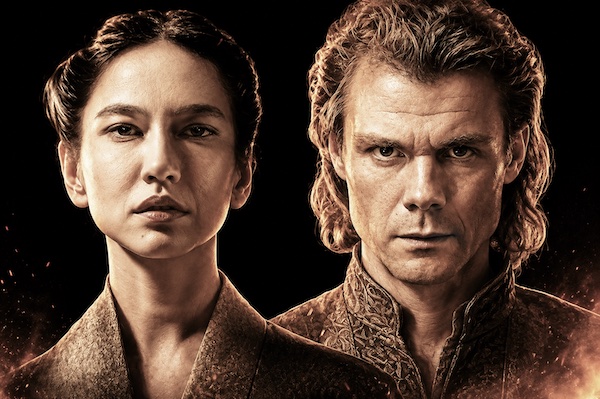
Throughout Rhaenyra’s time in King’s Landing, she failed to uncover almost every secret that could genuinely threaten the queen. She did not know where Aegon was. She did not know Sunfyre was alive. She failed to anticipate the Greens’ movements. And the one major secret she did discover — Helaena’s pregnancy and her plan to escape with Alicent — she chose to conceal. Apparently, someone noticed.
What makes this particularly interesting is that Fire & Blood leaves us with a delicious clue for the final season. After Helaena’s death, a rumor spreads through King’s Landing that she did not kill herself but was murdered on Rhaenyra’s orders. One version attributes the lie to the Shepherd. Another, recorded by Mushroom, claims that Larys Strong created the story while secretly remaining in the capital. So the series may not even have to choose between Mysaria’s underground influence and Larys’s.
They could simply be two sides of the same operation.
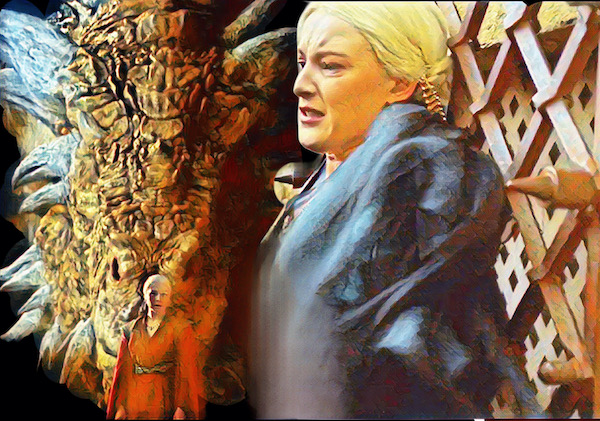
Helaena’s death could set King’s Landing on fire
Helaena was loved by the people in the book. When she dies, the rumor that Rhaenyra ordered her murder becomes the spark that ignites a city already ready to explode. Alicent tears her clothes, curses Rhaenyra, and that same night, the riots begin.
In the series, there is even more fuel. Helaena died as Rhaenyra’s prisoner. She was pregnant. Her attempt to escape with Alicent had been discovered. And Rhaenyra has just entered into open conflict with the Faith of the Seven, killed the High Septon, and presented to the people her own conviction that she has been chosen by the Valyrian gods for a greater purpose.
It will not be difficult to turn the young queen’s death into propaganda. And that brings us to the Dragonpit.
The Storming of the Dragonpit will be the true horror of King’s Landing
If the series preserves this event, we will probably see one of the most violent sequences in all of House of the Dragon.
Convinced by the Shepherd that dragons can be killed, the population storms the Dragonpit. Four dragons trapped inside are attacked by the mob. Among them is Dreamfyre, Helaena’s dragon. The building is destroyed during the confrontation, and the carnage consumes humans and dragons alike. It is also when Joffrey dies.
Worried about his own dragon, Tyraxes, the boy begs his mother to let him go to the Dragonpit. Rhaenyra refuses because she simply does not believe a mob can kill dragons. Joffrey disobeys, mounts Syrax without a saddle, and tries to reach the pit. Syrax does not recognize him as her rider and throws him off during the flight. Joffrey falls into Flea Bottom and dies. Syrax also joins the battle and is killed. Rhaenyra watches her dragon die from the Red Keep with Aegon the Younger in her arms.
This matters because the Dragonpit we know from Game of Thrones is already a ruin. We therefore know that the building will not survive the Dance of the Dragons.
Taxes will destroy Rhaenyra’s popularity
Before that, however, there is an issue far less spectacular but just as politically devastating as the dragons: money.
The Greens emptied the treasury before losing King’s Landing. The series spent the entire season reminding us that Rhaenyra does not have enough resources to sustain her government and has already transferred to Torrhen Manderly the role of Master of Coin that belongs to Bartimos Celtigar in the book.
In Fire & Blood, the solution is disastrous. With no gold, the Crown raises taxes brutally. Duties on wine and ale double, port fees triple, merchants must pay simply to keep their doors open, and even beds in inns are taxed. The combination of hunger, war, and taxation helps transform the former “Realm’s Delight” into a ruler hated in the streets. In the series, that bill will probably fall to Manderly.
Rhaenyra has already tried to win the people over by redistributing food and punishing the rich. The irony is that she will now probably have to do exactly what every unpopular ruler does when there is no money left: take it from a population that already has almost nothing. Dragons can win wars. They do not pay the bills.
Addam, the “Loyal,” may be far less loyal in the series
This is another point where Condal appears to have prepared an inversion.
In the book, Addam does not betray Rhaenyra. After Hugh and Ulf change sides, the queen decides that the dragonseeds are dangerous and orders their arrest. Corlys defends Addam and Nettles, but Rhaenyra refuses to back down. When he learns that Addam is about to be arrested, Corlys warns the young man and allows him to escape on Seasmoke. For doing so, the Queen’s own Hand is arrested and beaten, while much of the Velaryon force abandons Rhaenyra.
Addam could simply disappear. Instead, he raises a new army and returns to fight for Rhaenyra at Tumbleton, dying to prove that not every bastard is a traitor. That is where the word placed on his tombstone comes from: LOYAL. But the series’ Addam already seems to be reaching that point by a different road.
His connection with Baela and Rhaena has gained emotional weight. His loyalty to the queen feels far less absolute and much more dependent on what he believes is right. So when the order eventually comes to arrest him, Rhaenyra may not be accusing a man who is completely devoted to her, but someone who has genuinely begun to drift away. That does not make her decision any more justified. It makes it more dangerous.
Because Corlys certainly will not accept Rhaenyra killing Addam. Neither will Baela. And Alyn, who currently carries out terrible orders for the queen, will have to decide how far his loyalty extends when the target is his own brother.
Where are baby Aegon and baby Viserys?
This may be the biggest absence the final season needs to correct quickly. Aegon the Younger and Viserys simply cannot remain outside the story.
In the book, the two boys are sent to Essos during the war, but the ship carrying them is attacked by the Triarchy. Aegon manages to escape by riding Stormcloud for the first time. The small dragon reaches Dragonstone mortally wounded and dies soon afterward. Viserys is left behind, captured, and presumed dead by his family. This is not a minor event.
Aegon returns traumatized by the guilt of abandoning his brother, is later taken to King’s Landing and remains close to his mother. He is with Rhaenyra during the uprising, sees Joffrey fall from Syrax, sees Syrax die, and finally accompanies his mother when she flees the capital. And he will become the most important witness of all.
When Rhaenyra reaches Dragonstone and realizes too late that Aegon II has taken the island, it is her son Aegon who witnesses her death before Sunfyre. After the war, this traumatized child will be crowned Aegon III.
Child or not, there is simply no room left to exclude him from the series.
The Iron Throne still has to fully reject Rhaenyra
The series has also begun planting another famous image from the book. According to one version in Fire & Blood, when Rhaenyra first sits on the Iron Throne wearing armor, she is later seen with cuts on her hands and legs. To those who believe the throne symbolically judges those worthy of sitting on it, this was proof that it had rejected her.
The series has already shown Rhaenyra cutting herself. And it is unlikely to be the last time. The more she insists that she has been chosen, the more powerful it will be visually to watch her bleed over the very thing she believes belongs to her by right.
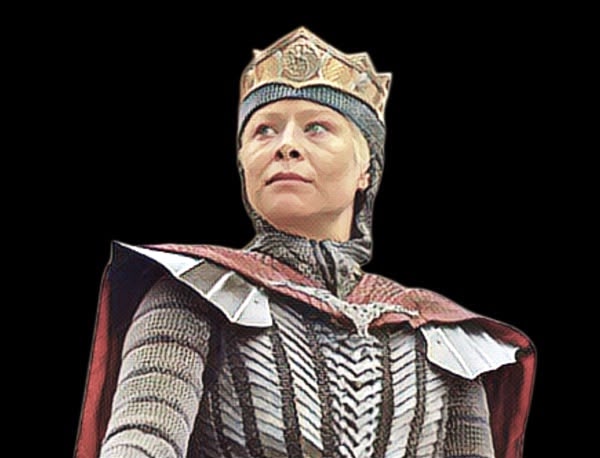
Tumbleton II is still coming, and almost nobody gets out alive
The First Battle of Tumbleton is over, but Tumbleton is not.
In the book, Ormund’s death leaves his army virtually leaderless. Hugh and Ulf, now known as the Two Betrayers, realize that possessing Vermithor and Silverwing gives them more power than any title the Hightowers could grant them. Hugh begins seriously considering becoming king. Daeron even throws wine in his face when he voices that ambition. The lords of the Reach realize they have created a problem that is nearly impossible to control and form a conspiracy known as the Caltrops to kill the two dragonseeds.
In the series, that will have to be reversed. Ulf was the one who initiated the betrayal, while Hugh remained loyal to Rhaenyra. So if the two end up together again, it will be Ulf who has drawn Hugh to the other side rather than the reverse.
Still, one of them will probably discover exactly what the lords have always feared: when a man possesses one of the largest dragons alive, why should he continue obeying men without dragons? That is when Addam returns.
After fleeing Rhaenyra, he raises almost four thousand men in the Riverlands and attacks Tumbleton by surprise at night. The battle is complete chaos. Ulf is so drunk that he sleeps through most of it. Hugh runs to reach Vermithor, but Jon Roxton intercepts him and kills him with Orphan-Maker. Roxton is then killed shortly afterward by Hugh’s men.

Daeron also dies, although even the book cannot tell us exactly how. One version says he emerges from his tent with his clothes on fire and is killed by Black Trombo. Another claims that an anonymous soldier kills him without even realizing who he is. The version some chroniclers consider most plausible is even less glorious: his burning tent simply collapses on top of him. His body is never identified.
Meanwhile, Addam and Seasmoke fight Tessarion until Vermithor joins the battle without Hugh. The three dragons become entangled in an uncontrolled fight. Seasmoke dies, Vermithor dies as well, and Tessarion is so badly wounded that she eventually has to be killed out of mercy. Only Silverwing survives.
Ulf survives the battle only to die shortly afterward. In the book, the man who tentatively assumes command after Ormund is his cousin, Ser Hobert Hightower. Hobert joins the conspiracy against the dragonseeds and offers Ulf poisoned wine. Ulf becomes suspicious and demands that Hobert drink as well. Hobert knows he will die, but drinks anyway to complete the plan. Both men die soon afterward.
Except the series has already made that impossible by turning Hobert into Ormund’s father and killing him before these events. Someone else will have to inherit his role.
Jon Roxton is an obvious possibility for part of it because he has already been introduced and plays a crucial role in Hugh’s death in the book, even though he is not a Hightower. Gwayne is another completely new piece on this board. And that is precisely why Tumbleton II may become one of the first major surprises of the final season.
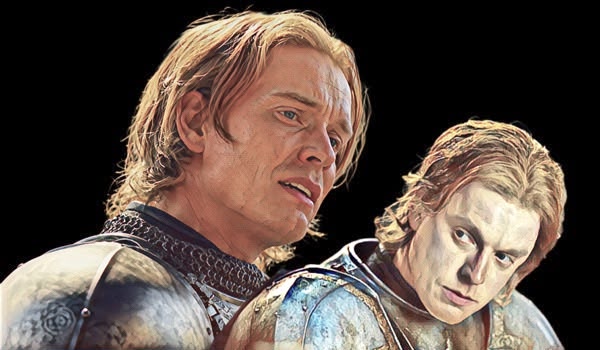
Gwayne should not even be alive
Gwayne Hightower is practically a new creation at this point. In the book, he never accompanies Criston Cole on this campaign. He remains in King’s Landing and dies when Rhaenyra takes the city, betrayed and killed by Luthor Largent, commander of the City Watch. The series not only removed him from that fate but killed Criston and kept Gwayne alive through Tumbleton, where he has become something of a protector to Daeron.
Freddie Fox helped transform a secondary character into one of the most interesting figures of the season, and Gwayne ended up becoming an unlikely hero precisely because he seems to have developed something almost every other Hightower has lost: the ability to see Daeron as a boy rather than simply a political piece.
There is no map anymore. If Daeron is alive, Gwayne will probably be beside him when Season 4 begins. But Tumbleton II is a character grinder, and the series will have to decide whether to give him a new function or simply a new death.
And what do you do with Alicent?
What House of the Dragon has done with Alicent deserves an article of its own.
Her insistence on inserting herself into decisions for which she was clearly unprepared helped create much of the chaos now surrounding her. She opposed Rhaenyra long after Otto had explained the threat to her, misread practically every political signal, and, in the most unbelievable moment of all, essentially gave Rhaenyra permission to kill Aegon.
Then she tried to kill Aemond, the very son she could have sought out to help her fight Rhaenyra. She left Helaena in the hands of her enemy and never even met Daeron in person. The last time we saw her, she was far away from everything, admiring butterflies. But Helaena is dead.

It is virtually impossible to imagine Alicent simply returning to King’s Landing and continuing to coexist with Rhaenyra after this. It is equally difficult to believe that Aegon and Aemond, now reconciled, will have much interest in welcoming back the mother who betrayed them both.
On the other hand, there is a fascinating door left open. In the book, when Alicent learns of Helaena’s death, she tears her clothes and curses Rhaenyra. The series has spent three seasons trying to preserve an emotional bond between the two women. Perhaps Helaena’s death will finally be the thing that destroys it.
If Mysaria or Larys makes Alicent believe that Rhaenyra played a role in her daughter’s death, Ryan Condal will finally have a way to bring Olivia Cooke closer to the bitter, vindictive, and cruel Alicent who exists at the end of Fire & Blood.
After everything that has changed, it would be a perfect irony.
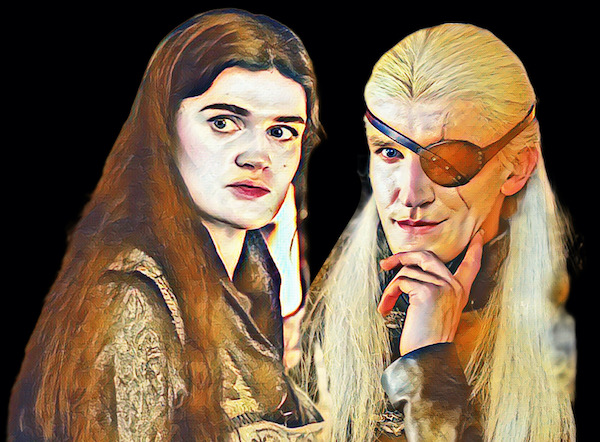
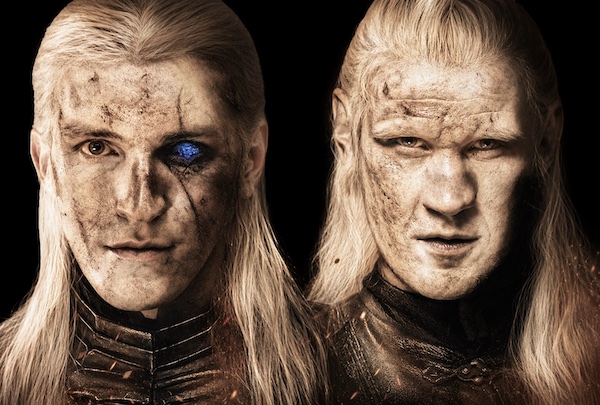
Aemond and Daemon still need to become Aemond and Daemon again
There is, however, a narrative problem the fourth season will have to solve quickly. Season 3 practically dismantled Aemond in the same way Season 2 dismantled Daemon. Damn you, Harrenhal.
Aemond should be becoming a monstrous threat, increasingly obsessed with his uncle and convinced that only he and Vhagar can defeat him. Instead, he spent much of the season emotionally adrift, lost control of his own family, and reached the point where even Vhagar abandoned him.
Daemon, meanwhile, spent an entire season at Harrenhal being broken down only to rebuild his loyalty to Rhaenyra. The problem is that these two men still need to reach the Gods Eye.
In the book, after helping Nettles escape, Daemon goes alone to Harrenhal and challenges Aemond. He waits thirteen days until his nephew finally arrives with Alys Rivers. Caraxes and Vhagar fight above the lake and, as the dragons fall, Daemon leaps from his saddle onto Vhagar and drives Dark Sister through Aemond’s blind eye. Vhagar and Aemond sink into the water. Caraxes manages to crawl onto the shore before dying. Daemon’s body is never found.
It is one of the most anticipated scenes in the entire series, but emotionally, it has lost much of the power it could have had.
Season 4 will have very little time to restore Aemond’s obsession with Daemon and rebuild the sense that these two men are inevitably heading toward a reckoning. The battle will still be spectacular. The challenge will be making it feel necessary again.
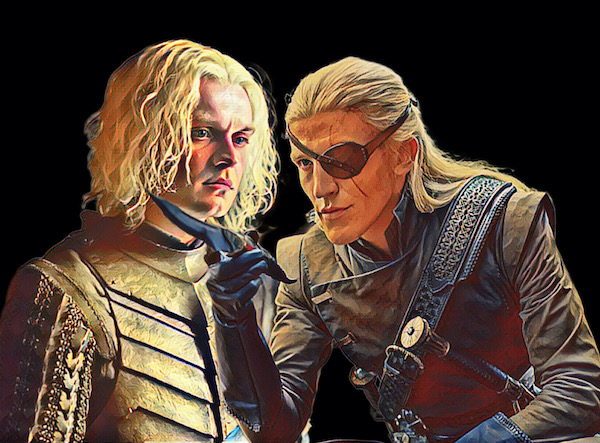
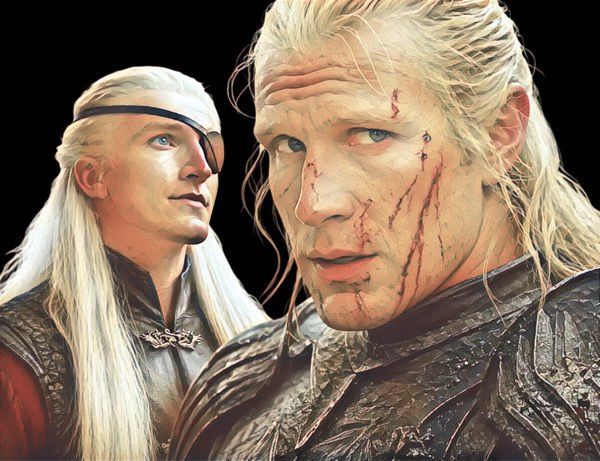
Aegon and Aemond have changed, and that may actually help the book
Curiously, the reconciliation between Aegon and Aemond brings the two brothers closer to a situation the series still needs to create. Rhaenyra cannot know where Aegon is.
In Fire & Blood, he disappears while Rhaenyra rules King’s Landing and manages to reach Dragonstone in secret. By the time she finally discovers the truth, it is already too late. The series has now brought the brothers together, but that may only be temporary. Aemond still needs to remain connected to Harrenhal, Alys, and Daemon. Aegon needs to reach Dragonstone.
And Baela needs to be there. She faces Aegon riding Moondancer against Sunfyre in one of the final major dragon battles of the Dance. Moondancer dies, Sunfyre is even more badly wounded, and Baela is captured but survives. It will be beautiful. And it will be the move that prepares Rhaenyra’s final tragedy.
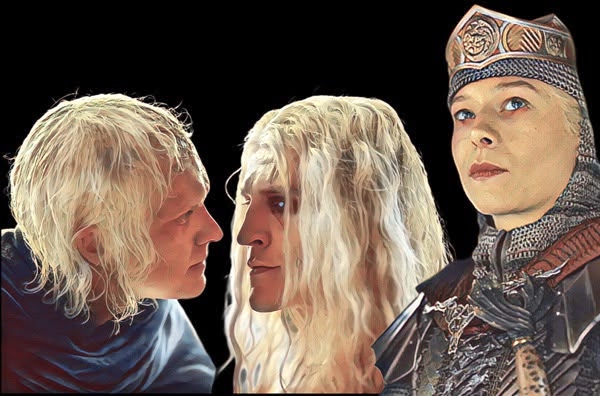
Rhaenyra may win everything and end up with no one
That is what all of these roads have in common. Rhaenyra’s downfall begins when she finally conquers exactly what she fought for.
The money disappears. The population turns against her. Helaena dies. The Dragonpit is destroyed. Joffrey and Syrax die. Addam is condemned. Corlys abandons her cause. Daemon chooses to protect Rhaena and does not return. Mysaria may become an enemy. Alicent may come back seeking revenge. The very city Rhaenyra believed she had conquered stops recognizing her. When she finally flees King’s Landing, only Aegon the Younger will remain.
And she will head for the one place she still believes is safe: Dragonstone. The problem is that Aegon II will get there first.
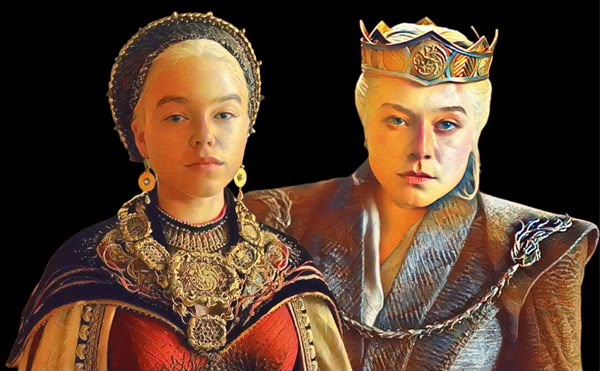
House of the Dragon has changed the Dance of the Dragons so much that we can no longer predict exactly how each piece will reach the end. But some destinies continue moving toward one another. And, to be fair, Joffrey Baratheon described the final scene of House of the Dragon to Margaery as though it had happened in King’s Landing. I have always found that a little confusing…
But anyway: we will see that Rhaenyra still occupies the Iron Throne, and that is precisely the tragedy. Getting what she believes belongs to her costs her the very people who made the victory matter. A defeat disguised as victory, and a victory decidedly marked by defeat.
Descubra mais sobre
Assine para receber nossas notícias mais recentes por e-mail.


1 comentário Adicione o seu