
If there is one prophecy capable of making Game of Thrones fans fight as if the fate of Westeros still depended on the answer, it is the one surrounding Azor Ahai. Jon Snow? Daenerys Targaryen? Both? Stannis? Rhaegar? Arya Stark? After five published books in A Song of Ice and Fire and eight seasons of Game of Thrones, we still do not have a definitive answer as to who the hero destined to face the darkness was supposed to be.
For a while, it seemed the debate would remain confined to book theories and the frustration left by the way Game of Thrones handled the Long Night. House of the Dragon did the opposite. By turning Aegon the Conqueror’s dream into a secret passed down among Targaryens, showing Daemon visions of the future, and pushing Rhaenyra toward the belief that her own destiny is tied to the Prince That Was Promised, the series placed the prophecy back at the center of the story. In Season 3, it went even further, with Rhaenyra making public what had previously been treated as a dynastic secret and declaring herself the Prince That Was Promised, something that never happens in Fire & Blood.
And now there is another piece in the puzzle. Game of Thrones: The Mad King, the Royal Shakespeare Company production that premiered in 2026 and is set during the final years of Aerys II’s reign, brings Rhaegar’s obsession with prophecy into the events leading up to Robert’s Rebellion. Written by Duncan Macmillan and developed within George R.R. Martin’s world, the play adds another layer to a question that was already impossible to settle.
So the old problem becomes unavoidable again. Who exactly is Azor Ahai? And are Azor Ahai and the Prince That Was Promised even the same person?
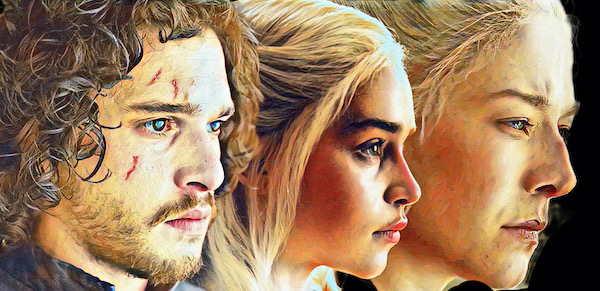
The story of Azor Ahai begins long before the Targaryens
Azor Ahai comes from ancient traditions associated with R’hllor, the Lord of Light, and is said to have been the hero who fought the darkness during the first Long Night. To defeat it, he had to forge Lightbringer, a sword that only came into being after two failed attempts and one horrific sacrifice. On the third try, Azor Ahai drove the blade through the heart of his wife, Nissa Nissa, allowing her blood, soul, and warmth to give the weapon its power.
The legend was never simply about a warrior saving the world. From the beginning, it involved fire, rebirth, and above all, sacrifice. The prophecy says that when the great darkness returned, Azor Ahai would be reborn amid smoke and salt, beneath a bleeding red star, and would wake dragons from stone.
The clues are specific enough to feel meaningful, yet vague enough for several different people to fit them. That may be the trap from the start.
Are Azor Ahai and the Prince That Was Promised the same prophecy?
This is one of the biggest assumptions fans have repeated for years as though it had already been settled. It has not. Azor Ahai comes from a religious tradition in Essos. The Prince That Was Promised belongs to another prophetic thread, one directly tied to the Targaryens and to what Rhaegar calls “the song of ice and fire.”
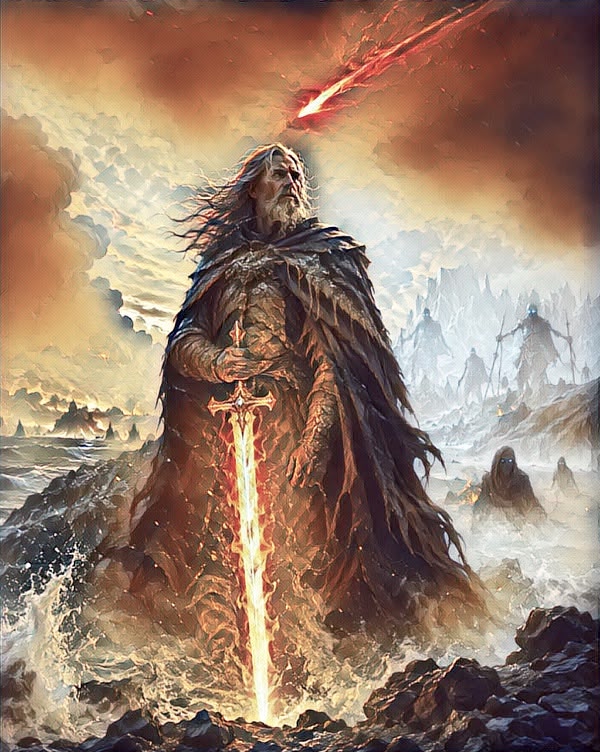
Melisandre treats the two figures as though they are the same person, and from there, both characters and fans largely adopted the same interpretation. But the story never gives us a neutral confirmation that the two prophecies are necessarily identical.
Melisandre herself shows us how dangerous that certainty can be. She decides Stannis Baratheon is Azor Ahai and finds all the necessary signs around him: Dragonstone, smoke, salt, the red comet, and even a supposed Lightbringer. But Maester Aemon notices something unsettling about Stannis’s sword: it gives off light, but no heat. If the interpretation is wrong, the signs have not vanished. They have simply been arranged to support a conclusion that came first.
Several Targaryens will repeat that pattern.
Rhaegar spent his life trying to identify the chosen one
Long before Jon Snow or Daenerys even knew such a prophecy existed, Rhaegar Targaryen was already trying to decode it. For a time, he appears to have believed that he himself was the Prince That Was Promised. His birth at Summerhall, during the fire that killed several members of House Targaryen, certainly provided enough material for a prophetic reading: smoke, fire, death, and tears.
Later, he changed his mind. In the House of the Undying, Daenerys sees Rhaegar with Elia Martell and their newborn son, Aegon. He says the boy is the Prince That Was Promised, that his is “the song of ice and fire,” and then adds one of the most debated lines in the saga: “the dragon has three heads.”
The Mad King makes that obsession even more central. The play places ancient prophecy and Targaryen succession among the forces driving the family’s collapse on the eve of Robert’s Rebellion. More specifically, it develops Aerys’s interpretation that “the dragon has three heads” could point toward the need for a third child connected to the Prince That Was Promised, building a deliberate parallel between Jon Snow and Daenerys as possible answers.
That does not settle the debate. It nearly does the opposite.
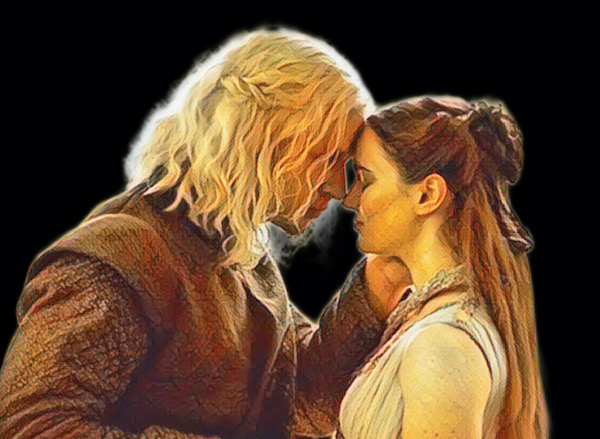

Within the play, both Jon and Daenerys become associated with the same prophetic horizon and with the signs Rhaegar and Aerys are trying to understand. The production even draws the conceptions of the two characters together symbolically under a red comet, prioritizing dramatic meaning over strict chronology. The important point is that The Mad King reinforces an idea already present in the books: the Targaryens make enormous decisions because they believe they understand a prophecy that keeps slipping through their fingers.
Rhaegar may be the most tragic example. First, he believes the chosen one is himself, then Aegon, while continuing to search for meaning in the idea of the dragon’s three heads. His relationship with Lyanna Stark, whatever the exact circumstances George R.R. Martin ultimately reveals in the books, helps trigger the war that destroys the very dynasty he believed was necessary to save the world.
A prophecy meant to prevent destruction may have helped cause it.
Daenerys still fits the signs better than anyone
If we look strictly at the traditional signs associated with Azor Ahai, it is difficult to find a character who matches them as literally as Daenerys Targaryen. She belongs to the bloodline associated with the Prince That Was Promised, was born on Dragonstone, and at the end of the first season of Game of Thrones steps into Khal Drogo’s funeral pyre while the red comet burns across the sky.
By dawn, Daenerys emerges from the ashes with three living dragons. She has quite literally awakened dragons from stone.
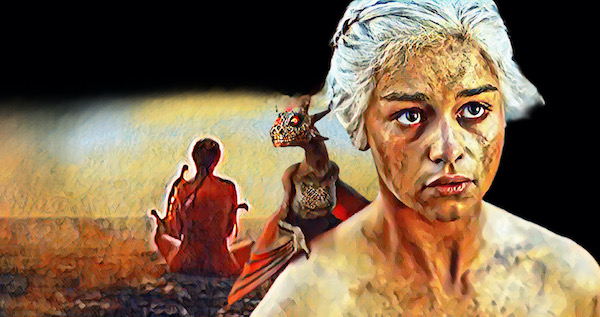
Maester Aemon also notices a crucial detail that changes how the prophecy can be read. High Valyrian does not require the “prince” in the prophecy to be male, opening the possibility that generations of people may simply have been searching for the wrong gender. Once he learns that dragons have returned, Aemon seriously considers Daenerys as the promised figure.
If Lightbringer does not have to be a literal sword either, her case becomes even stronger. Drogon could fill that symbolic role, or all three dragons could represent the true weapon returned to the world to face the darkness. The sacrifice required to wake them could then be connected to Drogo, Rhaego, and Daenerys’s own transformation through fire.
That is why her appearance in Daemon’s vision in House of the Dragon carried so much weight. Among images of the dead and the future, Daemon sees Daenerys with her newly hatched dragons. The series does not explicitly declare her Azor Ahai, but it does make clear that the return of dragons belongs to the chain of events tied to the dream Aegon tried to preserve.
Jon Snow, however, is literally ice and fire
Jon has fewer concrete signs than Daenerys, but perhaps an even stronger symbolic claim. As the son of Rhaegar Targaryen and Lyanna Stark, as Game of Thrones confirmed and the books strongly imply, he unites the two forces that give the saga its name: Stark and Targaryen, North and Valyria, ice and fire.
In the books, Melisandre herself offers one of the strongest clues without realizing it. While searching the flames for Azor Ahai, her visions continue to point toward Jon, even as she remains convinced she should be seeing someone else. Jon also ends A Dance with Dragons murdered by his brothers in the Night’s Watch, leaving open the expectation of resurrection and therefore rebirth.
That is why the Jon versus Daenerys debate has proved so impossible to kill. Daenerys fulfills more of the literal signs connected to the return of Azor Ahai. Jon more completely embodies the concept of the Song of Ice and Fire. And The Mad King, rather than choosing between them, pulls both of them back into the same prophetic conversation.
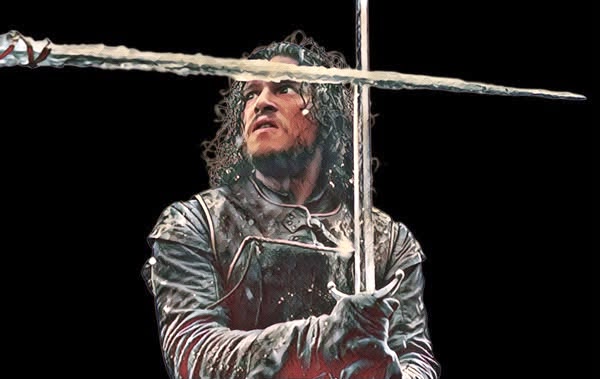
Arya killing the Night King did not settle anything
If Game of Thrones had decided that the Prince That Was Promised was simply whoever killed the Night King, then the answer would be Arya Stark. The problem is that the series never built Arya into this prophecy.
Arya delivered the final blow, but Jon was the one who recognized the threat when almost no one else believed it, united the living, and devoted his story to the war against the dead. Daenerys brought her dragons and her army North. Bran carried knowledge of the enemy. Victory depended on all of them.
The series chose Arya as the surprise conclusion to the battle, but never returned to the mythology surrounding the Prince That Was Promised to explain what that choice meant. That is why the Night King’s death did not end the Azor Ahai debate. For many fans, it simply left behind a question the show chose not to answer.
House of the Dragon made everything more complicated
The biggest contribution from House of the Dragon began when Viserys told Rhaenyra that Aegon the Conqueror had not united Westeros out of ambition alone. Aegon had supposedly dreamed of a threat rising from the North and believed the Seven Kingdoms would need to be united when it came. He called that dream A Song of Ice and Fire.
The series, therefore, turned the prophecy into a dynastic secret. For Viserys, sitting on the Iron Throne came with another duty: preserving that knowledge and passing it to the next generation.
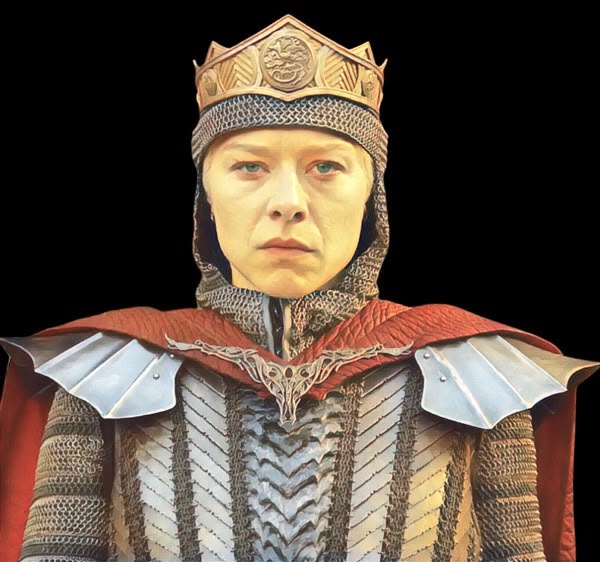

Rhaenyra received the story from her father. Alicent, hearing only fragments of Viserys’s final words, understood something else and believed he was speaking about their son Aegon. The irony is perfect: a message supposedly preserved to help save Westeros ends up contributing to the civil war that will destroy much of the Targaryens’ own power.
In Season 3, Rhaenyra’s relationship with the prophecy changes even more. Viserys never told his daughter that she was the promised figure. He gave her a responsibility. Over time, however, Rhaenyra begins treating that responsibility as evidence of a personal mission, eventually proclaiming herself the Prince That Was Promised. That declaration was created for the series and does not appear in Fire & Blood.
It is a major change because Rhaenyra stops saying she must rule to preserve the prophecy and begins using the prophecy itself to justify why she must rule.
Helaena can see the future, but that is something else
Season 3 also makes it important to separate Helaena’s dreams from this particular prophecy. She is a dreamer and sees events that have not yet happened, as shown when she anticipates both Aemond’s fate and Aegon’s return to the throne. But those visions do not mean she is receiving additional chapters of the Azor Ahai prophecy.
The tapestry Helaena leaves behind reinforces that distinction. It records symbols and events that seem to form a larger history, but that does not mean anyone looking at them will understand what they mean. Rhaenyra may believe she understands a prophecy handed down across generations while still failing to recognize a warning directly in front of her.
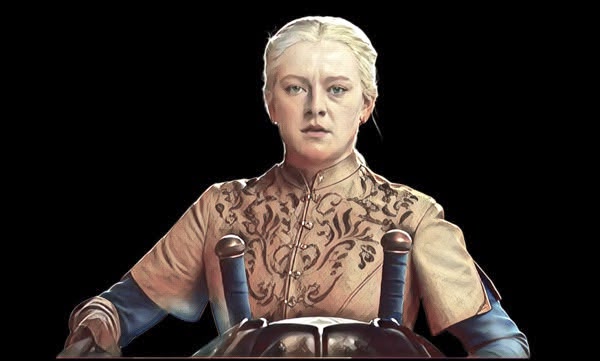
That contrast works precisely because Helaena is not turned into a machine that delivers answers. She sees fragments. Other people assign meaning to them.
Daemon’s vision at Harrenhal works similarly. He sees the dead, the Three-Eyed Raven, Daenerys and her dragons, but receives no organized explanation of how all those images fit together. What he understands is his own place within a much larger story and that Rhaenyra has a role to play. That is not the same thing as discovering that Rhaenyra is the promised one.
The distinction matters.
The greatest danger may never have been the prophecy itself
This is where House of the Dragon, The Mad King, and the story we already know from Game of Thrones begin to speak to one another fascinatingly.
Aegon has a dream and conquers Westeros. Rhaenyra inherits the story and gradually begins seeing herself inside it. Centuries later, Rhaegar tries to solve the same riddle, changes his chosen candidate, and makes decisions that help bring down his family. Aerys searches for meaning in the prophecy. Melisandre finds Stannis. They all have enough signs to believe they have understood something.
Maybe George R.R. Martin’s prophecies are not false at all. They may be completely true. The danger lies in believing that possessing one fragment of the future means understanding the whole thing.
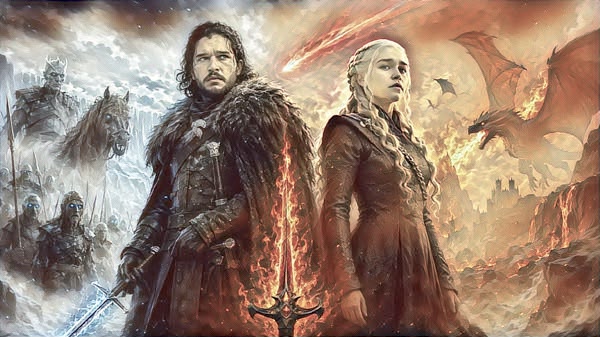
So who is Azor Ahai?
If the answer depends on the concrete signs, Daenerys remains the most convincing candidate. Few images could be more literal than a Targaryen emerging from fire beneath a red comet after waking dragons from stone.
If the answer lies in the very idea of the Song of Ice and Fire, Jon Snow seems almost designed for it. He is Targaryen and Stark in the same body and spends most of his story trying to prepare a divided kingdom for the real war.
But perhaps choosing between them simply repeats the mistake so many characters have already made. Azor Ahai and the Prince That Was Promised may not even be two names for the same person. “The dragon has three heads” may point toward a collective solution. Daenerys returned the dragons to the world, Jon united the living, Bran carried memory, and Arya was able to strike the enemy when the moment came.
The prophecy may describe less a single hero than a sequence of events that had to happen for the dawn to come.
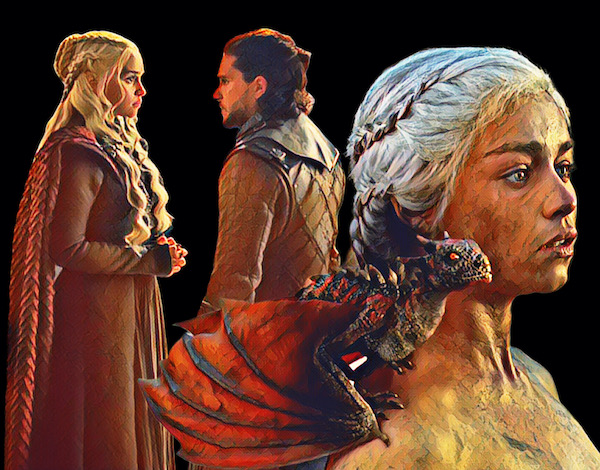
And perhaps that is exactly why fans still fight over whether Azor Ahai was Jon or Daenerys. We do what Martin’s characters have been doing for generations: we receive incomplete clues, choose the ones that support our favorite theory, and try to force the rest of the story to fit around them.
House of the Dragon has made that irony even crueler. The dynasty that believed it needed to keep Westeros united and preserve its dragons for a future war ended up using those very dragons to destroy itself. The Mad King shows that, nearly two centuries later, Rhaegar is still trying to assemble the pieces of the same puzzle.
The prophecy may have been right all along. The mistake may have been believing that any one person, alone, knew exactly what it meant.
Descubra mais sobre
Assine para receber nossas notícias mais recentes por e-mail.

