
When we last updated the case involving the deaths of Rob Reiner and Michele Singer Reiner, in April, the main development was precisely the lack of one. Nick Reiner remained in custody, had pleaded not guilty, and a preliminary hearing was not scheduled until September. It looked as though the case would remain virtually frozen for months. It didn’t.
A Los Angeles grand jury has formally indicted Nick Reiner in the deaths of his parents and added an important allegation to the case: according to prosecutors, he committed the murders “by means of lying in wait,” a legal expression that, in simple terms, means he allegedly waited for an opportunity to attack the victims by surprise. The indictment was filed on July 20 and made public on August 12. Nick again pleaded not guilty.
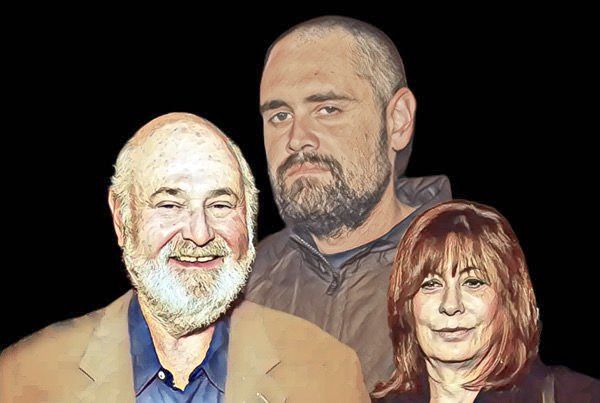
It is probably the most significant development in the case since Rob Reiner, 78, and Michele Singer Reiner, 70, were found dead at the family’s Brentwood home on December 14, 2025. Not because we suddenly know much more about what happened inside that house. Much of the evidence gathered by police and prosecutors has still not been made public. What we know now is how the prosecution intends to interpret the crime.
Nick was already facing two murder charges, a special circumstance involving multiple murders, and an allegation that a knife was used. The new lying in wait allegation adds something different: a theory involving waiting, preparation, and a surprise attack. Under the instructions used by California courts, prosecutors must prove elements connected to a deliberate period of waiting and an attack launched from a position of advantage.
That matters particularly because, at least in the narrative prosecutors intend to present in court, it weakens any interpretation that the deaths were simply the result of a sudden explosion of violence within the family. It does not mean that version has been proven. It means prosecutors believe they have enough evidence to support a more specific and more serious allegation before a jury.
There is another important procedural change.
The September 15 hearing, which had previously been expected to serve as a preliminary hearing, is now described in the district attorney’s official statement as a pretrial hearing. The grand jury has already determined that there is sufficient basis to formally bring the charges against Nick. A trial date has still not been set.

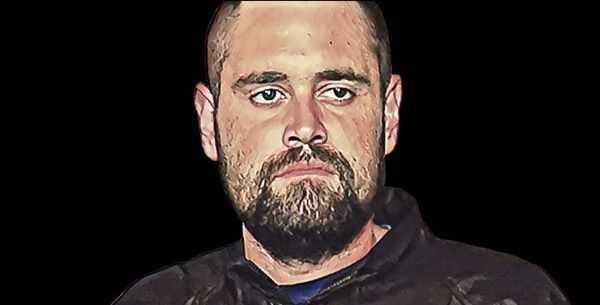
Nick, now 32, remains in custody without bail. If convicted as charged, he could face life in prison without the possibility of parole or the death penalty. Los Angeles prosecutors have not yet decided whether they will seek capital punishment.
It is worth repeating, because this is one of those cases in which the emotional dimension can easily overtake the legal one: Nick Reiner has pleaded not guilty, and the allegations still have to be proven in court.
The deaths of Rob and Michele were already a terrible story on their own. They became even harder to process because the main suspect is one of the couple’s sons. Jake Reiner summed up that aspect of the tragedy in April, when he spoke publicly about it for the first time: losing both parents violently while, at the same time, having his own brother at the center of the case created a situation he described as almost impossible to process.
Perhaps that is exactly why every new development attracts so much attention. But five months after the first hearings and eight months after the deaths, we finally have something more than procedural dates.
We still do not know exactly what happened inside that house. What we do know now is what prosecutors intend to prove.
Descubra mais sobre
Assine para receber nossas notícias mais recentes por e-mail.

