
Some films endure because they remind us of childhood. Others endure because we know they mattered. Beauty and the Beast, which turns 35 in 2026, belongs to a much rarer category: it remains beautiful, moving, funny, technically impressive and musically almost impossible to surpass. And perhaps it is even better when revisited through adult eyes, because some of the things that seemed simply romantic in 1991 now reveal a much sharper intelligence about love, freedom, desire and, above all, the difference between wanting someone and believing you are entitled to them.
There is also a kind of poetic justice in the film’s history. Walt Disney wanted to adapt Beauty and the Beast decades before it finally reached theaters. He tried to develop the fairy tale in the 1930s and returned to it in the 1950s, but never managed to solve its dramatic structure satisfactorily, especially the second half of the story. The project was eventually abandoned. Walt died on December 15, 1966, without seeing his version made and, naturally, without imagining that 25 years later that very tale would become the first fully animated feature in history to be nominated for the Academy Award for Best Picture.
That trajectory is especially moving in Howard, Don Hahn’s documentary, which I consider essential viewing for anyone who loves Disney, musicals, or simply wants to understand how great films actually happen. Because Beauty and the Beast was not born fully formed, much less inevitable. After the enormous success of The Little Mermaid in 1989, Disney revived the project, initially conceived as a non-musical period drama. It did not work. Jeffrey Katzenberg ordered the film to be essentially started over from scratch, Richard Purdum left the production, and Gary Trousdale and Kirk Wise, who had never directed a feature film, took over.
That was when Howard Ashman and Alan Menken became indispensable. The pair had already helped revive Disney animation with The Little Mermaid, but here they found something even more sophisticated. They understood that the songs could not simply be decorative pauses between scenes. They had to tell the story. In Beauty and the Beast, almost no song could be removed without the screenplay losing information, emotion, or character.
“Belle,” for example, does in a few minutes what many films take half an hour to establish. It introduces the town, shows how the villagers see the heroine, explains what she wants, introduces Gaston and makes it clear that something about that life is too small for her. “Gaston” is a masterclass in building character through comedy. “Be Our Guest” is Broadway, vaudeville, Busby Berkeley and Disney all at once. “Something There” turns the beginning of a feeling into narrative. “The Mob Song” shows how fear and prejudice can be manipulated until they become collective violence. And “Beauty and the Beast” simply does not age.
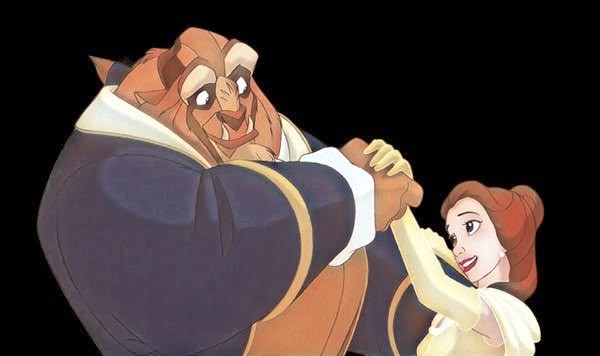
Angela Lansbury initially believed her voice was not right for the song. Ashman and Menken asked her to try it at least once, singing it the way she felt it should be sung. According to accounts from the production, Lansbury moved everyone in the studio, and the recording essentially remained that first interpretation. The song later won the Oscar for Best Original Song. Thirty-five years later, it is still difficult to hear “Tale as old as time” without immediately seeing Belle in yellow and the Beast in blue turning around that ballroom.
Alan Menken and Howard Ashman’s score is one of the reasons Beauty and the Beast remains so extraordinary. It is not simply beautiful. It is impeccably constructed. Every theme has a dramatic function, every song reveals something, and Menken moves between exuberance, humor, menace, and romance without ever making the film feel as though it has entered another universe. Disney has many unforgettable scores, but very few form such a perfect whole with the narrative.
There is also a sadness that cannot be separated from that music. Ashman was gravely ill during the production. He had been diagnosed with AIDS, and part of the work was moved to New York so that he could continue participating as his health deteriorated. He died on March 14, 1991, at the age of 40, eight months before the commercial release of Beauty and the Beast. He never saw the finished film.
There is one particularly beautiful story from that period. After a very well-received screening of the film while it was still in production, members of the team visited Ashman. Don Hahn commented that it was going to be a huge success and asked who could possibly have imagined it. Howard knew. In the end credits, Disney summarized his legacy in a way that remains painfully perfect: Howard had given a mermaid her voice and a beast his soul. That was exactly what he had done.
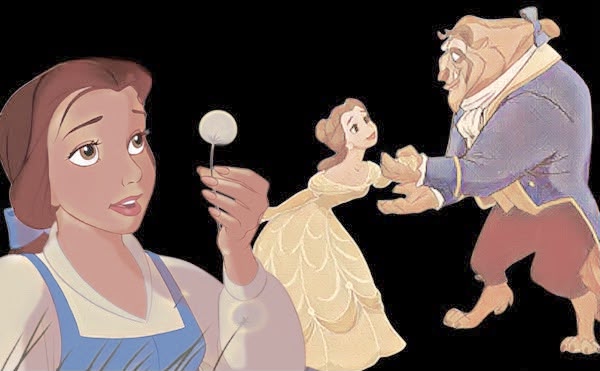
But the revolution of Beauty and the Beast was also Belle. Today, after Elsa, Moana, Merida and so many heroines who openly reject the traditional Disney princess model, it is easy to underestimate how different Belle was in 1991. She begins the film with no romantic urgency whatsoever. She reads, wants to see the world, feels the life around her is too small, and shows no interest in accepting what her community considers the ideal future for a woman.
Paige O’Hara was chosen from hundreds of candidates, and one of the filmmakers’ concerns was that Belle should sound more like a woman than a girl. It is a small but important detail. Belle was not retrospectively turned into a modern heroine because we now like to see her that way. That difference was being consciously built into the character. And perhaps that is why Gaston becomes even more interesting when we rewatch the film as adults.
He has no powers, casts no spells, and does not even look like a villain when he first appears. He is handsome, strong, popular, and completely admired by the community. In that world, Gaston is the perfect man. The problem is that he is absolutely convinced that wanting Belle means having a right to her. She says no. He hears it. And simply decides that the no does not count.
At first he turns her resistance into a joke. Then he prepares a wedding before he even has a bride who has agreed to marry him. When he realizes Belle loves someone else, he tries to use Maurice to blackmail her and eventually leads a mob to the castle to kill the Beast. The handsome, human, socially approved man ends up revealing himself to be far more monstrous than the monster.
That is also why I have never completely bought the old joke that Beauty and the Beast is simply a grand Stockholm syndrome fantasy. Belle does not fall in love with the Beast when he imprisons, threatens, or tries to control her. In those moments, she confronts him. When he crosses the line, she leaves. The relationship changes because he changes.
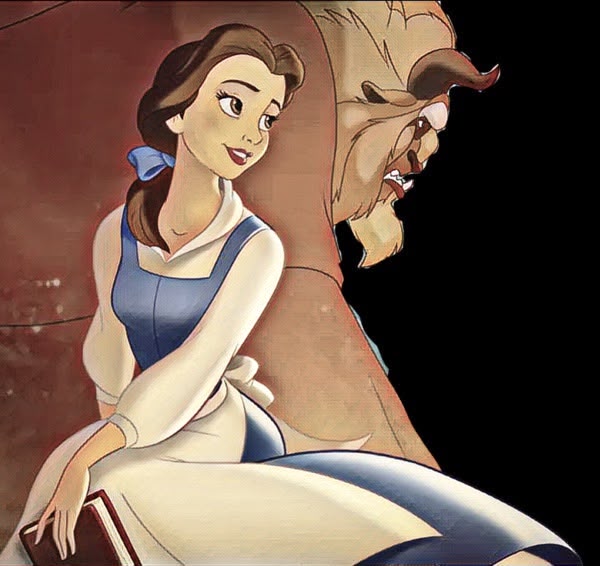
During the development of the film, Ashman and Linda Woolverton discussed the story as the Beast’s redemption arc, because he is the one who needs to transform. Belle already knows who she is. The Beast does not yet know who he is capable of becoming.
And his most important transformation happens long before any magic restores his human face. When Belle learns that Maurice is in danger, the Beast lets her go. He asks for nothing in return. He does not demand that she come back. He does not turn her freedom into a negotiation. He accepts losing the woman he loves because he finally understands that loving her means allowing her to choose. That is when he truly stops being the Beast.
This is the essential difference between him and Gaston. Gaston looks like a man and believes love means possession. The Beast looks like a monster and has to learn that love means letting go. Perhaps the film’s greatest sophistication lies precisely in that reversal. And then there is the library. Yes, 35 years later, giving an entire library to a woman who loves books remains one of the most effective romantic gestures cinema has ever created. There is really not much to debate there.
Visually, the film was also revolutionary. Beauty and the Beast was the second feature produced using the CAPS system, developed for Disney with Pixar’s involvement, and the famous ballroom sequence used that technology to combine hand-drawn characters with a three-dimensional environment. Today we are used to entire worlds being digitally built. In 1991, the camera entering that ballroom and moving around Belle and the Beast was astonishing.
And there is a delightful piece of trivia: in the final dance, after the Beast has returned to human form, part of Belle and the Prince’s movement was reused from Aurora and Phillip’s dance in Sleeping Beauty, from 1959. The reason was far less poetic than the result. The production was simply running out of time.
Perhaps no episode better demonstrates the film’s immediate impact than its screening at the New York Film Festival in September 1991. Beauty and the Beast was not finished. Roughly 70 percent of the animation was complete; for the rest, the audience watched storyboards and pencil tests. Even so, the film reportedly received a standing ovation lasting around ten minutes.
It is a wonderful image. Before it was even fully animated, the film had already achieved what so many animated features had struggled to do: to be seen not simply as children’s entertainment, but as cinema.
When it reached theaters in November 1991, it earned around $331 million worldwide in its original run and became the first animated feature to gross more than $100 million in the United States. Then came six Academy Award nominations, including Best Original Score, three songs competing simultaneously for Best Original Song and, finally, Best Picture. It was the first time an animated film had made it that far.
Walt Disney had been dead for 25 years. He had never managed to make his own version of the story. He did not live to see the Disney Renaissance, to hear Alan Menken and Howard Ashman, or to watch Belle cross a tiny French village carrying books while everyone around her considered her strange. But it was precisely Beauty and the Beast that went where no animated film had gone before. Then came the Broadway musical, which opened in 1994 and ran for 13 years, sequels, specials, theme parks, merchandise and a billion-dollar live-action remake. Nothing replaced the original.
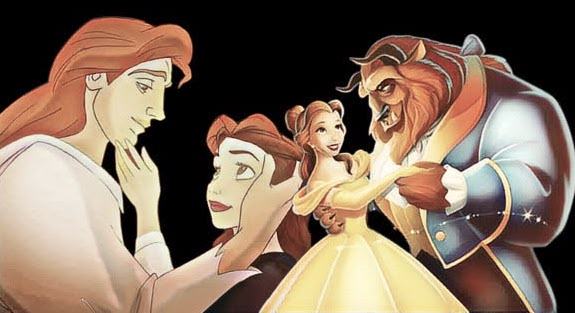
Thirty-five years later, the animation is still beautiful, the ballroom scene still moves us, Gaston may be even more frightening than he seemed when we were children, and Belle remains delightfully incapable of accepting the life other people planned for her.
And Alan Menken and Howard Ashman’s score remains exactly what it always was. Unforgettable, impeccable and perfect. Perhaps because Beauty and the Beast really is what its song promised from the beginning.
A tale as old as time. And yet it still feels alive.
Descubra mais sobre
Assine para receber nossas notícias mais recentes por e-mail.

