
I was born after the murders of Sharon Tate and the LaBiancas, but I grew up knowing exactly who Charles Manson was. Before I even knew the details of the crimes, I knew the face, the wild eyes, the swastika carved into his forehead, the women with shaved heads, the image of a diabolical manipulator surrounded by deranged followers who were absolutely devoted to him. For those of us who came after 1969, Manson became an image before he ever became a story.
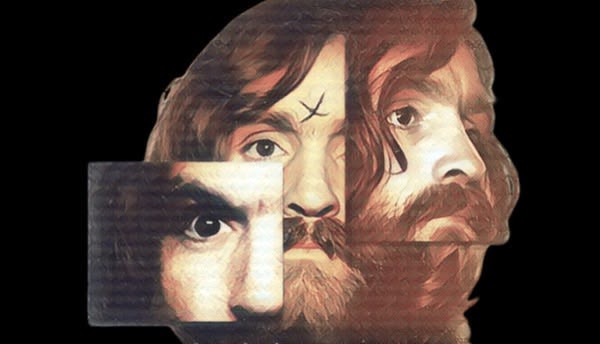
That may be precisely the image that Conversations with a Killer: The Charles Manson Tapes, Joe Berlinger’s new Netflix documentary, finally manages to shrink. Not to absolve Manson or diminish the responsibility of those who killed in his name. Quite the opposite. The more the documentary strips away the almost supernatural aura built around that “Family,” the more brutal the whole story becomes.
The three episodes are built around familiar material, interviews with people who were close to the group and, most importantly, 137 phone calls Manson made from prison during the final nine years of his life. Recordings that had never been heard publicly and that promise access to the mind of one of the most infamous criminals of the 20th century.
Joe Berlinger knows this territory well. An Oscar nominee for Paradise Lost 3: Purgatory, he has spent much of his career examining crimes that, once consumed by the press and the public, ceased to be merely crimes and became narratives. More recently, he served as executive producer on Netflix’s The Idaho Murders: College Nightmare, another documentary that deliberately moved the killer away from the center and restored an identity to the victims. With Manson, that problem is even greater.


For decades, the murders of August 1969 were told almost like an American horror story. Charles Manson was the devil. His followers were deranged disciples. Sharon Tate was the beautiful, young, pregnant actress who became the ultimate symbol of destroyed innocence. And Cielo Drive came to mean something far larger than that house and those victims.
Joan Didion captured this definitively in The White Album. She wrote that many people in Los Angeles believed the 1960s ended abruptly on August 9, 1969, the moment news of the murders spread through the city. “The paranoia was fulfilled,” she wrote. Freedom, sex, drugs, music, youth and the counterculture suddenly seemed to have met their dark opposite.
Almost 50 years later, Quentin Tarantino would turn Once Upon a Time… in Hollywood into a fantasy built on that exact collective memory. The film works because we know what is supposed to happen. When Sharon Tate, played by Margot Robbie, appears on screen, our relationship with her is already contaminated by the future we know. We know she is pregnant, we know where she lives, and we know who is going to come knocking at that door. Tarantino decides to say no. This time, the killers never reach Sharon, and she simply gets to keep living.
That is why the exaggerated violence of the ending is so cathartic. Tarantino is not merely killing off members of the Manson Family. He is giving Sharon Tate back something that history and, in a way, popular culture itself took from her: a future. Because that may be one of the most perverse consequences of the case. The victims became supporting characters in the story of the man responsible for their deaths.
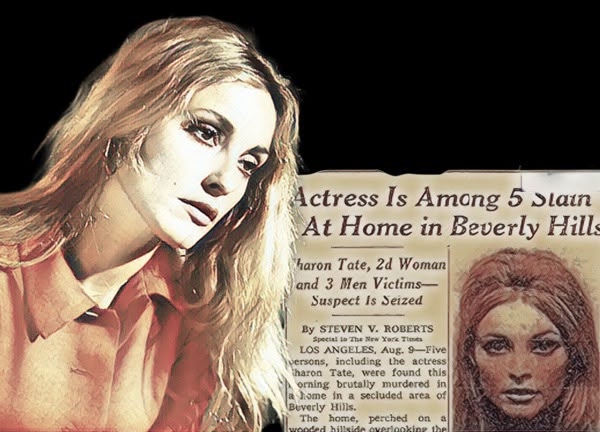
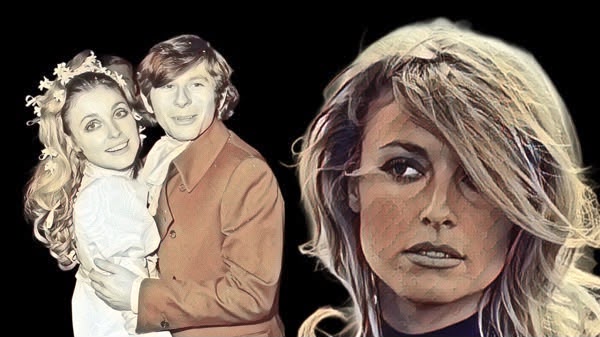
Sharon Tate became “the pregnant actress murdered by the Manson Family.” Jay Sebring became the former boyfriend who happened to be with her that night. Abigail Folger, the coffee heiress. Wojciech Frykowski, Roman Polanski’s friend. Steven Parent, only 18 years old, often nearly disappears from the retelling altogether. The following night, Leno and Rosemary LaBianca became the second chapter of the same story. Manson remained the protagonist.
There is another particularly strange layer for those of us who came to the case later. Roman Polanski was in London when Sharon was murdered and returned to find his pregnant wife and their friends dead. Years later, his own criminal history would radically transform the way the world saw him. None of that changes what happened in August 1969, but it is another example of how time keeps rearranging the characters in a real tragedy.
Berlinger goes back to the beginning. The first episode is called The Family. The second, The Devil’s Business. Only then do we reach Trial of the Century. The order says a great deal about what he wants to investigate. Before asking how those people were capable of killing, we need to understand how they got to Manson in the first place.
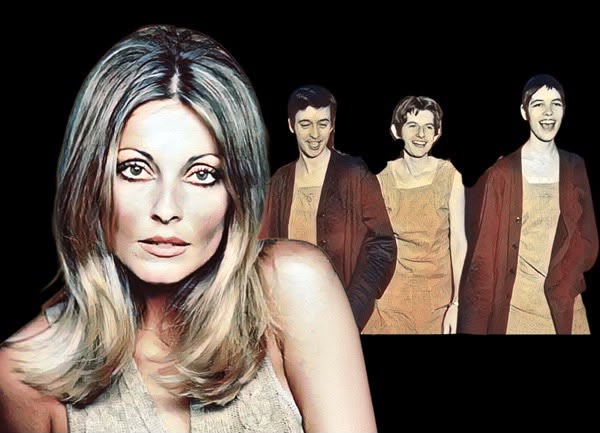
This is where the documentary acquires an especially contemporary perspective. Dianne Lake, Catherine Share and Stephanie Schram appear to describe what life was like inside the so-called Family. But it is important to say that they are not speaking for the first time. Lake and Share have given numerous interviews and appeared in other documentaries. Dianne Lake has even published a memoir. Stephanie Schram had also broken her silence before, although she has appeared far less frequently in public. So it would be misleading to sell The Charles Manson Tapes as the moment when we finally hear from these women. The difference may be in how we can hear them now.
Dianne Lake was only 14 when she joined the Manson Family. Put that fact next to the phrase “fanatical follower,” and the image inherited over decades immediately becomes more complicated. Today, we have a vocabulary that simply was not part of public discussion in 1969 in the same way. We talk about coercive control, psychological manipulation, emotional vulnerability, isolation, drug abuse, emotional dependency and the gradual erosion of autonomy. We understand more about abusive group dynamics and the way very young, vulnerable people can slowly be cut off from any outside point of reference.
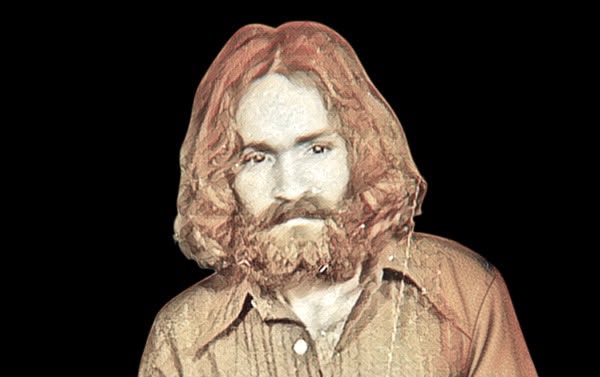
That does not turn killers into victims or erase responsibility. But it makes the old explanation that they were simply “crazy” feel inadequate. Manson offered exactly what many of those young people were looking for: love, belonging, freedom from social rules, sex and a community that appeared to be free of judgment. Gradually came control, loyalty tests, constant drug use, petty crimes, violence and submission.
The question then changes. It stops being only how someone could be so evil and becomes how someone manages to lead other people all the way to that point. And that may be far more frightening. It is comforting to imagine Susan Atkins, Patricia Krenwinkel, Leslie Van Houten and Tex Watson as creatures who were always capable of committing those crimes. It is much more disturbing to follow the path between a young woman joining a group that promises love and belonging and the person who, sometime later, walks through the door of a house to kill strangers. Understanding that path does not mean forgiving it. It means admitting that horror does not always arrive fully formed.
The same is true of Manson. The more the documentary searches for the demonic mind capable of justifying a crime of this magnitude, the more it finds something tragically smaller. A man who wanted to be famous, who wanted to be a musician, who reached the fringes of Hollywood through Dennis Wilson of the Beach Boys, met people who could help him and believed he was finally going to be recognized. He wasn’t.
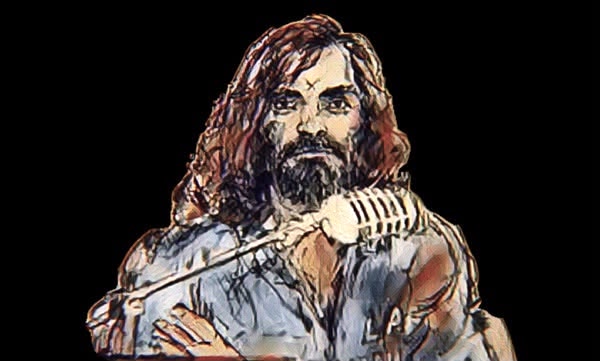
Terry Melcher, the music producer Manson hoped to impress, did not give him the career he imagined. And Melcher had lived at 10050 Cielo Drive before Sharon Tate and Roman Polanski moved into the house. The people murdered there that night had done nothing to Manson, but they were inside an address that represented the world he desperately wanted to belong to and that had ultimately left him outside.
Then came “Helter Skelter,” the supposed race war Manson claimed he could help ignite through the murders, appropriating the title of a Beatles song. For decades, that explanation helped organize the absurdity: a delusional man wanted to trigger an apocalyptic race war. Seen now, however, even that begins to look different. Perhaps “Helter Skelter” was also a way of turning resentment, racism, failure and delusions of grandeur into something epic.
And that is where the emptiness appears. Seven people died over two nights: Sharon Tate, Jay Sebring, Abigail Folger, Wojciech Frykowski, Steven Parent, Leno LaBianca and Rosemary LaBianca. The enormity of the tragedy seems to demand an equally enormous explanation. Perhaps that is precisely what we will never find. Perhaps there was only a narcissistic, resentful man desperate to be recognized, people increasingly subjected to his control, drugs, racism, isolation, fantasies of greatness and a series of decisions no one stopped before they became irreversible.
Netflix had, in fact, returned to the case shortly before with Errol Morris’s CHAOS: The Manson Murders, and the proximity between the two documentaries can initially make them seem repetitive. But they are looking for very different things. Morris draws on Tom O’Neill’s book CHAOS to question the established version of the murders. He explores inconsistencies in the investigation, the history of LSD, mind-control experiments, possible CIA connections, and the gaps in the narrative prosecutor Vincent Bugliosi built around “Helter Skelter.” His essential question is whether we really know everything that happened.
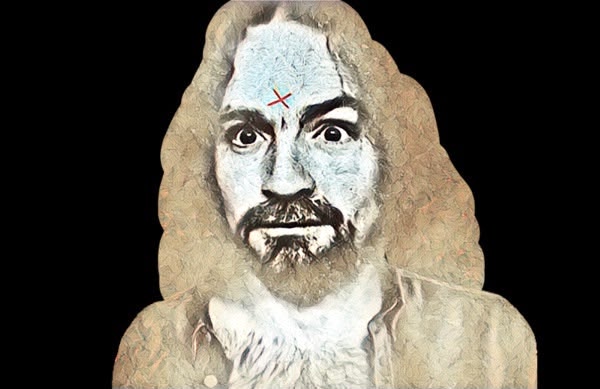
Berlinger makes almost the opposite move. Instead of expanding the mystery around Manson, he reduces him to human scale. He is not necessarily looking for a conspiracy capable of explaining the murders, but for the mechanisms that allowed one man to exercise so much control over other people. Morris asks what we may never have known about the case. Berlinger asks why we turned Manson into something larger than he actually was. Curiously, both approaches dismantle the same myth from opposite directions.
The final episode of The Charles Manson Tapes shows the precise moment that myth was constructed. In the courtroom, Manson and his followers became a spectacle. The shaved heads, the copied gestures, the outbursts, the cameras, the reporters, the women’s public devotion. Real men and women became the characters that would survive for decades: the demonic leader and his Family.
Berlinger argues that Manson, more than any other criminal, ushered in the modern era of America’s fascination with true crime. It is difficult to disagree. The murders helped mark the end of one era, but the trial inaugurated another: a culture in which the killer becomes a celebrity, a character in movies, books, songs, T-shirts, series and documentaries. A man who desperately wanted to be famous finally got what he wanted. Not through music, but because Sharon Tate and six other people died.
Perhaps that is why listening to Manson for hours produces such a strange feeling. After almost six decades of mythology, we expect those 137 calls to finally reveal the secret of Charles Manson, something proportional to the horror his name came to represent. Instead, we find resentment, self-pity, racism, vanity, manipulation, and an almost childlike need to feel important.
Didion recorded the moment innocence ended. Tarantino imagined what it would look like if we could get it back. Berlinger, 57 years later, dismantles part of the myth we created to explain why we lost it. Perhaps that is the most disturbing discovery of all: there was not necessarily some great secret hidden at the center of Charles Manson.
The enormity was in the consequences, not necessarily in the causes.
Descubra mais sobre
Assine para receber nossas notícias mais recentes por e-mail.

