
Meghan Markle was never a star before she met Prince Harry. She was a professional actress, worked steadily, and had achieved a degree of stability in a brutally competitive industry, which is no small accomplishment. But her role as Rachel Zane in Suits, although important within the series, was the peak of a career that was far from turning her into a global name. Worldwide fame came with the marriage. And it became even greater with the subsequent war against the British press and some of her husband’s relatives. Whether you are a fan of Meghan or not, those are facts.
What has been debated ever since is what she did with that fame. Since she “refused” to accept the rules of the monarchy—or became the victim of racism, jealousy, and envy; each side chooses its preferred narrative—her name has been associated with virtually everything toxic and complicated about our contemporary relationship with celebrity: racism, modernity, opportunism, victimhood, harassment, sexism, hypocrisy, authenticity, and narcissism. Not necessarily in that order, nor always fairly, but certainly frequently.

To her credit, Meghan is a strong woman. Or delusional, if you belong to the anti-Meg camp. Because she seems to turn every criticism into fuel. When people say she has failed, she launches another product. When they claim she has lost her relevance, she appears in front of the cameras. When they try to separate her brand from the monarchy, she signs her professional work as Meghan, Duchess of Sussex. And just when her announced return to England would already have been explosive enough, news emerges that she is negotiating with Guy Ritchie for a role in the potential third season of The Gentlemen.
For the Royal Family, it is difficult to imagine a more symbolically uncomfortable combination. The Duchess of Sussex appearing in a series in which dukes, lords, and owners of decaying palaces allow their estates to be used for secret marijuana farms? It is not, shall we say, content particularly well aligned with the dignity of the title Meghan continues to cling to.
The important detail is that, for now, nothing has been finalized. According to reports published by the American media and carried by Reuters, Meghan is in talks to join a possible third season. Netflix has not officially renewed the series, the role has not been disclosed, and neither the platform nor the Duchess’s representatives have confirmed her casting. We are therefore talking about preliminary negotiations for a season that does not yet officially exist—although it is difficult to believe that so much smoke appeared without at least some fire.
Where The Gentlemen Came From
The Gentlemen began as a film. Released in 2019, the crime comedy marked Guy Ritchie’s return to the world on which he built his career in films such as Lock, Stock and Two Smoking Barrels and Snatch. The story followed Mickey Pearson, played by Matthew McConaughey, an American who had built an enormous marijuana empire in England and was looking to sell the business.
To keep his production hidden, Mickey made deals with British aristocrats who no longer had enough money to maintain their properties. The stately homes continued to look magnificent in front of the cameras, but concealed underground plantations. The contrast was the film’s best joke: the old nobility survived thanks to organized crime, while the new criminals bought the access, prestige, and social protection that aristocratic titles still provided.
The film cost approximately $22 million and grossed more than $115 million worldwide. It was inevitable that its universe would be explored again. The Netflix series, however, is not a direct sequel and does not feature the same characters. It takes the central premise and transforms it into a story of its own.
Eddie Horniman, played by Theo James, is a soldier who returns home after his father’s death and discovers that he has unexpectedly inherited the title of Duke of Halstead, bypassing his older brother, Freddy. Along with the country estate and the privileges of the aristocracy, Eddie also inherits a problem: beneath the family’s land is an enormous marijuana farm controlled by Susie Glass, played by Kaya Scodelario.
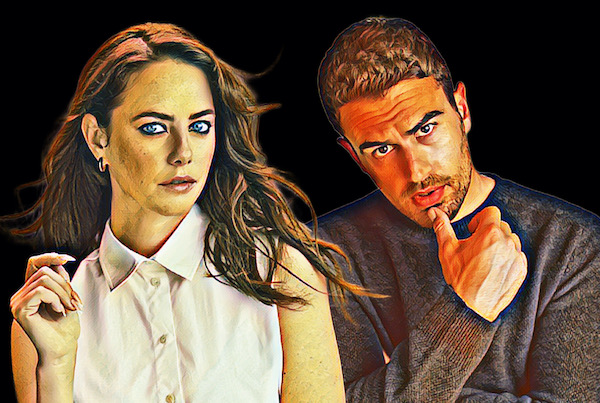
Initially, Eddie wants to free his family from the arrangement. Gradually, however, he discovers that he has a remarkably natural talent for threats, blackmail, criminal alliances, and morally dubious decisions. The Duke is not an innocent victim dragged into the underworld. The underworld merely reveals who he may always have been.
That is the most interesting point in The Gentlemen. Guy Ritchie does not present the aristocracy as an institution corrupted by drug dealers. He suggests that nobles and criminals have always spoken very similar languages: both defend territory, protect family names, accumulate power, demand loyalty, and believe that certain rules do not apply to them. As Kaya Scodelario put it when discussing the series, the aristocrats were, on some level, “the original gangsters.”
The Scale of Its Success
The first season premiered in March 2024 and became one of Netflix’s greatest British successes of that semester. According to the platform’s official engagement report, The Gentlemen accumulated 76 million views between January and June of that year, placing it behind only Fool Me Once and Baby Reindeer among the most-watched British series during the period.
Critical reception was positive, although not overwhelmingly enthusiastic: the series earned a 75% approval rating on Rotten Tomatoes. It was praised for its cast, humor, stylized violence, and Guy Ritchie’s unmistakable visual signature, but also criticized for repeating a formula the director has been using for nearly three decades.
The second season premieres on September 3, 2026, once again with eight episodes. Eddie and Susie are now partners in the empire controlled by her father, Bobby Glass, but begin to question their boss’s decisions. Their ambition takes the business beyond the English estate and as far as the Italian lakes, where new criminals and new power struggles await them.
Theo James, Kaya Scodelario, Daniel Ings, Ray Winstone, Joely Richardson, and Vinnie Jones return. The newcomers include Hugh Bonneville, Benedetta Porcaroli, Michele Morrone, Sergio Castellitto, Maya Jama, and Benjamin Clementine. Guy Ritchie returns as director and co-writer.
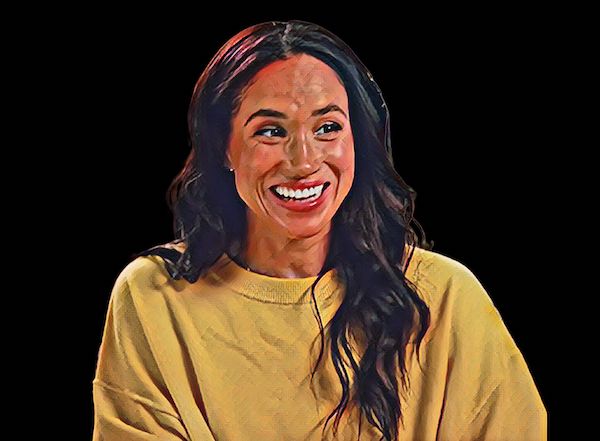
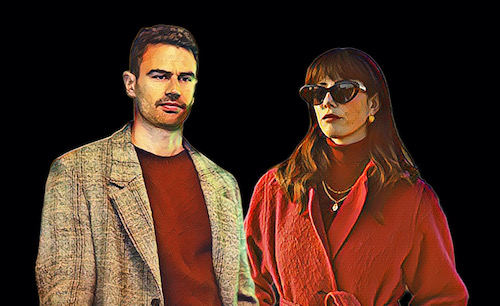
Under normal circumstances, the performance of this second season would determine whether a third would be commissioned. Meghan’s involvement, however, would change the equation entirely. She would not merely be another addition to the cast. She would be a cultural, political, and publicity event capable of giving the series a level of exposure no conventional marketing campaign could buy.
Who Would Be Using Whom?
The first and inevitable interpretation is that Meghan would once again be profiting from the Royal Family. Without the title, the marriage, and the public rupture, her potential casting would hardly generate the same level of attention. An actress who left Suits in 2017 would not provoke an international frenzy of headlines simply by negotiating an undefined role in a season that has not yet been commissioned.
But there is another equally possible interpretation: Guy Ritchie and Netflix would also be profiting from Meghan and, consequently, from the Royal Family. Casting her in The Gentlemen would be an extraordinarily self-aware marketing decision. Meghan playing an aristocrat, an American infiltrating the nobility, or—as the tabloids are already speculating—a seductress connected to the criminal world would be a provocation designed to generate curiosity before a single scene had even been filmed.
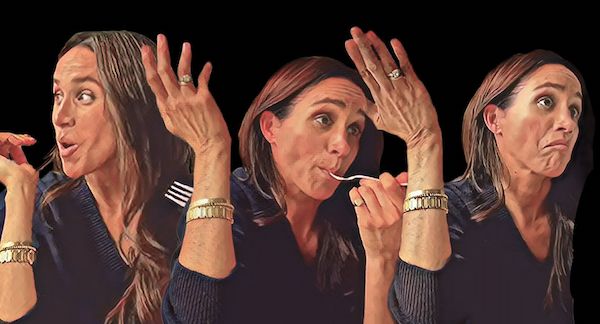
That is precisely what makes her potential involvement so perfect. The Gentlemen is about the commercialization of aristocracy. Its characters use titles, historic properties, and symbols of tradition to sustain modern and frequently illegal businesses. Meghan has built her post-monarchy life around a similar dilemma: she wants freedom from the institution’s rules, but not from its symbolic capital.
She is no longer a working member of the Royal Family, and the Palace has no editorial control over her career. Accepting the role would therefore not constitute an institutional violation. After all, even before the wedding, the Queen reportedly made it clear that Meghan could continue working as an actress if she did not wish to take on full-time royal duties. The problem is symbolic. Meghan would continue presenting herself as the Duchess of Sussex while appearing in a fictional world that turns dukes into drug dealers, aristocratic properties into marijuana farms, and the decline of the British elite into global entertainment.
Perhaps the question, then, is not whether Meghan is once again defying or exploiting the Royal Family. Perhaps it is why we still expect her to choose between the two.
Meghan may be defying the monarchy precisely because she has learned how to profit from it. And the monarchy—which has always depended on image, spectacle, and public curiosity to preserve its relevance—cannot claim to be entirely shocked when a former member uses the same weapons. What makes her potential entrance into The Gentlemen so fascinating is that, for the first time, she would not have to explain that contradiction. She would only have to play it.
Descubra mais sobre
Assine para receber nossas notícias mais recentes por e-mail.


I Think Lost Beyond Pluto, Brittany Raymer of Royal News Network, RHR Jen, According 2Taz, The Royal Grift, SueMe, Meghan’s Mole, Paula M Channel, Kinsey Schofield, Maureen Callahan, Leilani Of Barbados, Pdina, Shauna Kay.of The Vintage Read Show, Sue Smith, Lauren The Inside, Think Beautiful, Jennifer C, Stef The Alter Nerd, Royal Daily Tea, RVealingthenarc, RestingDollface, Cheere Denise, Dan Wootton, Andy Signore, Nancy Sidley & Stephanie Sidley of TWiN TALK W/ The Sidley Twins, Link Lauren, Paula Froelich, Lady Colin Campbell all are Communism
CurtirCurtir
I Think Meghan Markle Is on the same level as Melania Trump, Erika Kirk, Jackie Siegel, Amber Heard, Baroness Marie-Christine Anna Agnes Hedwig Ida von Reibnitz, Katie Miller, Sarah Ferguson, Lara Trump, Hailey Bieber, Kristi Noem, Hilaria Baldwin, Cheryl Hines Katy Perry, Vanessa Trump, Belle Gibson, Elizabeth Holmes, Anna Sorokin, Rebekah Neumann, Judy McCarthy, Laura Loomer, Nancy Mace, Chrissy Teigen, Candace Owens, Karoline Leavitt, Ghislaine Maxwell, Patrizia Reggiani, Leona Helmsley, Ann Woodward, Kimberly Guilfoyle, Oksana Grigorieva, Heather Mills, Marjorie Taylor Greene, Lauren Boebert, Ivana Trump, Marla Maples, Usha Vance,
CurtirCurtir