
Some actors spend an entire career searching for one unforgettable character. Tim Curry had several.
The British actor, who has died at 80, was Dr. Frank-N-Furter in The Rocky Horror Picture Show, the original Mozart in Broadway’s Amadeus, Wadsworth in Clue, Rooster Hannigan in Annie, Darkness in Legend, Pennywise in It, and the suspicious Plaza Hotel concierge in Home Alone 2. It was a career that moved through theater, film, musicals, horror, comedy, and voice acting without Curry ever seeming to belong entirely to a single genre.
Timothy James Curry was born on April 19, 1946, in Cheshire, England. The son of a Methodist Royal Navy chaplain and a school secretary, he sang from childhood and studied English and Drama at the University of Birmingham. Shortly after graduating, he made his professional debut in London in the musical Hair in 1968.
It was onstage, a few years later, that the role that would change his life appeared.
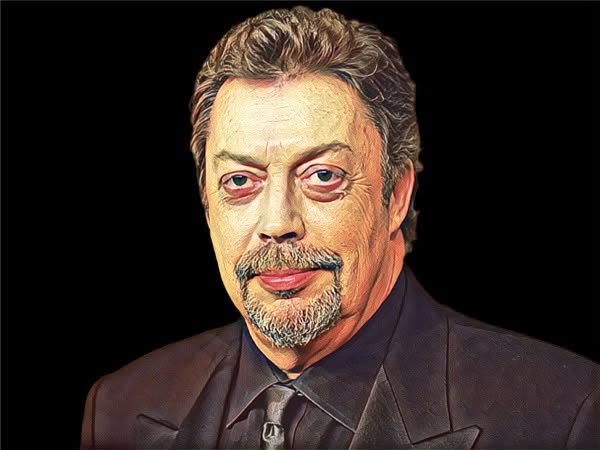
Frank-N-Furter and the Rocky Horror Revolution
In 1973, Curry debuted as Dr. Frank-N-Furter in The Rocky Horror Show, by Richard O’Brien, at the tiny Theatre Upstairs at the Royal Court.
The alien scientist in a corset, fishnet stockings, heavy makeup and high heels could easily have been reduced to mere provocation. Curry made him something far more complex: sexy, threatening, funny, arrogant and vulnerable.
When the musical reached the screen in 1975 as The Rocky Horror Picture Show, Curry reprised the role alongside Susan Sarandon, Barry Bostwick, Meat Loaf, Patricia Quinn and O’Brien.
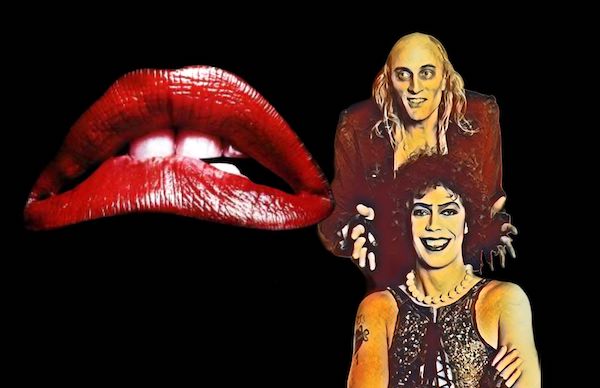
The film was not an immediate success, but it found its audience at midnight screenings and eventually created a ritual all its own. Moviegoers arrived in costume, shouted responses at the screen, danced the Time Warp and turned the film into a symbol of sexual freedom, transgression and belonging for anyone who felt outside convention.
Curry became inseparable from Frank-N-Furter. For a while, he tried to distance himself from the character so it would not define his entire career. He did not succeed — and, as the years passed, he no longer seemed particularly interested in doing so.
Fortunately, there was much more to come.

Broadway’s Mozart
The pop-culture magnitude of Rocky Horror often overshadowed something fundamental about Curry: before anything else, he was a formidable stage actor.
After appearing in Tom Stoppard’s Travesties, he arrived on Broadway in 1980 as Wolfgang Amadeus Mozart in the original American production of Peter Shaffer’s Amadeus.
Ian McKellen played Salieri, and Jane Seymour was Constanze. Curry made Mozart a vulgar, childish, insolent young genius whose musical brilliance was completely beyond reach — exactly the sort of personality capable of driving Salieri mad.
Both actors were nominated for the Tony Award for Best Actor; McKellen won.
Curry would be nominated again for My Favorite Year in 1993 and for King Arthur in Monty Python’s Spamalot in 2005. Three Tony nominations across three different decades help explain why remembering him simply as a cult figure would be unfair.
He also starred in Me and My Girl on Broadway and played the Pirate King in The Pirates of Penzance.

From Annie to Clue: The Pleasure of Playing the Villain
Hollywood quickly recognized that Curry possessed a valuable combination: a deep voice, an extraordinarily expressive face, complete command of irony, and the rare ability to play enormous characters without ever losing control of them.
In John Huston’s Annie (1982), he played Rooster Hannigan, the scheming brother of Carol Burnett’s Miss Hannigan. Alongside Burnett and Bernadette Peters, he helped turn Easy Street into one of the movie’s great musical numbers.
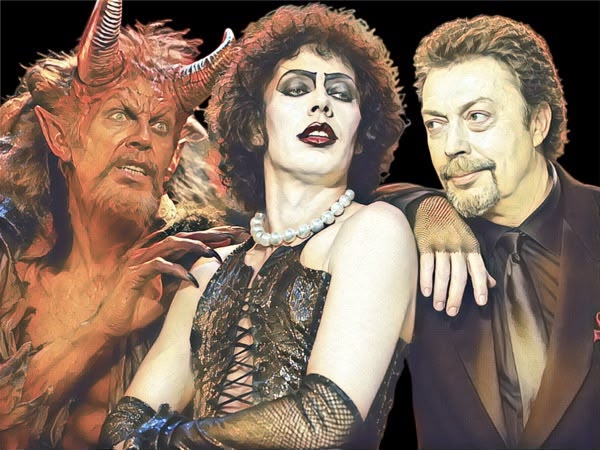
In 1985, he disappeared beneath red makeup, prosthetics and enormous horns to play Darkness in Ridley Scott’s Legend. The creature seeking to plunge the world into eternal darkness is visually monumental, but it is Curry’s voice that gives him personality.
That same year brought Wadsworth in Clue.
The comedy based on the board game became another cult classic, acquiring a status over time far greater than it enjoyed on release. Curry drives much of the film’s madness, particularly in the final sequence in which Wadsworth races through the mansion reconstructing murders, clues and lies at almost impossible speed.
It may be one of the clearest demonstrations of Curry’s precision as a comic actor.
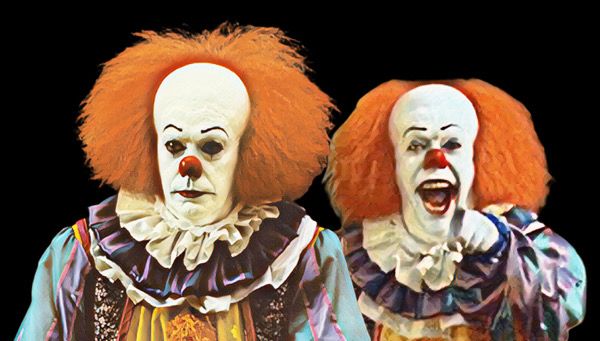
The First Great Pennywise
In 1990, Curry took on a role that would mark another generation: Pennywise, in the television miniseries It, based on Stephen King’s novel.
Decades before Bill Skarsgård played the character on the big screen, Curry established the image of the murderous clown in popular culture.
Curiously, his Pennywise did not depend on an exaggerated performance. Much of the terror came from small details: a smile held a little too long, false friendliness, a sudden shift in the voice.
Around the same period, Curry appeared in The Hunt for Red October and later played Cardinal Richelieu in The Three Musketeers, as well as appearing in films including Congo and The Shadow.
And then there is Mr. Hector in Home Alone 2: Lost in New York.
The Plaza Hotel concierge suspects from the beginning that something is wrong with Kevin McCallister and spends much of the film trying to expose him. It is a supporting role, but Curry turns the character’s increasingly theatrical outrage into one of the film’s funniest running jokes.
A Second Career Using Only His Voice
When he was not in front of the camera, Curry built an enormous career as a voice actor.
He was Captain Hook in Peter Pan and the Pirates, a performance that earned him a Daytime Emmy; he voiced Hexxus in FernGully and Nigel Thornberry in The Wild Thornberrys; appeared in series including Gargoyles, Duckman and Jimmy Neutron; and took over as Palpatine/Darth Sidious in Star Wars: The Clone Wars.
He also recorded audiobooks and received a Grammy nomination for narrating The Bad Beginning, the first book in Lemony Snicket’s A Series of Unfortunate Events.
Music, in fact, was never merely an extension of his acting career. Curry released three solo albums — Read My Lips (1978), Fearless (1979) and Simplicity (1981) — combining rock and pop with the voice that had already helped turn Rocky Horror into a phenomenon.
After the Stroke
In 2012, Tim Curry suffered a severe stroke that left him partially paralyzed, and he began using a wheelchair.
The change was profound, but it did not end his career. He continued working primarily in voice acting and gradually returned to public appearances. In 2016, he returned to the universe that had made him internationally famous by appearing in the television version of The Rocky Horror Picture Show. This time, he played the Criminologist, while Laverne Cox took on Frank-N-Furter.
In 2024, after many years away from live-action roles, he appeared in the horror film Stream. The following year, he published his memoir, Vagabond, looking back over nearly six decades of work.
Curry never married and had no children. He guarded his private life with a discretion that was almost the opposite of the flamboyant characters he so often played. Perhaps that contradiction was part of his appeal.
Tim Curry was never a conventional star. He had classical stage training, an extraordinary voice, tremendous comic control and an almost complete absence of fear of looking ridiculous — an essential quality for anyone who understands that exaggeration and losing control are two very different things.
For one generation, he will always be Pennywise. For another, Wadsworth racing through the corridors of Clue. Others will immediately think of Darkness, the Plaza concierge or the provocative Mozart of Amadeus. But Frank-N-Furter inevitably occupies a different place.
It is difficult to think of Tim Curry without seeing him in high heels, pearls, heavy makeup and a corset, descending in the elevator to introduce the world to a character who, half a century later, remains impossible to separate from the actor who created him.
Few actors had so many faces. None of them ever seemed to belong to anyone else.
Descubra mais sobre
Assine para receber nossas notícias mais recentes por e-mail.

