
Natalia Osipova has already played women driven mad by love, betrayed, abandoned, killed and brought back to life onstage. Anyone who has seen her Giselle knows that calling the Royal Ballet principal simply a ballerina almost feels insufficient: Osipova has always been an extraordinary actress too, only one accustomed to telling stories without saying a word. Now that is about to change.
In September, she will make her dramatic acting debut in the West End in The Standard of Living, a new play by James Graham, the writer behind Dear England, Punch and Labour of Love. And they could hardly have found a more intriguing first role for her: Osipova will play Lydia Lopokova, another Russian ballerina who left her country, conquered European stages and eventually became part of one of the most fascinating love stories — and intellectual circles — of 20th-century Britain.

Lydia trained at the Imperial Ballet School in St. Petersburg and joined Sergei Diaghilev’s legendary Ballets Russes, the company that helped revolutionize not only ballet, but music, visual art, fashion and the very idea of performance in the early decades of the last century. After spending several years in the United States, she returned to the company and caused a sensation in London in 1918. Small, lively, funny and possessed of a personality that seemed to escape convention, she attracted attention far beyond the stage.
Among the men fascinated by her was John Maynard Keynes. Yes, that Keynes.
One of the most important economists of the 20th century, whose ideas would transform the way governments thought about crises, employment and intervention in the economy, Keynes also lived a life far less austere than the word “economist” might suggest. He belonged to the Bloomsbury Group, the circle of writers, artists and intellectuals that included Virginia Woolf, Vanessa Bell, Lytton Strachey and Duncan Grant. Grant, incidentally, had been Keynes’ lover. In the new play, he will be played by Thomas Flynn, while Naomi Frederick takes on Virginia Woolf.
And then Lydia entered that world. Keynes was reportedly captivated by her joy, her peculiar English and a spontaneity completely at odds with Bloomsbury’s cerebral sophistication. They fell in love and married in 1925. The problem was that his friends were not exactly thrilled by the development. Lydia never fully fit into the group, and her arrival particularly unsettled the relationship between Keynes, Duncan Grant and Vanessa Bell. A flamboyant Russian ballerina entering one of England’s most exclusive intellectual circles: there is certainly no shortage of drama.
But reducing her to the eccentric wife of a great economist would repeat exactly the mistake history has so often made with her. Lydia had a career of her own, was friendly with artists including Stravinsky and Picasso, and remained closely connected to British theatre and dance. Her influence on Keynes also helps explain something The Standard of Living seems especially interested in exploring: the fact that the man remembered for economic theory also believed deeply in the value of art. Keynes founded and financed the Cambridge Arts Theatre, which opened in 1936, became a major advocate for public funding of culture, and played a fundamental role in the institution that would become the Arts Council of Great Britain. His devotion to dance and theatre was deeply intertwined with Lydia. Which is why the title of the play is far less dry than it sounds.
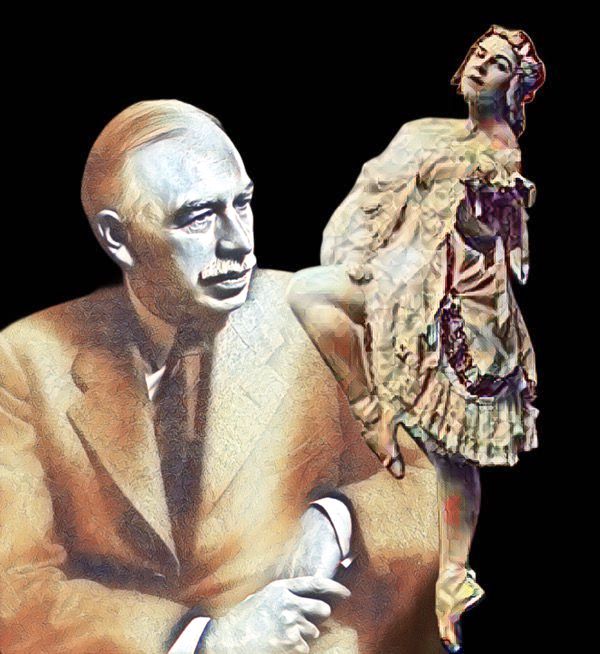
The Standard of Living uses Keynes to ask something no spreadsheet can answer easily: what makes a good life? Can you put a price on happiness? On beauty? On love? As markets collapse, political systems tremble, and Keynes moves between the corridors of power and the sexual, artistic and intellectual freedom of Bloomsbury, James Graham places economics, desire and art inside the same conversation. Nicholas Hytner directs, with Rory Kinnear playing Keynes.
And that is precisely where the casting of Natalia Osipova becomes especially delicious. Nearly a century separates the two Russian women, but the symmetry is irresistible. Lopokova left the traditions of Russian imperial ballet to build an international career and found a second artistic life in England. Osipova left the Bolshoi, became one of the Royal Ballet’s biggest stars and now, at 40, is crossing for the first time from acting through movement to acting through words.
And there is one final coincidence: Lydia became an actress too. After ballet, she appeared in film, radio and theatre and, in 1936, acted in The Master Builder at the newly founded Cambridge Arts Theatre itself. Her final dramatic appearance would come in War and Peace in 1943. In other words, Osipova will make her acting debut by playing a ballerina who, after a major career in dance, also decided to act. It is almost too perfect to be merely casting.

The Standard of Living opens on September 21, 2026, at London’s Theatre Royal Haymarket, where it will run for just 12 weeks, through December 12. Press night is September 29.
For anyone who has followed Osipova for years, the curiosity will be impossible to resist. We already know how she plays Giselle when her heart breaks, how she can build a character with a glance, and how she can make a pause feel as important as a jump.
Now we will finally discover what Natalia Osipova sounds like when she speaks.
Descubra mais sobre
Assine para receber nossas notícias mais recentes por e-mail.

