
SPOILER WARNING
For most of Furious’ first season, the central question seemed relatively simple: how far would Catherine Grace go in her revenge — and how far could Alice Black understand her without crossing the same line? In the finale, Hart Island, the series answers both questions in a particularly cruel way. Catherine finally discovers the truth she has been searching for all these years. Alice, meanwhile, discovers something far more dangerous: she may understand Catherine better than she would ever like to admit. And that is exactly where the already confirmed second season begins.
Catherine’s search was always tied to Isabel. It was because of her friend, what happened to her, and the silence surrounding her death that Catherine built her list of men to punish. But the memory she couldn’t access was the most painful. Isabel had just given birth when she was brutally assaulted by Jay Easton. Instead of receiving medical care, she was left bleeding and dying. Catherine reached her, but there was nothing she could do to save her.
That is when the finale delivers its most devastating revelation: Catherine was the one who gave Isabel the fatal dose of heroin. Not as murder or revenge, but because Isabel, aware that she was dying, asked her friend to end her suffering. Catherine did not spend years searching for the person who killed Isabel. She spent years trying to recover a memory her own mind had erased because she could not bear it.
The dissociation we have followed throughout the season therefore stops being merely an abstract consequence of trauma. It was hiding the moment when Catherine had to do for Isabel what no one else had done: stay beside her while every man with the power to help had chosen to abandon her.
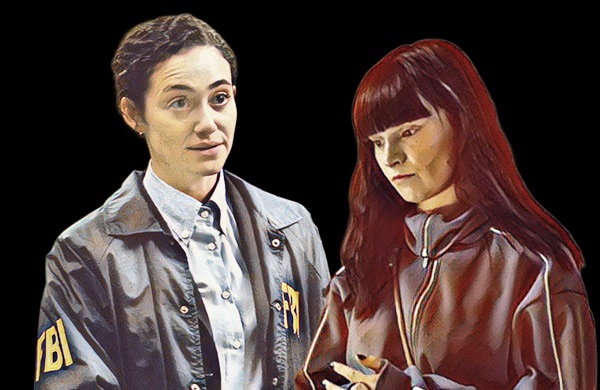
When the FBI arrives at the Easton estate, Alice stays by Catherine’s side and even protects her as the agents enter. It is a small gesture, but a huge one in terms of understanding what has happened between the two women. Alice began Furious, trying to find a serial killer. Gradually, she started seeing a survivor. Then someone who had found her own — obviously criminal — way of punishing men protected by money, influence, and institutions that had repeatedly failed.
That does not absolve Catherine. But the series was never particularly interested in innocence. Catherine goes to prison. Her search for Isabel is over, including the possibility of finally removing her friend’s body from Hart Island and burying her under her own name. The arc that fueled Catherine’s hunt has therefore reached its conclusion. Alice’s is only beginning.
Jay Easton is still alive when Alice finds him. And he manages to do something perhaps even worse than denying his crimes: he recognizes Alice. The video of the abuse she suffered at 14 was part of the material circulating among the men connected to that network. Jay tells her he remembers her. Shortly afterward, he begins struggling to breathe. Alice calls for help. At first, it appears we are simply watching an elderly, sick man die. Until the series returns to the scene.

Alice stepped on his oxygen tube and stopped him from breathing. She killed him. It was not professional negligence or a moment of hesitation. Alice made a decision and then constructed a perfectly plausible version of his death for the other agents. Suddenly, the difference between the FBI agent and the woman she spent eight episodes chasing becomes much harder to locate.
That is precisely where Furious finds its most interesting question. Alice tried to do everything right. When she reported Marshall, she watched her colleagues protect him. She lost her place in the police department and had to rebuild her career at the FBI. Now, while investigating Catherine, she once again watches powerful men escape the consequences of what they have done.
Emma destroys evidence. Jay is protected. Ed George treats Isabel as just another dead girl. Marshall, meanwhile, receives recognition from the same institution that ignored Alice. Catherine chose revenge. Until that point, Alice still believed she could choose the law. Jay’s murder shows that this conviction is gone.
Danny manages to save a copy of Jay’s files, and that is when Furious stops merely wrapping up the first season and begins clearly building the next one. Alice hands the material to Nora and finally enters the secure room where she can watch the video she has avoided for so many years. She finds her own name. And discovers that the recording of her abuse was downloaded more than 50,000 times.
The information changes everything. Alice has already killed the man standing in front of her. Now there is potentially an entire list of people who participated in the circulation of that video. We do not know who they are. We do not know whether they can be identified. And, more importantly, we do not know what Alice intends to do if she finds them. But we know how Catherine began.
In prison, Catherine quickly realizes that the official version of Jay’s death does not make sense. She asks Alice whether she enjoyed killing him. Alice smiles. It may be the most important moment of the entire episode, because Catherine recognizes something in her.
Throughout the season, Alice believed she was looking at Catherine in an attempt to understand how someone reaches the point of killing in the name of what they consider justice. By the end, we realize Catherine had also been looking at Alice. And perhaps she recognized her successor before Alice recognized it herself.
The second season has already been confirmed and is expected to place Alice in front of a new FBI case instead of simply repeating the Catherine investigation. That is probably the most interesting choice. Furious can work with a new crime each season while keeping Alice as its continuing character. The case changes, but the question remains: what happens when an agent responsible for finding killers begins secretly agreeing with them?

Nora also deserves attention. For now, she still represents the attempt to work within institutions, but she knows more and more about Alice and about the mechanisms that protect men like Jay. Danny occupies another delicate position. His relationship with Alice finally moves forward, but he is also someone capable of noticing changes in her. The deeper Alice goes into this territory, the harder it will become to keep her personal life, her role at the FBI, and what she does when she thinks no one is watching separate from one another.
And then there is Marshall. He survived and represents precisely the crime for which Alice never received justice. Jay belonged to her past. Marshall is much closer. Catherine, meanwhile, does not necessarily need to remain a co-lead in exactly the same way. The story that transformed her into a killer has reached a conclusion: Isabel was found, her death was explained, and Catherine was arrested. But removing her from the series entirely would almost feel like a waste.
Because Catherine now has an even more interesting function: she knows Alice. If she returns, she can stop being the woman the FBI is chasing and become something closer to Alice’s moral mirror — the one person capable of recognizing when Alice begins crossing lines no one around her can see. Their prison meeting leaves that door wide open.
Alice also does not need to simply become the “new Catherine.” The difference between them could be precisely the heart of Season 2. Catherine was outside the system. Alice is inside it. She has a badge, access to information, databases, investigations, and people who trust her. And now we know she is also capable of killing and hiding what she has done. That potentially makes Alice more dangerous than Catherine ever was.
The first season began with an FBI agent trying to get inside a killer’s head. It ended by suggesting something much better for the future of the series: perhaps it was the killer who got inside the agent’s head.
Descubra mais sobre
Assine para receber nossas notícias mais recentes por e-mail.

