
My Brilliant Career is finding success on Netflix with a formula that has become almost compulsory in period dramas: impeccable costumes, breathtaking landscapes and a protagonist who is supposed to belong to the early 20th century but thinks, speaks and reacts like a young woman today. Sybylla Melvyn is witty, irreverent, defiant and constantly aware of the injustices surrounding her. It is the usual anachronism, designed to ensure that no one mistakes a woman living in the past for an outdated woman.
The problem is that Miles Franklin did not need that kind of help.
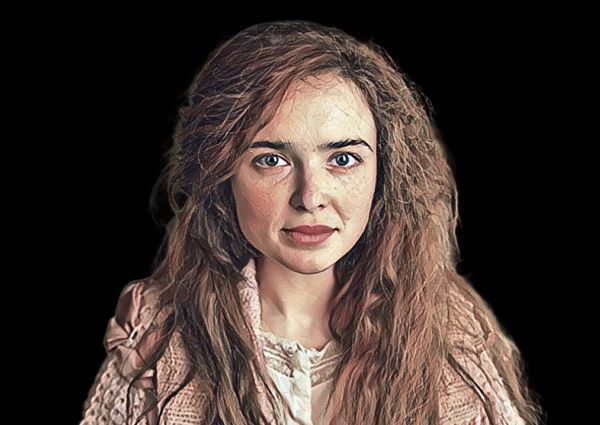
The series is not exactly a biography of the Australian writer, although it is easy to come away with that impression. It is an adaptation of her most famous novel, published in 1901 and heavily inspired by her own youth. Sybylla is a fictional character, but she is also a kind of alter ego for Franklin: an intelligent, restless and ambitious young woman raised in a rural family that has lost its money and social standing, condemned to a life of hard work and very few prospects.
Miles Franklin was born Stella Maria Sarah Miles Franklin in 1879 and grew up watching her family struggle financially in rural Australia. While still a teenager, she began writing the story of a young woman who refused to accept the only destiny considered appropriate for her: finding a husband, running a household and abandoning any ambition that might threaten that order.
Sybylla wants to write. She wants to see the world, achieve independence and discover who she might become before somebody else decides it for her. When she leaves her parents’ deteriorating property to live with her wealthy grandmother, she finally appears to enter a world of comfort, dances and possibilities. It is also where she meets Harold Beecham, a handsome and wealthy man willing to offer what, in another story, would represent the inevitable happy ending.
The point is that Sybylla can love Harold and still reject the life that marrying him would represent. She understands that becoming a wife might mean the disappearance of the writer she has not yet had the opportunity to become. Faced with the security offered by a man and the uncertainty of pursuing her own career, she chooses to risk choosing herself.
That does not seem particularly revolutionary when the character is presented with all the recognizable codes of a contemporary heroine. It was, however, a radical position in 1901, when Australian women were still fighting for the right to vote and had extremely limited opportunities for financial independence. Miles Franklin did not invent a retrospective rebellion to please audiences of the future. She wrote about a conflict she understood while still trapped inside it.
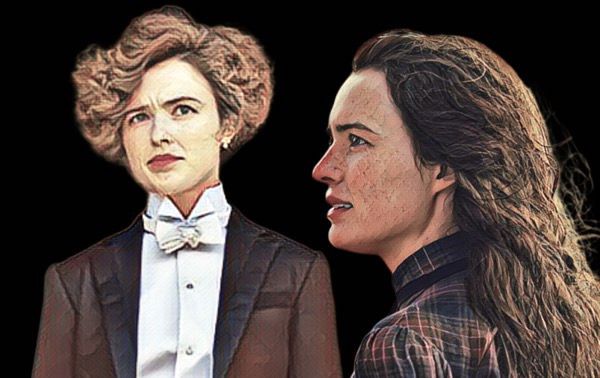
The book was published when Franklin was only 21, with the help of writer Henry Lawson. She adopted the name Miles partly to avoid the prejudice reserved for women who wanted to be taken seriously as authors. Lawson, however, revealed in his preface that the novel had been written by a young woman. Its success was immediate, but it brought consequences Franklin was not prepared to face.
Because the story bore obvious similarities to her family and the rural community in which she had grown up, relatives and neighbors began recognizing themselves in the characters. Franklin felt invaded by this public reading of her life and eventually withdrew the novel from circulation. She later determined that it could only be republished 10 years after her death. There is an almost perfect irony in that: the young woman who wrote about wanting a career was frightened when her first book gave her precisely the recognition she had sought.
Her life, however, did not end with that novel. Franklin left Australia, lived in the United States and England, worked with movements defending women and workers and served in the Balkans during World War I. She published other books and left money to establish the Miles Franklin Literary Award, which would become one of Australia’s most important literary prizes.
My Brilliant Career also crossed generations. In 1979, it became a film directed by Gillian Armstrong and starring Judy Davis. The adaptation helped reaffirm both the novel’s significance and the strength of an Australian cinematic tradition committed to telling its own stories. There was, therefore, no shortage of material to justify a new version.
The Netflix series is beautiful, energetic and has a protagonist carefully designed to win the audience over immediately. It also offers an irresistible curiosity for anyone who watches Slow Horses: Christopher Chung, the memorably irritating Roddy Ho, appears here as Harold Beecham, the romantic interest. Watching him exchange the agent’s socially inept arrogance for period costumes and longing glances may be one of the adaptation’s most unexpected pleasures.
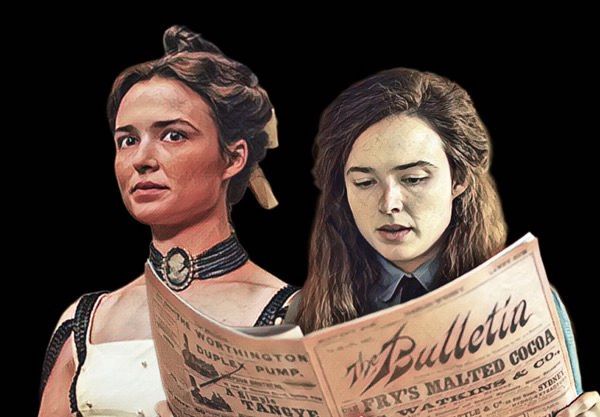
Even so, I could not connect with it. The excess of contemporary signals drains the character of precisely what made her most courageous. By making Sybylla resemble one of the many modern heroines trapped inside an old-fashioned dress, the series diminishes the magnitude of the original gesture. Her rebellion no longer grows organically from the concrete limitations of her time and instead feels like a personality trait carefully manufactured for the algorithm.
It is an understandable choice. Netflix wants audiences to recognize Sybylla immediately, root for her and turn her rejection of marriage into an easily shareable manifesto. But the real Miles Franklin was more interesting, contradictory and courageous than this update allows us to see.
While still a teenager, she wrote about a woman who could love a man without agreeing to disappear inside his life. She did so in 1901, long before television felt the need to teach period characters how to behave like 21st-century women. Miles Franklin was already modern. The series simply did not trust her enough.
Descubra mais sobre
Assine para receber nossas notícias mais recentes por e-mail.

