
In English, mayday is the international distress call used in emergency situations. Rarely has a title been so unintentionally perfect. Over nearly two hours, as Ryan Reynolds attempts to turn Top Gun into yet another extension of his sarcastic persona, it is difficult to think of anything else: help, help. The film has no chemistry, no logic, and, worse, is rarely funny.
Set in 1987, during the Cold War, Mayday introduces Reynolds as Troy “Assassin” Kelly, a US Navy pilot who is as talented as he is undisciplined. He has the uniform, the call sign, the insolence and the confidence of Maverick, as well as that cinematic gift for disobeying orders and still being considered indispensable. During a covert mission over Soviet airspace, however, his plane is shot down, and he finds himself stranded behind enemy lines.
Troy is discovered by Nikolai Ustinov, played by Kenneth Branagh, a former KGB agent fascinated by the United States, its popular culture and, especially, Top Gun. Nikolai secretly watches the movie on VHS and sees the fallen American pilot as the embodiment of his fantasies. From that point on, the two men must cross the Soviet Union, evade the agents pursuing them and, naturally, learn something from each other.
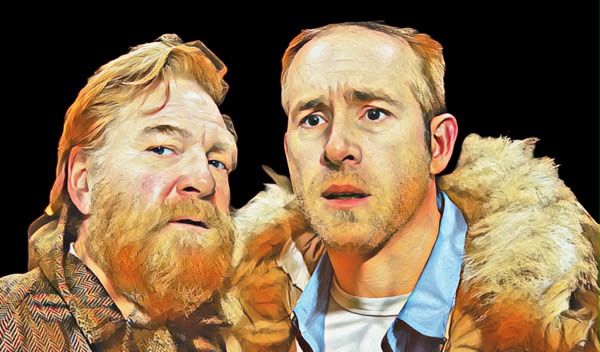
Naturally, because we know this story. We know the jokes, the conflicts, the chases and even the carefully scheduled pauses in which two apparently opposite men discover that they are not so different after all. Mayday wants to be a 1980s buddy comedy, a spy adventure, a Cold War satire, a commentary on patriotism and a tribute to Top Gun. The problem is that it never truly commits to any of those possibilities.
The Top Gun reference, incidentally, is not merely an interpretation. It is an acknowledged part of the film’s construction. Directors and screenwriters Jonathan Goldstein and John Francis Daley received Tom Cruise’s permission to use footage from the 1986 classic and worked with professionals connected to Top Gun: Maverick on the aerial sequences. The dialogue between the films is therefore intentional. And it is precisely this proximity that makes the comparison so cruel.
Tom Cruise may be many things, but his physical commitment creates a genuine sense of danger. When Maverick enters an aircraft, we believe he might die in it. Ryan Reynolds offers something else: the permanent detachment of someone who needs to demonstrate that he knows he is inside a movie. Troy can crash, be beaten, chased, or placed in mortal danger, but there will always be a joke ready to ensure that nothing becomes too serious.
I would not say Reynolds is exactly trying to become Cruise’s successor. What Mayday attempts to do is turn Maverick into another Ryan Reynolds character. Troy carries all the outward signs of the Top Gun hero, but they pass through the same sarcastic filter the actor applies to almost everything. The result is a counterfeit Maverick with Deadpool’s mannerisms, but without the anarchic energy, violence, or self-awareness that justify this kind of humor in the antihero’s universe.
Reynolds has already transformed this persona into an extraordinarily profitable brand. He is the handsome man who knows he is handsome, the hero who never takes his own image entirely seriously, and the guy who responds to every threat with an ironic observation. It has worked many times. Here, it merely feels tired. The jokes arrive before any emotion has the opportunity to form and, because nearly all of them sound familiar, they offer no element of surprise either.
Kenneth Branagh is supposed to provide the contrast. Nikolai is eccentric, resourceful, sentimental and absurd enough to allow the actor to play with his own Shakespearean prestige. Branagh commits himself, performs action scenes and appears to understand better than anyone that he is inside an enormous piece of nonsense. Even so, he cannot create by himself the chemistry that the screenplay assumes exists between its protagonists.
Some international critics saw the partnership as the film’s greatest strength. There was praise for the contrast between Reynolds’ sarcasm and Branagh’s apparent innocence, as well as for the lightness of the action sequences. Other critics, however, identified exactly the problem Mayday attempts to conceal through speed: this is a comedy long on absurdity and short on laughs, dependent on its actors’ charisma because the screenplay does not offer enough.
The absence of logic could be irrelevant if the film were genuinely funny. Action comedies do not have to obey the laws of reality rigorously when they create their own rhythm and convince us to follow it. Mayday, however, uses absurdity as a shortcut. Characters change positions whenever the story requires it, impossible situations are resolved through convenience, and the Cold War becomes nothing more than a recognizable backdrop filled with cultural references and caricatures.
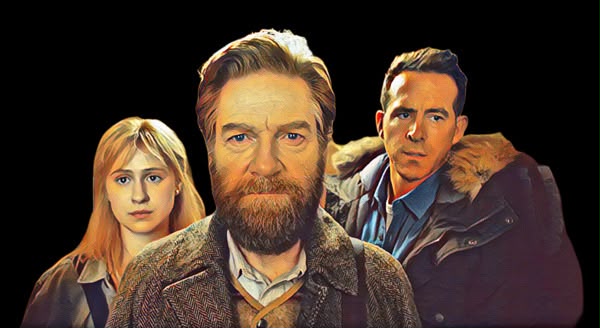
Even the belated attempt to say something about patriotism, propaganda, and the similarities between people separated by political regimes arrives too neatly packaged. The film wants to question the fantasy of the American hero without truly relinquishing it. Troy learns that loving his country does not mean blindly obeying its institutions, while Nikolai discovers that the American dream may never have been what he imagined. None of this would necessarily be bad if it did not feel like a message pasted onto the adventure after all the jokes have already failed.
Goldstein and Daley, responsible for far more agile and inventive films such as Game Night and Dungeons & Dragons: Honor Among Thieves, know how to organize action and comedy. In Mayday, there is technical competence, impressive aerial footage, and a few well-executed chases. But competence is not personality. The finish may be efficient, yet the film remains strangely flavorless, like a product assembled from ingredients that worked much better in other recipes.
Perhaps that is why the title is so perfect. Mayday begins as a tribute to Top Gun, attempts to turn itself into a buddy comedy, and ends by asking us to believe in an emotion it never built. Ryan Reynolds pilots, Kenneth Branagh makes an effort, and the movie keeps moving, convinced that movement and entertainment are the same thing.
They are not. And when it finally lands, the only feeling left is relief.
Descubra mais sobre
Assine para receber nossas notícias mais recentes por e-mail.

